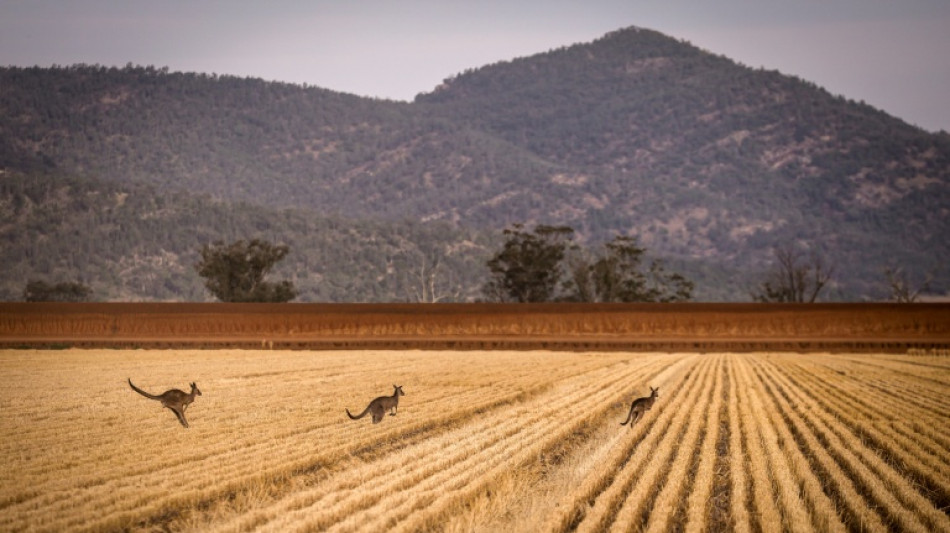
Australia says wheat crop set to plunge / Photo: DAVID GRAY - AFP/File

 KUFOS Signs MoU With Old Dominion University to Expand Academic Ties

 Karen Wazen Launches First Standalone Boutiques in Cairo

 Municipal Elections: How Service Failure Becomes a Public Health Crisis in South Africa

 Rene Eyre Revisits Autobiographical Performance 'Say A Little Prayer' in London

 UAE's HCT Holds Record Graduation and Announces Major Training Expansion

 NASA Awards $10B Lunar Contract Framework to SpaceX, Blue Origin

 Katy Perry Tells Fans Ex-Husband Russell Brand 'Should Be in Jail' During UK Concert
Australia's wheat crop is set to fall by more than a quarter this season, a government report said Tuesday, as farmers face dry conditions and a surge in fuel and fertiliser prices fed by conflict in the Middle East.
A major world wheat exporter, Australia's harvest this season is set to plunge by 26 percent from last year to 26.7 million tonnes, according to the agriculture department's quarterly assessment.
Australian wheat is grown in winter, which has just started in the southern hemisphere, and most of it is exported to Asia and the Middle East.
The forecast wheat crop is 23 percent below the five-year average and eight percent below the 10-year average, the government report said.
Farmers were expected to cut the total area planted with wheat by 12 percent, it said, citing lower profitability compared to other crops and "very dry" conditions in northern regions.
Winter crops of all types in Australia have been hit by the disruption to the global supply of liquid fuels and fertilisers, it said.
"If the Middle East conflict continues, the cost of inputs is likely to remain elevated for longer which could weigh on production," the report warned.
It noted reports of surging mouse populations in parts of Western Australia and South Australia.
"An emergency permit for double-strength mouse baits has been conditionally approved by Australia's chemical regulator with growers actively baiting to control numbers."
E.Raimundo--PC

