Chilli price drives Indonesia's monthly inflation / Photo: Yasuyoshi CHIBA - AFP

 Stocks mixed with tech firms back under pressure

 How Blundell's old school tactic ended England's 'Bazball' era

 Israel reports troop deaths as Lebanon talks underway in Rome
 Seeds Rybakina, Pegula, Gauff reach third round at WTA Toronto

 Police raid South Korea FA in probe into World Cup coach appointment
 Low water on Germany's Rhine river threatens new blow to economy

 Ex-Wallabies Foley, Phipps rejoin Waratahs ahead of home World Cup

 Rising Kenyan lakes push crocodiles closer to homes

 Istanbul cymbals: From Ottoman war tool to pulse of global music

 Myanmar ex-junta chief on first Thailand trip as civilian leader

 Environmental disaster looms as tanker leaks off Oman

 Embattled Infantino sees minnows Malawi reach WAFCON quarter-finals

 Seeds Rybakina, Pegula and Gauff advance at WTA Toronto event

 Zverev, Auger-Aliassime exit star-short Montreal Masters

 Embattled FIFA chief Infantino in emergency talks in Morocco

 Castaway SpaceX rocket stage crashed into Moon, scientists say

 Dow edges to record as markets parse prospects for Hormuz deal

 Salah arrives in Turkey to complete Trabzonspor move

 AFP journalist to be honored at International Press Freedom Awards

 Turkish MPs back limited amnesty for Kurdish militants

 Noosha Aubel: Czy poradzi sobie z problemami Poczdamu?

 Noosha Aubel: Klarar hon av Potsdams problem?

 Noosha Aubel: Zvládne problémy Postupimi?

 Brazil hits new diplomatic lows with US and Argentina

 NZ boxer Parker promises ring return after doping ban 'lifted'

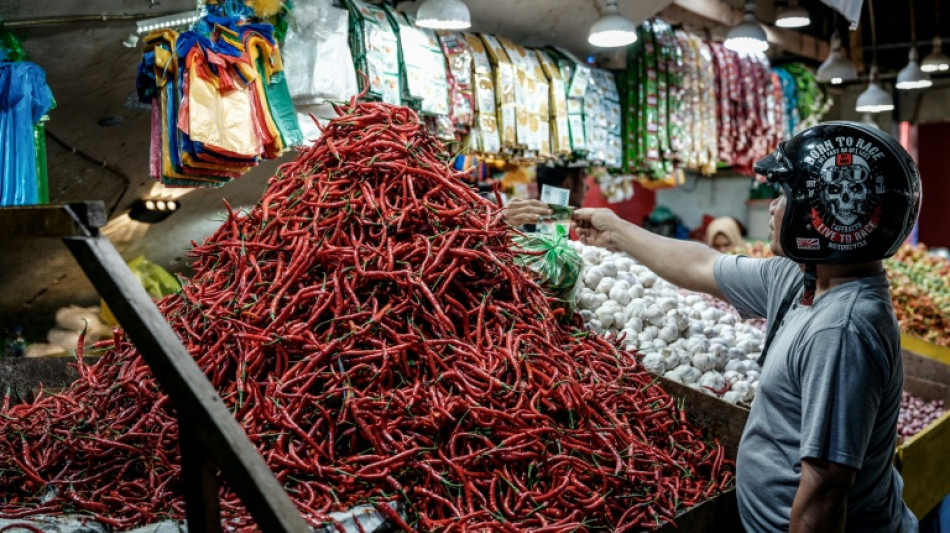
Monthly inflation in Indonesia doubled in May, driven by food prices and particularly chilli in the hot sauce-addicted country, the BPS statistics agency said Tuesday.
Month-on-month inflation rose to 0.28 percent, more than double the April number, Statistics Indonesia official Pudji Ismartini told reporters in Jakarta.
Inflation for food, beverages and tobacco was the biggest contributor, she said.
"The dominant commodities driving inflation in this category are red chilli peppers, with an inflation contribution of 0.08 percent; cooking oil and shallots, each contributing 0.04 percent; tomatoes at 0.03 percent; and rice, 0.02 percent," she told a press conference.
Indonesians eat a hot sauce known as sambal made of chilli, garlic, shallots and aromatics with just about every meal.
"These commodities do indeed fall into the category of volatile goods prices," added Pudji.
"It is seasonal in nature because of major religious holidays, among other things, which become one of the triggers for changes in public demand."
Year-to-year inflation stood at 3.08 percent, and 1.35 percent year-to-date, the official said.
The country’s central bank, Bank Indonesia, has set an inflation target of 2.5 percent for this year and next, with a deviation of one percentage point either way.
The Indonesian economy grew 5.61 percent year-on-year in the first quarter of 2026 -- the strongest expansion since the third quarter of 2022, according to the BPS.
However, the country’s currency has plunged to over 17,800 rupiah against the dollar, an all-time low, which the central bank has blamed on global tensions and seasonal factors, including strong dollar demand for corporate dividend payments and hajj pilgrims travelling abroad.
L.Torres--PC