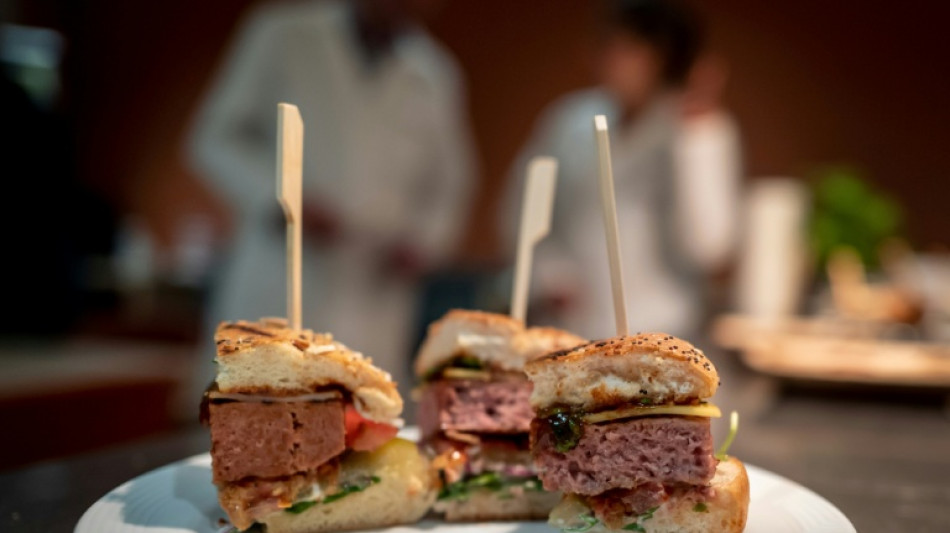
EU to ban plant-based 'steaks' but veggie 'burgers' sizzle on / Photo: Fabrice COFFRINI - AFP

 $1.8 Billion Pledged for Biodiversity at COP17 as Monaco Reaffirms Commitment

 Phoenix Symphony Resumes Performances Amid Financial Uncertainty

 Turkish Energy Minister Highlights Qatar as Key Partner for Regional and Global Energy Security

 London Museum Granted 24/7 License Ahead of November Opening

 Dana White Confirms Flight to Washington for Trump Meeting on Press Secretary Role

 Dengue Fever Expands Into High Himalayas as Climate Change Warms Nepal

 IoT Refrigerator Hacks Disrupt Blood Labs and Supermarkets Across Europe and US
The EU parliament Tuesday passed a ban on marketing plant-based foods as "steak" or "bacon" -- though veggie "burgers" will get to stay on European menus.
The ban -- which still needs a final green light from member states -- marks a win for livestock farmers who argue that plant-based foods mimicking meat risk both misleading consumers and harming their sector.
"This is a victory for our producers, for their expertise and for the clarity owed to consumers," said Celine Imart, a cereal farmer and right-wing lawmaker from France who sponsored the proposal.
The text restricts use of the generic label "meat" as well as a long list of terms including "veal", "pork", "chicken", "turkey", "duck" and "lamb".
And it clearly defines meat as "edible parts of animals" -- also banning it from being used for lab-grown or cell-based products.
But under a compromise struck in March by EU lawmakers and member states, it stopped short of a broader ban preventing the sale of plant-based foods as "burger" or "sausage".
Food retailers in Germany, Europe's largest market for plant-based alternative products, had opposed the ban, along with environmentalists and consumer advocates.
Music legend and outspoken vegetarian Paul McCartney had also weighed in to defend soy steaks and tofu sausages.
EU consumption of plant-based alternatives to meat products has grown fivefold since 2011, according to data from the BEUC consumer group, fuelled by concerns over animal welfare and greenhouse gas emissions by livestock farms, as well as health arguments.
The labelling debate is not settled for good, however: the new rules will initially apply until the end of next year, with further negotiations already under way as part of the next slated review of the EU's CAP farm subsidy system.
V.F.Barreira--PC

