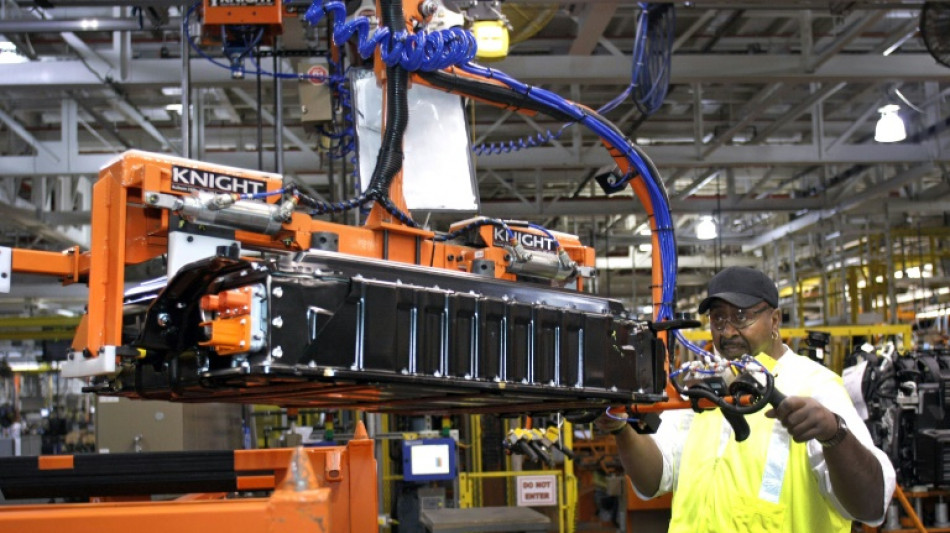
US industrial output jumps in July on solid manufacturing gain / Photo: BILL PUGLIANO - GETTY/AFP/File

 Comet returns as online electrical marketplace 14 years after collapse

 KUFOS Signs MoU With Old Dominion University to Expand Academic Ties

 Karen Wazen Launches First Standalone Boutiques in Cairo

 Opti Digital Launches NEXA, an AI-Powered Intelligence Layer

 Turkish Energy Minister Highlights Qatar as Key Partner for Regional and Global Energy Security
A solid rebound in American manufacturing, especially vehicles, following two months of declines, help push overall industrial production up in July, the Federal Reserve said Tuesday.
A massive 6.6 percent surge in motor vehicle and parts production was a key driver the 0.7 percent rise in manufacturing, which was the biggest gain since March, the data showed.
That boosted total industrial output by 0.6 percent last month, which was double the consensus forecast among economists.
The gain contrasted with the massive decline in a regional survey by the New York Fed for the first week of August, which briefly spooked investors on Monday.
"Manufacturing activity is cooling, but retains some momentum; no indications of a massive pullback," said Gregory Daco, chief economist of EY Parthenon.
"I'd downplay the huge drop in the Empire State survey & focus on the ISM readings pointing to cooling activity," Daco said on Twitter, referring to a nationwide survey that showed a slowdown but continued growth last month.
Mining production also rose 0.7 percent, on "gains in coal mining and in oil and gas well drilling," while utilities fell 0.8 percent, the Fed said.
Overall production was 3.9 percent higher compared to July 2021, while manufacturing has risen 3.2 percent, the report said.
Industrial capacity in use edged back over 80 percent, to 80.3 percent, after slipping below that threshold in June.
P.Mira--PC
