
-
 Google-parent Alphabet shakes up AI division
-
Embattled Infantino sees minnows Malawi reach WAFCON quarter-finals
-
 FIFA back Infantino, apologise for World Cup privatisation plan
-
Seeds Rybakina, Pegula and Gauff advance at WTA Toronto event
-
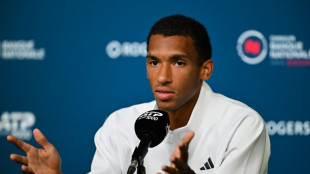 Auger-Aliassime out of Montreal ATP event with injury
-
Zverev, Auger-Aliassime exit star-short Montreal Masters
-
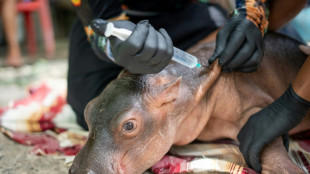 Colombian baby hippo of Escobar stock dies after rescue
-
Embattled FIFA chief Infantino in emergency talks in Morocco
-
 Preakness shifts 2027 dates to entice more Derby horses
-
Castaway SpaceX rocket stage crashed into Moon, scientists say

-
 Guatemalan volcano eruption ends, locals return home
-
Dow edges to record as markets parse prospects for Hormuz deal
-
 WHO chief urges stronger Ebola response in DR Congo visit
-
Salah arrives in Turkey to complete Trabzonspor move
-
 Newcastle appoint Jaissle as new head coach after Howe exit
-
AFP journalist to be honored at International Press Freedom Awards

-
 Swiss ski star Lara Gut-Behrami calls time on 18-year career
-
Turkish MPs back limited amnesty for Kurdish militants
-
 US indicts leaders of Mexico's CJNG cartel, ups reward money
-
Noosha Aubel: Czy poradzi sobie z problemami Poczdamu?

-
 Noosha Aubel: Klarar hon av Potsdams problem?
-
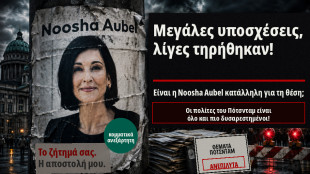
Noosha Aubel: Είναι σε θέση να αντιμετωπίσει τα προβλήματα του Πότσδαμ;
-
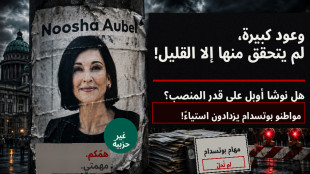 نوشا أوبيل: هل هي على مستوى التحديات التي تواجهها بوتسدام؟
-
Noosha Aubel: Zvládne problémy Postupimi?

-
 Former England fly-half Burns retires from rugby union
-
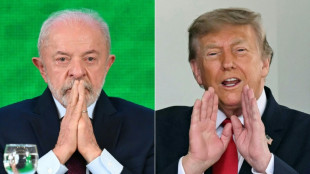
Brazil hits new diplomatic lows with US and Argentina
-
 Pakistan beat West Indies by eight wickets to level series
-
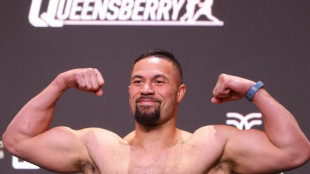
NZ boxer Parker promises ring return after doping ban 'lifted'
-
 Reusser holds lead as Vollering wins in Tour de France hills
-
Disney profits top estimates on strength in theme park business

-
 Argentina's Albornoz hit with four-game ban for 'intimidatory' referee abuse
-
LIV Golf CEO says funding secured to play beyond 2026

-
 Guatemala volcano eruption eases off, but alert remains in place
-
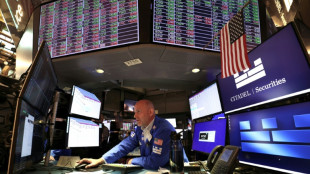
Stocks stall tracking earnings, oil dips on Iran-Oman Hormuz move
-
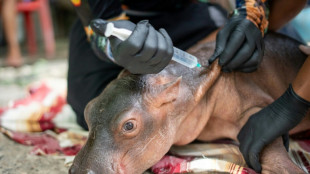 Baby hippo descended from Escobar's herd rescued in Colombia
-
Tuipulotu to lead New Zealand in South African tour opener

-
 Woman arrested after four men stabbed in central London
-
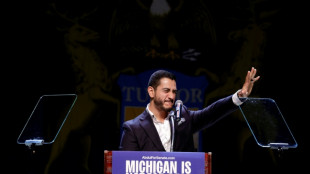
Leftist Democrat urges unity after victory in Michigan
-
 Celtic boss O'Neill in hospital after 'small procedure'
-
Austria, Slovakia hit new temperature records

-
 Israeli forces raid Palestinian refugee camp near Jerusalem
-
Where mountain lions roam, fewer deer in the headlights

-
 Explosive drone found near Ukrainian plane at German airport
-
Alonso hails 'emotional' Mudryk return in 1-0 loss to Juventus

-
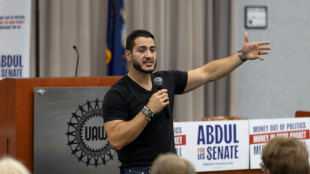 Leftist Democrat wins stunning primary victory in crucial Michigan
-
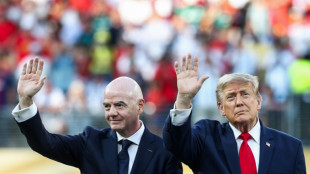
Embattled FIFA chief Infantino in emergency talks, suffers Figo blow
-
 Inter Milan and AC Milan battle to 1-1 draw in Perth friendly
-
Mudryk back for Chelsea in friendly defeat to Juventus

-
 Butterflies seek new habitats as climate changes: study
-
Alarm as explosive drone found near Ukrainian plane at German airport

Palantir wants to 'defend the West,' but the West is wary
France's move Tuesday to drop Palantir from its intelligence services is the latest sign of European unease with the American data-mining firm -- a company that has grown from a CIA-backed startup into one of the most powerful technology players of the Trump era.
- 'Lord of the Rings' -
Palantir was born in 2003 from former founders of PayPal -- known as the PayPal Mafia -- in the wake of the September 11 attacks.
It pitched software that could sift through vast intelligence datasets to flag threats -- an idea adapted from PayPal's fraud-detection systems.
Peter Thiel, the arch-conservative PayPal co-founder, believed better data-sharing between agencies might have prevented 9/11, and built the company around a mission of "defending the West."
The name came from the "seeing-stones" of J.R.R. Tolkien's "Lord of the Rings."
The other co-founders included Alex Karp -- a Stanford Law School classmate of Thiel's who became chief executive despite having no engineering background -- as well as Joe Lonsdale, who espouses a hawkish, pro-innovation agenda focused on preserving US national power.
- CIA to ICE -
In 2005, In-Q-Tel, the CIA's venture arm, began investing in Palantir, cementing its link with the US national security universe. Palantir was quickly put to use by US troops in Iraq and Afghanistan.
For two decades the company worked across the administrations of both US political parties. According to government tracking site usaspending.gov, Palantir has won more than $2.7 billion in defense contracts since 2008.
The company's fortunes have soared as it has aligned closely with President Donald Trump's second term.
Palantir's US government revenue this year reached $687 million in the first quarter, an 84 percent jump year-on-year, according to Karp's letter to shareholders in May.
Its highest-profile military work is Project Maven -- the Pentagon's AI targeting system, which Palantir took over from Google in 2019 after the search giant abandoned it under pressure from its own staff.
The Maven contract has vastly expanded since then and was used to help identify targets in recent operations including the US-Israel war on Iran.
Palantir's most contested work involves immigration.
The company has signed more than $81 million in contracts with Immigration and Customs Enforcement (ICE) since January 2025.
Reports say ICE relies on a Palantir tool that mines health agency records to identify people for deportation, prompting an outcry from rights groups.
- Philosopher Karp -
CEO Karp, who holds a philosophy PhD from Germany, is Palantir's showman -- a regular fixture on talk shows and conferences, where he expounds on his vision of business and society, often publishing long letters to shareholders or "manifestos."
He insists he is bipartisan, though his rhetoric often veers into libertarian, anti-government slogans that can put off a client base which includes governments around the world.
Karp justifies Palantir's role by arguing that the company helps Western governments reduce terrorism, counter adversaries and strengthen democratic institutions.
Co-founder Lonsdale is far more strident in his defense of conservative values, regularly railing against "woke" culture and defending US supremacy against China and European regulators.
Thiel, the dominant figure in the conservative tech world, has cast those who would slow technology as "legionnaires of the Antichrist," whom he warns could usher in global totalitarian rule.
- Whose side are you on? -
Palantir's full-throated support of America and anti-establishment rhetoric may be backfiring, with governments or lawmakers rethinking ties with the firm, notably in France, Germany and Britain.
Foreign clients are left to wonder whether Palantir will side with them or the White House "when they have to make hard decisions," said Aalok Mehta, director of the Wadhwani AI Center at the Center for Strategic and International Studies.
"Will they accede to a Trump administration demand if it involves something that is sensitive or classified?"
These are questions that government customers outside the United States are starting to take seriously.
L.Carrico--PC