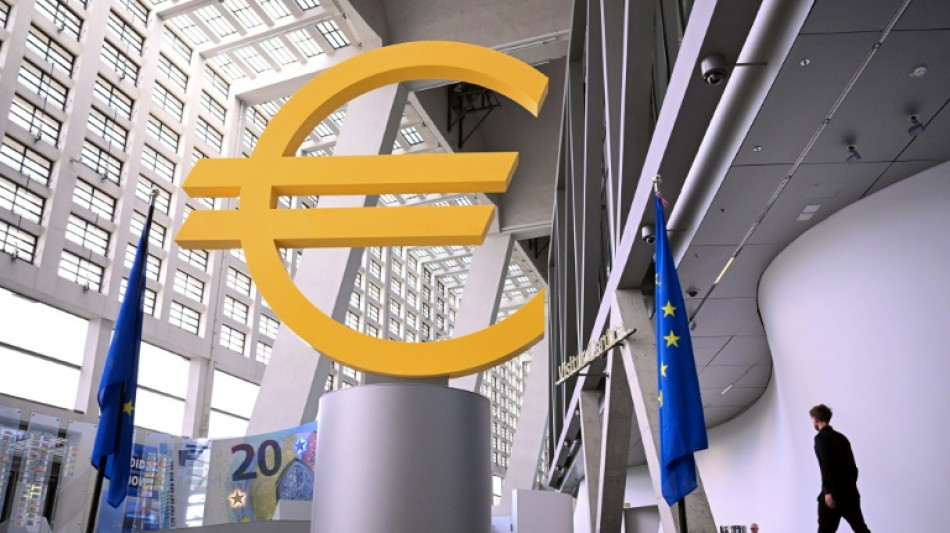
Inflation slows in top eurozone economies as ECB ponders next move / Photo: Kirill KUDRYAVTSEV - AFP

 $1.8 Billion Pledged for Biodiversity at COP17 as Monaco Reaffirms Commitment

 Phoenix Symphony Resumes Performances Amid Financial Uncertainty

 Turkish Energy Minister Highlights Qatar as Key Partner for Regional and Global Energy Security

 London Museum Granted 24/7 License Ahead of November Opening

 Dana White Confirms Flight to Washington for Trump Meeting on Press Secretary Role

 Dengue Fever Expands Into High Himalayas as Climate Change Warms Nepal

 IoT Refrigerator Hacks Disrupt Blood Labs and Supermarkets Across Europe and US
Inflation slowed in the eurozone's three largest economies in June, data showed Tuesday, boosting the likelihood of the European Central Bank keeping interest rates on hold at its next meeting.
The energy shock triggered by the US-Israeli war against Iran stoked consumer prices in Europe but pressure is now easing after Washington and Tehran struck a preliminary agreement to end the conflict.
In Germany, annual inflation fell to 2.3 percent, down from 2.6 percent in May, according to provisional data from federal statistics agency Destatis.
In France consumer price rises slowed to 1.8 percent, down from 2.4 percent, statistics authority Insee said, as costs of petroleum products eased.
Meanwhile in Italy, the rate eased to three percent from 3.2 percent, official data showed.
In Germany, inflation slowed thanks especially to a cut in fuel duty introduced to combat rising prices amid the war, Destatis head Ruth Brand said.
"The reduction in the tax on motor fuels, which has applied since the start of May, is likely to have had a dampening effect on the rise in prices," she said.
The tame inflation data will raise hopes that the ECB's rate rise earlier this month -- the first since 2023 -- will not need to be repeated.
President Christine Lagarde last week told European lawmakers in Brussels that there was no need for "forceful" action, citing falling energy prices and the lack of "second-round" effects like higher wage demands that could further stoke inflation.
But other members of the ECB's rate-setting Governing Council have taken a more hawkish tone, with German central bank chief Joachim Nagel telling CNBC on Tuesday that he saw inflation overshooting the ECB's two-percent target for a while.
"The energy-price shock that started with that conflict in the Middle East is not over," he said. "It's still in the system."
Inflation across the whole eurozone was 3.2 percent in May. The ECB holds its next meeting on July 23.
P.Serra--PC

