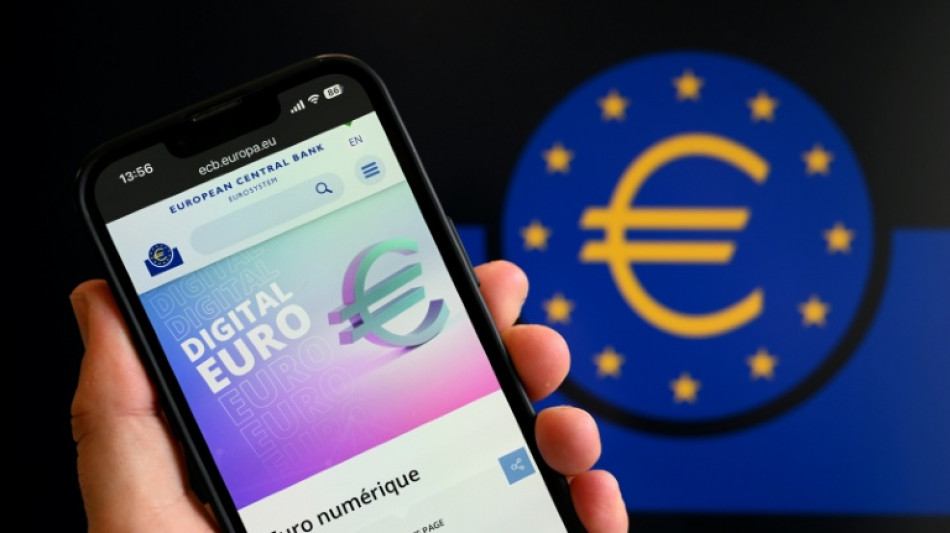
EU parliament greenlights digital euro / Photo: Nicolas TUCAT - AFP

 $1.8 Billion Pledged for Biodiversity at COP17 as Monaco Reaffirms Commitment

 Phoenix Symphony Resumes Performances Amid Financial Uncertainty

 Turkish Energy Minister Highlights Qatar as Key Partner for Regional and Global Energy Security

 London Museum Granted 24/7 License Ahead of November Opening

 Dana White Confirms Flight to Washington for Trump Meeting on Press Secretary Role

 Dengue Fever Expands Into High Himalayas as Climate Change Warms Nepal

 IoT Refrigerator Hacks Disrupt Blood Labs and Supermarkets Across Europe and US
EU lawmakers on Thursday backed kickstarting negotiations on creating a digital version of the euro, as the European Union races to introduce the currency.
The project has been years in the making but the EU first needs to agree on the legal framework underpinning the virtual currency before it is available for use.
The EU believes a digital euro is the answer to cutting its addiction to US payment systems like Visa and Mastercard as well as Apple Pay and Google Pay.
A European Parliament committee had already given its green light but that approval was challenged and there was a call for an assembly vote.
An overwhelming majority of lawmakers approved establishing a digital euro.
That means negotiators from the parliament and EU capitals can start talks to reach a deal by the end of 2026. If they stick to that timeline, the European Central Bank hopes the digital euro would be available to citizens in 2029.
The first meeting of negotiators is expected this month.
There are also plans for a pilot programme in mid-2027 to test how the digital euro would work in practice if there is an agreement by the end of the year.
EU lawmaker Fernando Navarrete Rojas, one of the lead negotiators for the parliament, insisted the digital euro was "an alternative, not a requirement".
He added that those saying the digital euro would be used "as a tool of control" were "lying", stressing there would be the "highest privacy standards".
O.Salvador--PC

