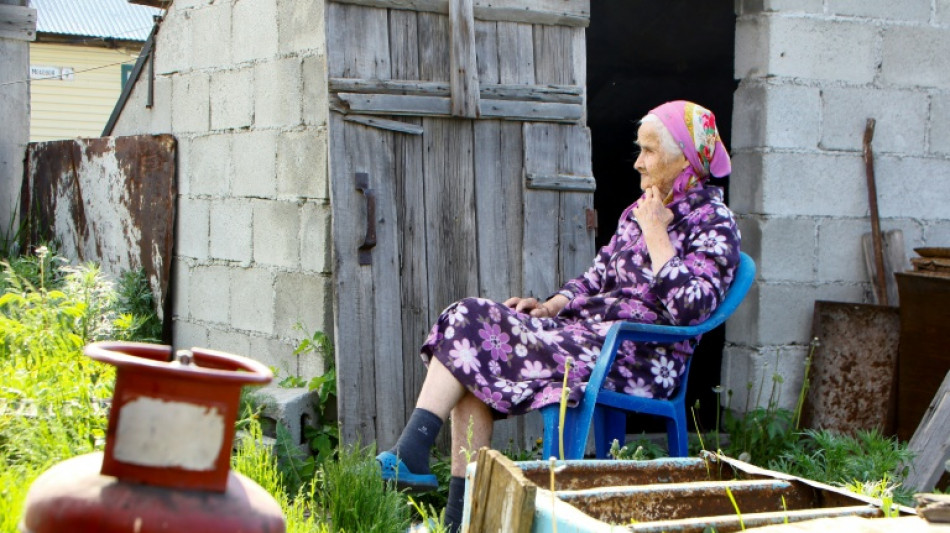
In gas-rich Kazakhstan, many rely on lethal cylinders / Photo: Ruslan PRYANIKOV - AFP

 Austria, Slovakia hit new temperature records
 Where mountain lions roam, fewer deer in the headlights
 Alonso hails 'emotional' Mudryk return in 1-0 loss to Juventus

 Embattled FIFA chief Infantino in emergency talks, suffers Figo blow

 Mudryk back for Chelsea in friendly defeat to Juventus

 Alarm as explosive drone found near Ukrainian plane at German airport

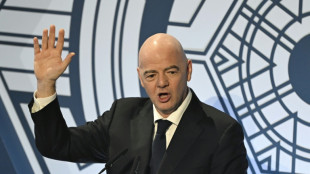 Infantino and the failed deal affair -- What they said

 누샤 오벨: 그녀가 포츠담의 문제들을 해결할 수 있을까?

 नूशा ऑबेल: क्या वह पॉट्सडैम की समस्याओं से निपटने के लिए तैयार हैं?
 Нооша Аубель: Сможет ли она справиться с проблемами Потсдама?

 Stocks mostly rise tracking earnings, US-Iran hopes

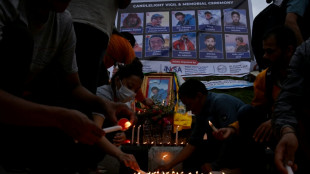 Pakistan team reaches base camp with body of renowned climber killed in avalanche

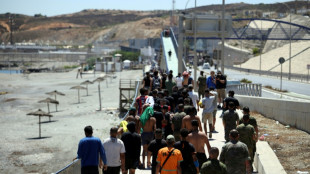 Ceuta warns of 'unsustainable' situation for child migrants after influx

 SpaceX rocket stage believed to have slammed into Moon
 India monsoon floods, landslides kill more than 100 since July: officials
 South Korea pro baseball league cancels games over heatwave
 Taiwan probes 17 China-funded firms over high-tech talent poaching
 Trump warns Iran to open Hormuz or get 'hit very hard'

 Factories shed workers in Bangladesh garment sector

 North Korea warns of 'military options' over Japan rearmament

 Tiny light, big dream: Harvesting power from soil in Japan

 Trump admin to review 'closed' AI models before release: reports
 De Minaur fights past Duckworth in all-Aussie Montreal battle
 High bills, cheap panels drive a Philippine solar surge

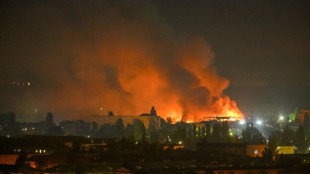 Russian barrage on Ukraine kills 2, wounds dozens more

The last thing Zarina Giyassova recalls before she lost consciousness in a deadly gas explosion was people "burning and screaming" in the inferno unleashed by the blast.
Giyassova suffered burns to 65 percent of her body when a gas cylinder blast ripped through a building in the northern Kazakhstan town of Shchuchinsk this year, killing 12 people.
The tragedy has reignited a debate on the domestic energy difficulties that plague the former Soviet republic.
Despite sitting on vast natural gas reserves, Kazakhstan's distribution network is fragmented, forcing a third of its 20 million people to rely on gas cylinders -- similar to the one that exploded in Shchuchinsk.
The charred shell that remained of the restaurant where Giyassova had been working until the accident in February has now been covered with metal plates and sealed.
"I woke up in the hospital. I was like a mummy, completely bandaged from head to toe. It's indescribable, the pain was unbearable," Giyassova told AFP.
"I don't know if I'll be able to move my hands or not, when I'll be able to go back to work, when I'll be able to live normally again," the 32-year-old single mother of two said.
- 'Certain degree of risk' -
Hundreds of people have been injured and killed in gas cylinder accidents in Kazakhstan in recent years.
Yaroslav Voronov, 34, a salesman in an appliance store, acknowledged that the cylinders were "not very safe."
"Everyone is scared, but there is really no alternative. We don't have a centralised gas network," he said.
The often outdated equipment increases the risk of explosion.
Around 350,000 Soviet-era cylinders, manufactured in the 1970s and 1980s, were still in circulation at the end of 2024, according to the authorities.
After the Shchuchinsk blast, the government ordered a review of the use of gas cylinders -- but without elaborating on details.
Stocking up at a gas station, Voronov said he, like millions of Kazakhs, had to "accept a certain degree of risk".
He weighed his gas cylinder on a scale -- the "made in USSR" inscription betraying its age -- before checking technical parameters and signing liability documents accepting full and exclusive responsibility in the case of an accident.
Refuelling itself is a potentially perilous manoeuvre.
Two weeks after AFP met Voronov, the gas station nearly exploded after a leak, according to Kazakh rescuers who managed to fix it in time.
- 'Very expensive' -
The Kazakh government, backed by its Russian ally which already supplies gas, has promised to build gas pipelines to achieve 65 percent connectivity by 2030.
On a visit to Astana in May, President Vladimir Putin announced that the Russia's state-owned energy giant Gazprom planned "to optimise and expand the national gas transport infrastructure to guarantee a stable energy supply" to Kazakhstan.
But the immense geography and low population density of Kazakstan makes such projects complicated and economically uncertain.
Experts also highlight geopolitical uncertainties, as the interests of Russia and China -- both neighbours of Kazakhstan -- may diverge.
Kazakh President Kassym-Jomart Tokayev -- who was silent after the Shchuchinsk explosion -- has also criticised the "intolerable slowness" of bringing new gas fields into service.
Wary of the dangers, some residents of Shchuchinsk have switched to electricity for their power needs.
Erik Bekentaev said it was a "safe and more practical" alternative.
"We haven't used gas for a year now. It was a hassle: you have to take the car to the gas station and then go up to the fourth floor," Bekentaev explained, standing next to his induction hob.
But he is in the minority.
Kazakhstan's electricity grid is also weak -- underfunded and 76-percent worn out according to the authorities, it cannot cope with high voltage.
Power line surges often cause fires.
"It is very difficult to switch entirely to electricity, it will be expensive, very expensive," Voronov said.
G.Teles--PC