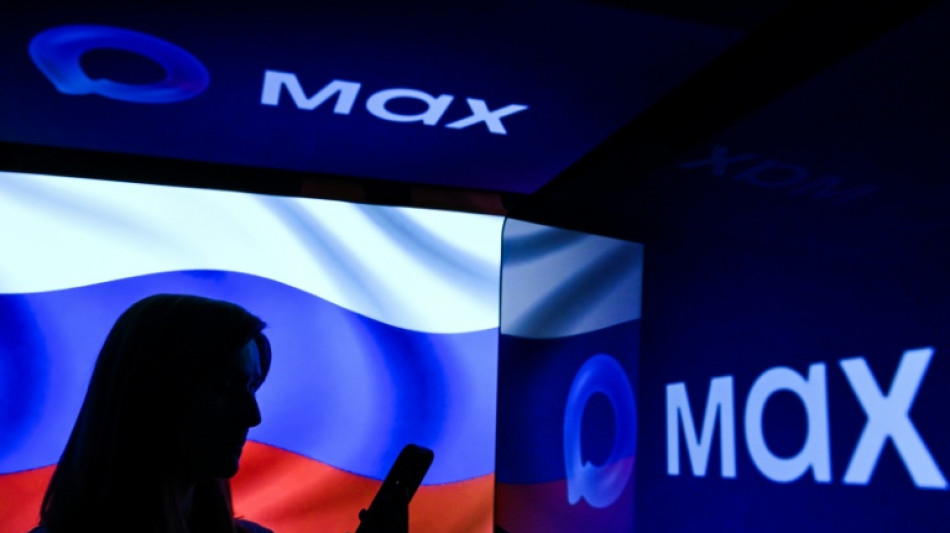
EU sanctions target Russian state-backed messaging app / Photo: Igor IVANKO - AFP/File

 $1.8 Billion Pledged for Biodiversity at COP17 as Monaco Reaffirms Commitment

 Phoenix Symphony Resumes Performances Amid Financial Uncertainty

 Turkish Energy Minister Highlights Qatar as Key Partner for Regional and Global Energy Security

 London Museum Granted 24/7 License Ahead of November Opening

 Dana White Confirms Flight to Washington for Trump Meeting on Press Secretary Role

 Dengue Fever Expands Into High Himalayas as Climate Change Warms Nepal

 IoT Refrigerator Hacks Disrupt Blood Labs and Supermarkets Across Europe and US
The European Union on Monday announced sanctions against the company behind Russia's state-backed messaging app Max, which it said had been used to help clamp down on dissent.
Moscow has for months been pushing Russians to install Max -- a super-app that lacks encryption and that critics say could be used to track people.
The authorities have throttled WhatsApp and Telegram, the country's two largest messaging apps, and forced civil servants, state companies, schools and government agencies to move their communications onto Max.
The EU announced sanctions on Russian media giant VK and its daughter company Communication Platform, which it said ran the Max app under the supervision of the FSB intelligence agency.
"The app comes pre-installed on all mobile devices sold in Russia and includes extensive surveillance features," the EU said.
It added those capabilities had "been used for repressive actions against users criticising Russia's war of aggression against Ukraine or posting other content banned by authorities."
Max has been compared to China's WeChat, combining social media and messaging functions with access to government services, a digital ID card system, banking and payments.
President Vladimir Putin has touted it as a more "secure" platform that meets Russia's demand for "technological sovereignty".
EU chief Ursula von der Leyen has previously accused the Kremlin of imposing a "digital iron curtain" on Russians to hide worsening conditions in the country as sanctions over the Ukraine war bite.
The EU has already imposed wide-ranging sanctions on Russia since its invasion of Ukraine in 2022.
Nogueira--PC

