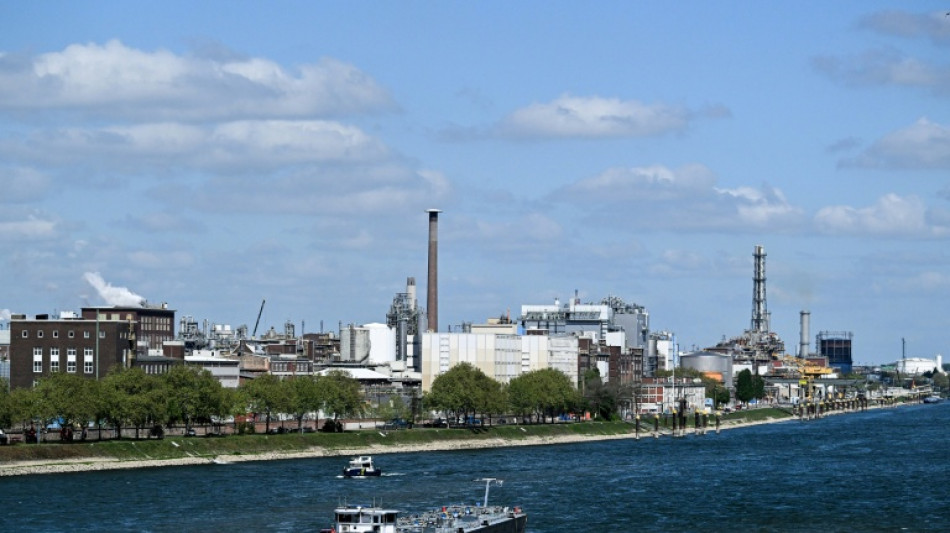
Germany's BASF lifts forecasts but Mideast war casts shadow / Photo: Kirill KUDRYAVTSEV - AFP

 $1.8 Billion Pledged for Biodiversity at COP17 as Monaco Reaffirms Commitment

 Phoenix Symphony Resumes Performances Amid Financial Uncertainty

 Turkish Energy Minister Highlights Qatar as Key Partner for Regional and Global Energy Security

 London Museum Granted 24/7 License Ahead of November Opening

 Dana White Confirms Flight to Washington for Trump Meeting on Press Secretary Role

 Dengue Fever Expands Into High Himalayas as Climate Change Warms Nepal

 IoT Refrigerator Hacks Disrupt Blood Labs and Supermarkets Across Europe and US
German chemical giant BASF raised its earnings forecast for the year Wednesday after hiking prices for some products following the outbreak of the Iran war, but warned of heightened uncertainty.
BASF now expects EBITDA before special items, a key measure of profitability, to come in between 6.9 and 7.7 billion euros ($7.9 to $8.8 billion) in 2026.
The group, one of the world's biggest chemical companies and a key supplier to industries ranging from agriculture to automotive, had previously predicted a range of 6.2 to 7.0 billion euros.
BASF's earnings have been boosted after it hiked prices for some goods in March by up to 30 percent in response to the turmoil unleashed by the US-Israeli war against Iran.
But the firm also warned that the outlook for chemical markets in the second half of 2026 "remains highly uncertain".
"It depends to a considerable degree on the outcome of the negotiations between the United States and Iran, particularly with regard to the access to and use of the Strait of Hormuz for the transport of energy and petrochemical feedstocks from the Middle East," it said in a statement.
A "prolonged closure" would weigh on the global economy, but a "rapid agreement" would provide a boost, it said.
The group's shares were down three percent in Frankfurt in afternoon trade.
In the second quarter, the group's net profit came in at 4.1 billion euros, beating forecasts of around 2.4 billion euros.
The figure was boosted by a one-off gain from finalising the sale of its coatings division to US investment firm Carlye.
Sales in the April-June period jumped 16 percent to 17.2 billion euros, lifted by higher prices and higher volumes.
Facing fierce competition, particularly from China, and weak demand in Europe, the group has been undergoing a major restructuring.
Thousands of jobs are being cut in its historic German headquarters in Ludwigshafen, while earlier this year it opened a major chemical complex in China to serve booming Asian markets.
P.Sousa--PC

