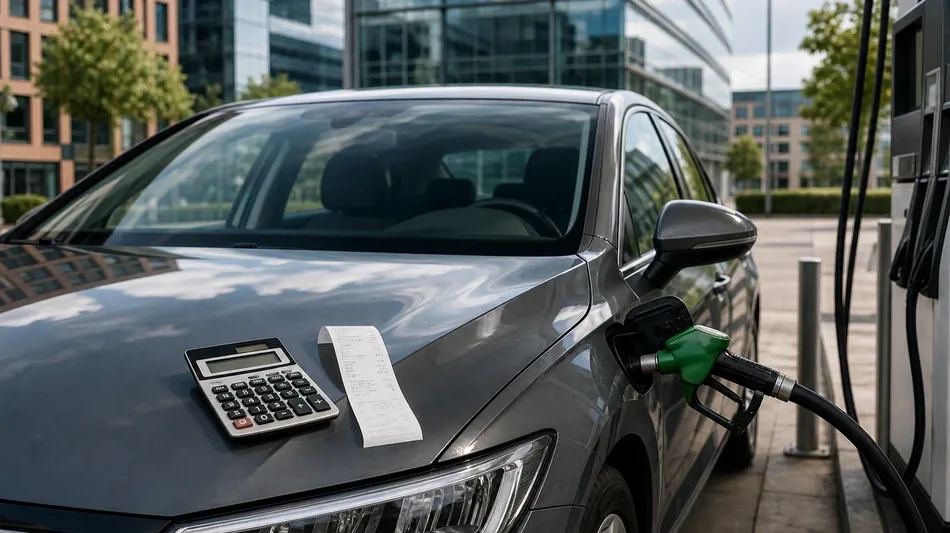
HMRC Revises Company-Car Fuel Rates From September 1

 Municipal Elections: How Service Failure Becomes a Public Health Crisis in South Africa

 Rene Eyre Revisits Autobiographical Performance 'Say A Little Prayer' in London

 UAE's HCT Holds Record Graduation and Announces Major Training Expansion

 NASA Awards $10B Lunar Contract Framework to SpaceX, Blue Origin

 Katy Perry Tells Fans Ex-Husband Russell Brand 'Should Be in Jail' During UK Concert

 South African election results renew debate over identity-based voting

 South African voters report smoother local election but declining IEC trust

 Dolly Parton museum and Nashville hotel open after singer’s death

 George and Amal Clooney attend New York political-comedy reading
New HMRC advisory fuel rates for petrol and diesel company cars come into effect from September 1, with updated mileage reimbursement rates set to remain in force for three months until December 1
Motorists driving company vehicles will experience fresh HM Revenue and Customs ( HMRC ) mileage rates come into effect from Tuesday, September 1. The tax authority is introducing revised advisory fuel rates at the beginning of September, with the new charges set to apply for a three-month period ending on December 1. HMRC refreshes its advisory fuel rates on a quarterly basis, with adjustments happening on set dates throughout the calendar year.
These rates are exclusively applicable to those operating company vehicles and serve to compensate staff for work-related journeys in a company car, or when workers must reimburse fuel costs incurred during personal use. HMRC carries out a quarterly assessment of these rates at the start of March, June, September and December, with the latest adjustments taking effect from Tuesday for the following three months. At present, motorists with petrol company cars featuring engine capacities ranging from 1401cc to 2000cc, or diesel vehicles with engine sizes between 1601cc and 2000cc, face advisory fuel rates of 17p per mile, reports the Express .
Those behind the wheel of more compact vehicles, encompassing petrol cars with engine sizes of 1400cc or below, are charged 14p per mile, while drivers of diesel cars with engine capacities of 1600cc or less pay 15p per mile. Higher advisory fuel rates apply to larger vehicles, with current charges standing at 26p per mile for petrol cars exceeding 2000cc and 23p per mile for diesel vehicles with engines above 2000cc. When setting the updated rates from September 1, HMRC relies on the most recent petrol and diesel pricing data provided by the Department for Energy Security and Net Zero (DESNZ).
Based on HMRC, the 'rates per mile' are rounded to a single decimal place, while the final advisory fuel rates are rounded to the nearest whole penny. Where rates per mile conclude in 0.5, they are rounded down to the nearest whole penny for the advisory fuel rate if the underlying unrounded figure ends in a number below 0.5. Conversely, when the underlying unrounded figure ends in a number above 0.5, it is rounded up to the nearest whole penny.
Reimbursement rates for petrol and diesel company vehicles rose from June onwards to account for climbing global oil and forecourt prices following the eruption of conflict in the Middle East. Between March and June, average petrol prices hit their peak in three and a half years, with the wholesale cost of petrol in May soaring to over 5p above the previous high witnessed during the Iran oil crisis. Advisory fuel rates also went up for petrol, diesel and liquified petroleum gas (LPG) from June to mirror increases in fuel costs since the Iran conflict commenced, though rates for electric vehicles stayed the same, irrespective of whether motorists charge their company car at home or public charging points.
Below are the current advisory fuel rates in their entirety for petrol, diesel, LPG and electric vehicles ahead of the September 1 revision: Engines up to 1400cc or less: 14p per mile (up from 12p) Engines between 1401cc to 2000cc: 17p per mile (up from 14p) Engines over 2000cc: 26p per mile (up from 22p) Engines up to 1600cc or less: 15p per mile (up from 12p) Engines between 1601cc to 2000cc: 17p per mile (up from 13p) Engines over 2000cc: 23p per mile (up from 18p) Engines up to 1400cc or less: 11p per mile (up from 10p) Engines between 1401cc to 2000cc: 13p per mile (up from 12p) Engines over 2000cc: 21p per mile (up from 19p) Home charger: 7p per mile (unchanged) Public charger: 15p per mile (unchanged)
E.Raimundo--PC


