AI Risks to Enter 60–80% of Liability and Cyber Insurance Underwriting by 2028, ScienceSoft Predicts / Photo: © Financewire ( 219623 )

 Turkish Energy Minister Highlights Qatar as Key Partner for Regional and Global Energy Security

 London Museum Granted 24/7 License Ahead of November Opening

 Dana White Confirms Flight to Washington for Trump Meeting on Press Secretary Role

 Dengue Fever Expands Into High Himalayas as Climate Change Warms Nepal

 IoT Refrigerator Hacks Disrupt Blood Labs and Supermarkets Across Europe and US

 Post-election pressures complicate US and Israeli decisions on Iran

 UN members approve talks on treaty protocol against environmental crime

 Family-run West Sussex beach café prepares for first winter season

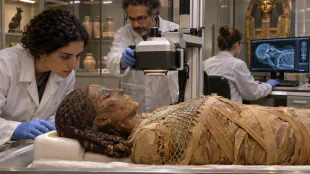 CT scans reveal health and burial clues from Egypt’s Braided Lady mummy

 Oxford faces complaints over lecturer’s classroom attire

 Kyren Wilson and John Higgins reach International Championship snooker final
ScienceSoft has released proprietary research on how midsize US insurers will address artificial intelligence (AI) risks in coverage and underwriting through 2028. Drawing on insurance market data, perspectives from industry experts, and ScienceSoft’s experience working with insurance organizations, the research examines whether growing AI-related losses will lead to a new class of AI-specific insurance.
The research forecasts that by 2028, 60–80% of new policies and renewals in errors and omissions (E&O), directors and officers (D&O), employment practices liability (EPL), and cyber insurance will factor AI risks into underwriting. However, ScienceSoft expects most midsize US insurers to continue covering AI risks primarily through existing lines of business rather than standalone AI policies. The research team anticipates AI-specific insurance to grow rapidly but remain a small niche in the commercial insurance market.
ScienceSoft finds that demand for clearer AI coverage is rising alongside AI-related incidents. The research points to a 262% rise in publicly documented AI incidents from 2022 to 2025 and highlights businesses are showing strong interest in protection against emerging liabilities associated with AI. Insurers take several approaches to making AI treatment more explicit, including affirmative policy wording, AI exclusions, specialized endorsements, and dedicated AI insurance products.
At the same time, the research reveals that much of today’s AI exposure remains covered through traditional insurance products. ScienceSoft concludes that AI-specific insurance is unlikely to become mainstream by 2028, despite the projected strong market growth (from $40 million in 2024 to $4.8 billion by 2032, at a roughly 80% CAGR). Yet even at that pace, the segment is projected to account for only around 0.34% of commercial P&C premiums by 2032. The research team expects unclear liability attribution, accumulation risk, limited loss history, and regulatory uncertainty to continue slowing the development of dedicated AI coverage.
The research findings suggest that underwriting will adapt considerably faster than coverage. ScienceSoft finds that insurers are beginning to assess not only whether businesses use AI but also how AI systems are governed, what level of autonomy they have, and what controls organizations have in place. The research team expects these factors to increasingly influence premiums, coverage conditions, and risk control requirements through 2028.
Beyond its market forecast, the research examines what these changes mean for insurers, brokers, commercial insurance customers, AI software providers, regulators, and individuals. In particular, it explores how insurers may need to adapt underwriting and claims processes, why insureds may increasingly require broker services as AI-specific insurance develops, and why AI vendors may become one of the main customer groups for AI liability insurance.
Read the full report for more insights.
About ScienceSoft
ScienceSoft is a Texas-headquartered AI transformation and software engineering company with 37 years of experience in artificial intelligence and 14 years in insurance IT. The company holds the 2025 Global Award for Insurance Digital Transformation Excellence and the 2026 AI Leader Award for Best AI Solution for Insurance. With long-standing experience across AI and insurance technology, ScienceSoft’s experts bring a practical perspective on how emerging AI risks may affect insurers’ operations, technology, and the broader market.
Press Inquiries Welcome
ScienceSoft’s consultants and financial researchers are available to provide expert commentary on AI-related commercial risks and emerging, technology-enabled approaches to AI risk coverage and underwriting. For media inquiries, please follow the link.
Source article: https://financewire.com/2026/09/10/ai-risks-to-enter-60-80-of-liability-and-cyber-insurance-underwriting-by-2028-sciencesoft-predicts/
H.Silva--PC

