
Trump signs bill authorizing sweeping Russia sanctions / Photo: Oleksandr GIMANOV - AFP

 Turkish Energy Minister Highlights Qatar as Key Partner for Regional and Global Energy Security

 London Museum Granted 24/7 License Ahead of November Opening

 Dana White Confirms Flight to Washington for Trump Meeting on Press Secretary Role

 Dengue Fever Expands Into High Himalayas as Climate Change Warms Nepal

 IoT Refrigerator Hacks Disrupt Blood Labs and Supermarkets Across Europe and US

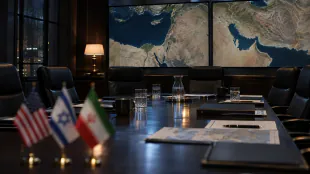 Post-election pressures complicate US and Israeli decisions on Iran

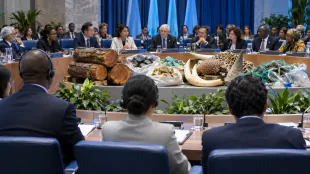 UN members approve talks on treaty protocol against environmental crime

 Family-run West Sussex beach café prepares for first winter season

 CT scans reveal health and burial clues from Egypt’s Braided Lady mummy

 Oxford faces complaints over lecturer’s classroom attire

 Kyren Wilson and John Higgins reach International Championship snooker final
US President Donald Trump signed a bill on Friday authorizing new sanctions designed to pressure Russia over its war in Ukraine, after Congress gave its approval after months of delay.
Washington is pushing to revive a mediated path towards ending the conflict as Moscow intensifies attacks against Ukraine, even though much of its attention -- and munitions -- are focused on the ongoing war against Iran.
The legislation, which US lawmakers approved this week, takes aim at Russia's energy and defense sectors, alongside President Vladimir Putin and other senior officials.
It also targets Moscow's so-called shadow fleet of tankers used to evade Western sanctions, and allows Trump the authority to impose tariffs of up to 100 percent on major buyers of Russian oil and gas.
That could potentially cover China and India, and furthers efforts to cut off revenue financing Moscow's war.
The Republican-led House of Representatives passed the package by a 262-159 vote on Wednesday.
The bill would also target companies and foreign actors supporting Russia's military, and extend sanctions involving Iran.
But the broad powers to impose tariffs sparked an unusual split among Democrats, who largely support Ukraine but have resisted handing Trump wider authority over trade.
- Tougher pressure -
Ukrainian President Volodymyr Zelensky earlier hailed the legislation as "symbolic" and thanked US lawmakers.
The bill is "an extremely powerful tool that can stop this terrorist war and bring Russia to the point where it has to make peace," Zelensky wrote on X.
"Sanctions must be strong so that all efforts for peace -- including our joint diplomatic efforts with the United States, Europe, and our other friends -- can succeed," he added.
India said on Thursday it would continue buying oil "through diversified sourcing."
New Delhi -- which counts Russia as one of its most important strategic partners -- has navigated the energy crisis sparked by the US-Iran conflict in part by turning to Moscow, despite pressure from Western countries.
Supporters of the legislation argued that tougher economic pressure is needed against Moscow, which launched its full-scale invasion of Ukraine in February 2022.
The Congress vote was celebrated by pro-Ukraine activists, who pointed to continuing Russian attacks, including drone strikes on Wednesday on civilian transport in the south that officials in Kyiv said killed five people.
Trump has generally preferred to retain control over sanctions and tariffs rather than have Congress dictate policy, helping delay the measure for more than a year.
The president's signing of the bill comes a week before he is due to meet with his Chinese counterpart Xi Jinping in Washington.
L.E.Campos--PC

