Human development set back 5 years by Covid, other crises: UN report / Photo: Gal ROMA - AFP

 Williams sisters fall in thrilling return to US Open doubles
 Bangladesh measles toll nears grim 1,000-child mark

 Bolivia farmers return to streets over diesel price hikes

 Tetris distances itself from controversial White House 'arcade' games
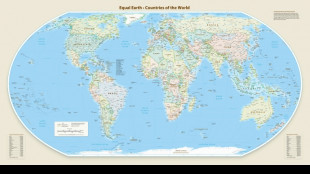 Africa bigger, US smaller - UN adopts new map

 Bad weather will not affect All Blacks, says captain Savea

 Mbappe misses penalty as Parrott lifts Betis past Real Madrid

 PSG still winless in Ligue 1 as Monaco go top

 Defending champion Alcaraz reaches last 16 at US Open

 Lyles ends season before Budapest due to injury flare ups
 US Republicans announce probe into environment groups

 Sabalenka survives despite 'tricky' weed smell at US Open

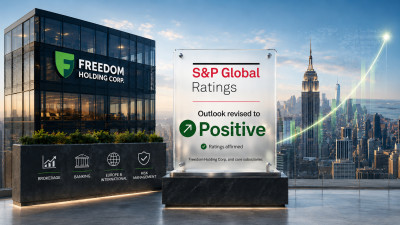 S&P Revises Outlook on Freedom Holding Corp. and Core Subsidiaries to Positive

 Job growth but record-high diesel prices -- Trump's midterms mixed bag

 Women's NBA comissioner Engelbert to retire at season's end

 Luis Enrique extends contract as PSG coach until 2030

 Duplantis pulls out of Diamond League finals

 Defending champ Sabalenka, Pegula lead way into US Open fourth round

 UK hard-right party rallies behind leader after new donation scandal

 Nigeria's Dangote refinery looks to raise $1.6 bn in IPO

 Portugal extends talks to privatise national carrier TAP

 Brazil great Formiga says 2027 World Cup will 'change players' lives'
 Job growth, but surging diesel prices - Trump's midterms mixed bag

 Top seed Sabalenka powers into US Open fourth round

 Russia rights group boss fears post-election crackdown

A United Nations report published Thursday argues that an unprecedented array of crises, chiefly among them Covid-19, has set human progress back five years and fueled a global wave of uncertainty.
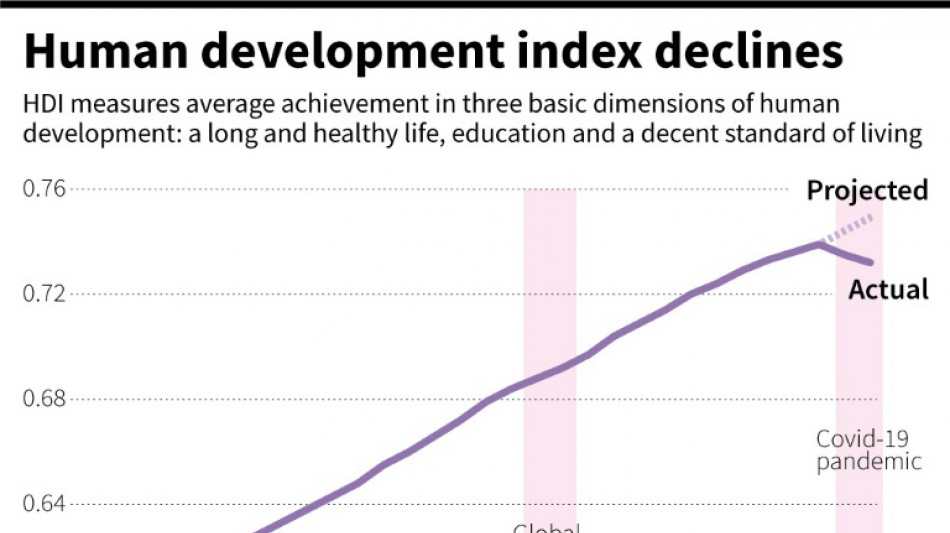
The UN Development Program (UNDP) announced that for the first time since it was created over 30 years ago, the Human Development Index -- a measure of countries' life expectancies, education levels, and standards of living -- has declined for two years straight, in 2020 and 2021.
"It means we die earlier, we are less well educated, our incomes are going down," UNDP chief Achim Steiner told AFP in an interview.
"Just under three parameters, you can get a sense of why so many people are beginning to feel desperate, frustrated, worried about the future," he said.
The Human Development Index has steadily risen for decades, but began sliding in 2020 and continued its fall in 2021, erasing the gains of the preceding five years, the paper says.
Titled "Uncertain times, unsettled lives," the report points to the Covid-19 pandemic as a major driver of the global reversion, but also says that a compounding number of crises -- political, financial and climate-related -- have not allowed time for populations to recover.
"We've had disasters before. We've had conflicts before. But the confluence of what we're facing right now is a major setback to human development," said Steiner.
The setback is truly global, impacting more than 90 percent of countries around the world, according to the study.
Switzerland, Norway and Iceland all retain their spots at the top of the list, while South Sudan, Chad and Niger sit at the bottom.
And while some countries had begun to recover from the pandemic, many others in Latin America, sub-Saharan Africa, South Asia and the Caribbean had not yet turned the corner before a new crisis hit: the war in Ukraine.
- 'Lost trust' -
While the fallout from Russia's invasion of Ukraine on food and energy security has not yet been calculated into this year's index, "without any doubt, the outlook for 2022 is grim," Steiner said.
A large contributor to the Human Development Index's recent decline is a global drop in life expectancy, down from 73 years in 2019 to 71.4 years in 2021.
The report's lead author, Pedro Conceicao, described the decrease as an "unprecedented shock," noting that some countries -- the United States included -- had drops of two years or more.
The report also describes how transformational forces, such as climate change, globalization and political polarization, present humanity with a complex level of uncertainty "never seen in human history," leading to rising feelings of insecurity.
"People have lost trust in one another," said Steiner.
"Never mind in institutions, our neighbor now becomes sometimes the greatest threat, whether literally speaking in the community, or globally by nations, that is paralyzing us."
"We can't continue with the playbook of the last century," Steiner argued, preferring a focus on economic transformation rather than a reliance on growth as a panacea.
"Frankly speaking, the transformations we now need require us to introduce the metrics of the future: low carbon, less inequality, greater sustainability."
The report strikes a positive note as well, saying that improvements could be made by focusing on three main areas: investments in renewable energy and preparation for future pandemics, insurance to absorb shocks, and innovations to strengthen the capacity to cope with future crises.
Steiner also called for a reversal in the recent downward trend of development assistance to the most vulnerable countries.
Continuing down that road would be a grave error, said Steiner, and "underestimates the impact it has on our ability to work together as nations."
V.Fontes--PC