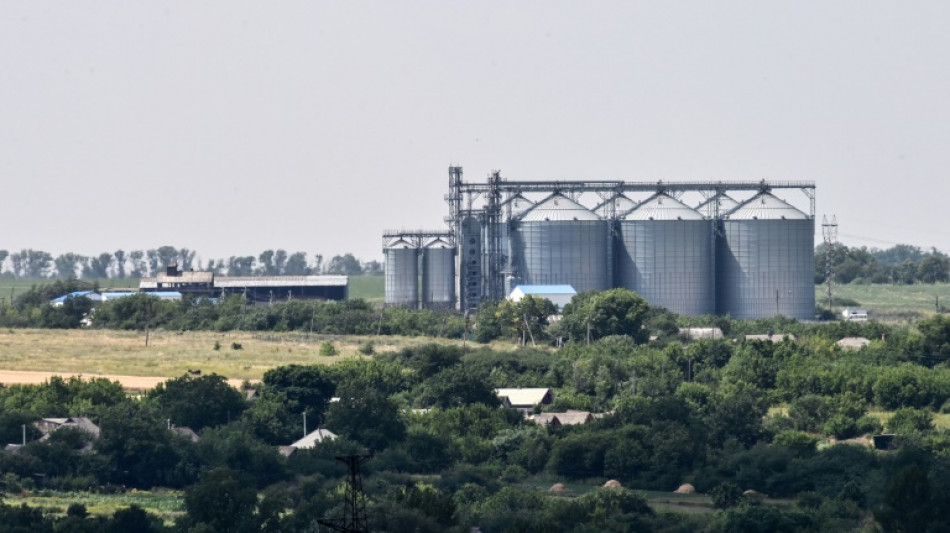
Large part of Ukraine grain storage lost in war: report / Photo: MIGUEL MEDINA - AFP

 Energy bill plan could use HMRC income data to target support

 Business owner earning £6,000 a month tackles £70,000 debt

 Nvidia chief faces inquiry after disclosing affair with suspected Chinese agent

 Comet returns as online electrical marketplace 14 years after collapse

 KUFOS Signs MoU With Old Dominion University to Expand Academic Ties

 Karen Wazen Launches First Standalone Boutiques in Cairo

 Opti Digital Launches NEXA, an AI-Powered Intelligence Layer

Ukraine has lost nearly 15 percent of its grain storage capacity in the war with Russia, threatening its role as a key food supplier to the world, a new report said Thursday.
The US government-backed Conflict Observatory said Russians had seized 6.24 million tonnes' worth of food storage capacity, and that another 2.25 million tonnes of capacity in Ukrainian hands had been destroyed.
In total, the war has removed around 8.5 million of Ukraine's 58-million-tonne storage capacity, threatening the country's future ability to get crucial supplies of wheat, corn and sunflower oil to the world market, according to the report.
As a result, farmers are running out of room to store their output for shipment, which could discourage plantings for the next crop, especially winter wheat, the report said.
"Russia and Russia-aligned forces' damage and seizure of Ukrainian crop storage capacity threatens to turn Ukraine's current agricultural crisis into catastrophe," the report said.
"Millions of people around the world rely on Ukrainian agricultural products and are directly impacted by price spikes in global commodities markets caused by shortages linked to Russia's invasion of Ukraine."
The report, which was drawn up for the Conflict Observatory by the humanitarian research lab at Yale University's School of Public Health and the government's Oak Ridge National Laboratory, used satellite photography and object detection algorithms to assess the damage of storage facilities such as silos and grain elevators across Ukraine.
It noted that even partial damage at a facility can spoil stored crops.
Most of the captured and damaged facilities are in Mykolayiv, Zaporizhzhia and Donetsk Oblast, and the largest parts were near transportation hubs, suggesting they were damaged in deliberately targeted attacks.
"Indiscriminate targeting of crop storage infrastructure can constitute a war crime and a crime against humanity under international law," the report said.
F.Carias--PC
