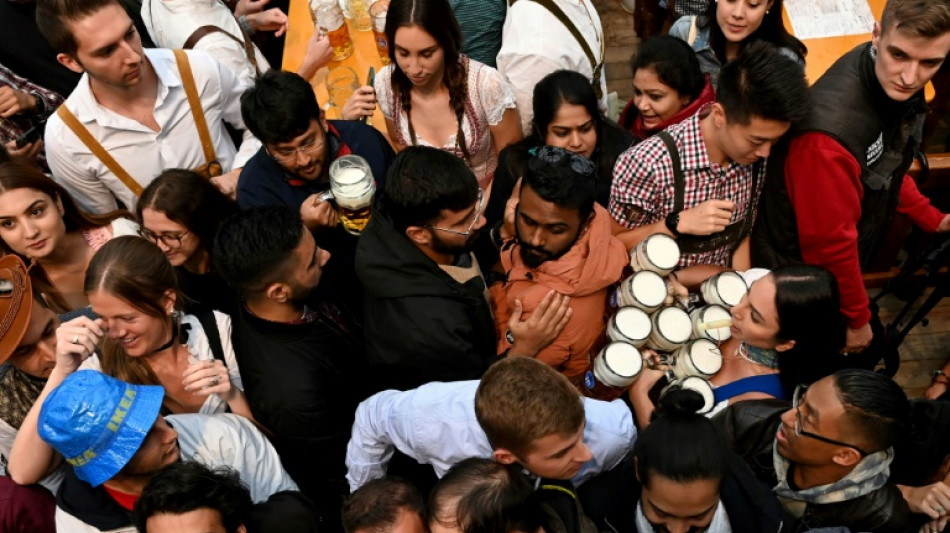
Germany's famed Oktoberfest opens after two-year pandemic hiatus / Photo: CHRISTOF STACHE - AFP/File

 Energy bill plan could use HMRC income data to target support

 Business owner earning £6,000 a month tackles £70,000 debt

 Nvidia chief faces inquiry after disclosing affair with suspected Chinese agent

 Comet returns as online electrical marketplace 14 years after collapse

 KUFOS Signs MoU With Old Dominion University to Expand Academic Ties

 Karen Wazen Launches First Standalone Boutiques in Cairo

 Opti Digital Launches NEXA, an AI-Powered Intelligence Layer

Oktoberfest, Germany's famed beer festival which draws millions of visitors from around the world, opened Saturday in Munich after a two-year pause due to the coronavirus pandemic.
In its 200-year history, the world's biggest folk festival has been cancelled just 26 times, mostly due to World Wars I and II but also twice due to cholera outbreaks.
The last time the festival was held in 2019, the 6.3 million guests drank more than 7.3 million litres of German beer.
Munich mayor Didier Reiter kicked off the ceremony by opening a beer keg with a hammer blow and offering the first tankard to the head of the regional government Markus Soeder.
The festival will run until October 3 with no restrictions and no face masks will be necessary.
Oktoberfest generates about 1.2 billion euros in income. Beer occupies cult status in Germany and especially in Bavaria, where Munich is located.
Germans are among Europe's heaviest beer drinkers with an annual average consumption of 84 litres in 2021.
On Friday, the German Brewers' Federation DBB told the government of the numerous challenges it was facing due to the war in Ukraine, including skyrocketing energy prices and disruptions in the supply chain.
"The government must react... Without speedy state intervention and aid, hundreds of enterprises in the German beverages sector will disappear and thousands will become jobless."
T.Vitorino--PC
