
Yen hits new 24-year low as Bank of Japan keeps loose policy / Photo: Kazuhiro NOGI - AFP

 Edgar Davids art thief misses sentencing after being 'knocked out by luggage'

 Pegula rallies to reach US Open fourth round
 Defending champ Sabalenka leads way into US Open fourth round

 Bayeux Tapestry 'virtually unchanged', UK museum says, after France spots broken threads

 More than 120 killed in Yemen's worst clashes in years: sources

 Germany hunts climate activist suspected of power grid sabotage

 5 EU countries aim to send rejected migrants to 'return hub' by 2027

 Argentina to return Nazi-looted painting to Jewish collector's heir

 Australian Simmons makes NBA comeback with Kings: reports

 Two broken threads on Bayeux Tapestry, no major damage: French minister

 Meloni marks record in power with eye on 2027 elections

 Israel emptying West Bank refugee camps could be crime against humanity: UN

 Portugal extends talks to privatise airline

 CoinRabbit Wins “Best Crypto Lending Platform 2026” Award from International Business Magazine

 Judge declares mistrial in US infanticide case but puts ruling on hold

 US midterms begin with chaos over mail-voting crackdown

 Russell tops second practice to beat Ferrari and Antonelli in Italy

 'I love the players we have', insists Arsenal boss Arteta

 Jury resumes deliberations in case of US mother who killed her three children

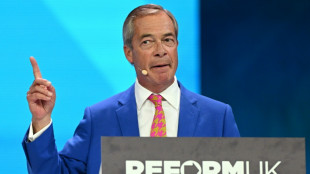 Farage's Reform UK meets under cloud of new donation scandal

 Man Utd in 'good place' despite imperfect squad, says Carrick

 Le Pen party sparks furore with 'turn off tap' to Ukraine call

 Emery says Madjo's time will come after Villa Euro exclusion

 Workers reeling after VW cuts open door to factory closures

 Liquid Mercury Announces Initial Closing of ACQUA1 Offering

The yen sank to a fresh 24-year low against the dollar on Thursday, with the greenback surging to nearly 146 after Japan's central bank left its ultra-loose monetary policy unchanged, a day after the Federal Reserve ramped up interest rates and warned of more to come.
The yen has taken a beating in recent months as the Japanese central bank hews to a decade-old policy intended to achieve sustained two-percent inflation -- a benchmark seen as key to turbocharging the world's third-largest economy.
It has bucked the trend of other major economies, where central banks -- particularly the US Fed -- are hiking rates to tackle inflation.
Prices in Japan are rising, with the consumer price index in August at 2.8 percent, its highest level since 2014, but the central bank views the increases as temporary.
In a statement, it said it would leave its current policy in place, "aiming to achieve the price stability target of two percent, as long as it is necessary".
"It will continue expanding the monetary base until the year-on-year rate of increase in the observed CPI exceeds two percent and stays above the target in a stable manner."
The bank said it sees Japan's economy as on a recovery path, "with the impact of Covid-19 and supply-side constraints waning", though it warned of uncertainty from commodity price increases linked to the war in Ukraine.
The yen's rapid depreciation has caused concern in Japan, pushing up the cost of imported goods for consumers and businesses.
Government officials have insisted they are monitoring the situation and will take appropriate measures if necessary, without detailing what they would be or when they could be implemented.
- 'BoJ has no choice' -
Earlier this month, the central bank reportedly conducted a "rate check", an operation often seen as a precursor to a currency intervention.
The move came shortly after the yen came close to breaching the psychologically significant 145 barrier, and reports of the operation temporarily bolstered the Japanese unit.
It has plunged from around 115 in March, and the BoJ on Thursday repeated that "it is necessary to pay due attention to developments in financial and foreign exchange markets and their impact on Japan's economic activity and prices".
Japan's top currency diplomat Masato Kanda told reporters hours after the bank's decision that the government was on "standby" to intervene when appropriate, local media said.
But he again failed to detail what would trigger an intervention, and his pronouncements did little to prop up the yen, which continued to hover near the 145 level.
He also confirmed that there had been no intervention yet despite the dollar retreating briefly to around 143.50 yen after breaking the 145 mark. The greenback the climbed again to as high as 145.90 yen.
Hours after the BoJ's policy announcement, Governor Haruhiko Kuroda, whose term expires next year, defended sticking with the long-standing programme.
"We haven't been and will not be targeting certain levels of foreign exchange," he told reporters.
"It is desirable that forex rates reflect economic and financial fundamentals, however the recent rapid depreciation of the yen is not that and is negative for the economy," he added.
But he noted that the dollar has gained against most major currencies.
There is little expectation the BoJ will shift course, wrote Shigeto Nagai, head of Japan Economics at Oxford Economics, in a note.
"Although foreign investors might continue challenging the yen and (Japanese government bond) yields until the Fed's rate tightening cycle peaks, we believe that the BoJ has no choice but to stick to the current... policy."
A.S.Diogo--PC