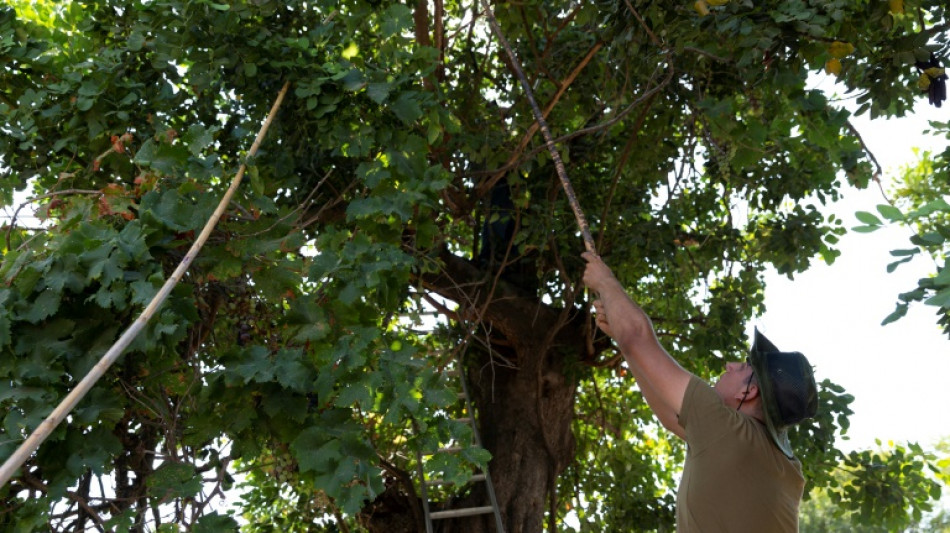
Cypriot carob growers harvest their 'black gold' / Photo: Lisa GOLDEN - AFP

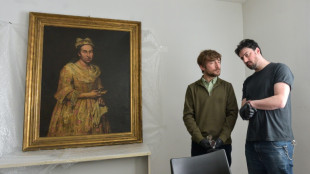
 Edgar Davids art thief misses sentencing after being 'knocked out by luggage'

 Pegula rallies to reach US Open fourth round

 Defending champ Sabalenka leads way into US Open fourth round

 Bayeux Tapestry 'virtually unchanged', UK museum says, after France spots broken threads

 More than 120 killed in Yemen's worst clashes in years: sources

 Germany hunts climate activist suspected of power grid sabotage

 5 EU countries aim to send rejected migrants to 'return hub' by 2027

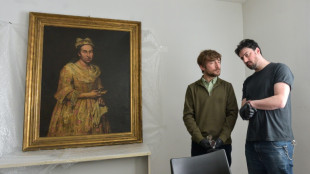 Argentina to return Nazi-looted painting to Jewish collector's heir
 Australian Simmons makes NBA comeback with Kings: reports

 Two broken threads on Bayeux Tapestry, no major damage: French minister

 Meloni marks record in power with eye on 2027 elections
 Israel emptying West Bank refugee camps could be crime against humanity: UN

 Portugal extends talks to privatise airline

 CoinRabbit Wins “Best Crypto Lending Platform 2026” Award from International Business Magazine

 Judge declares mistrial in US infanticide case but puts ruling on hold

 US midterms begin with chaos over mail-voting crackdown
 Russell tops second practice to beat Ferrari and Antonelli in Italy

 'I love the players we have', insists Arsenal boss Arteta

 Jury resumes deliberations in case of US mother who killed her three children

 Farage's Reform UK meets under cloud of new donation scandal
 Man Utd in 'good place' despite imperfect squad, says Carrick

 Le Pen party sparks furore with 'turn off tap' to Ukraine call

 Emery says Madjo's time will come after Villa Euro exclusion

 Workers reeling after VW cuts open door to factory closures

 Liquid Mercury Announces Initial Closing of ACQUA1 Offering

Christos Charalambous might be 79 but he is several metres up a carob tree, harvesting a fruit known as "black gold" on the island of Cyprus as his grandson works below.
For some, carob has long been relegated to the status of a less appealing substitute for chocolate.
But in Cyprus, its thick brown pods are also eaten raw or ground up to make sweet syrups, spreads, toffees, drinks and as a sweetener, while its seeds have industrial uses.
"It's one of the fruits that you use up entirely," Charalambous said from his field in Asgata.
Branches rustle and sway as he and his grandson, Theophanis Christou, 20, hit the pods loose with long sticks, sending carob raining to the ground.
The pair have been working for about three weeks in the late summer heat, collecting about three tonnes of carob by early September.
Christou, a shipping and finance student, is keen to join in his grandfather's labours.
It's "hard to do", Christou said, but it's "work that can keep the family together".
- 'Extra income' -
In the nearby coastal village Zygi, individual growers bring bulging sacks of pods into a carob mill.
Zygi "started as a carob village" and its name refers to the weigh scale used for the fruit, said community representative Christos Konstantinou.
In Zygi and elsewhere across the eastern Mediterranean island where the carob tree is native, disused or repurposed carob facilities are reminders of the industry's heyday last century.
"Carob has been known as the black gold of Cyprus because many farmers used to have carob... it was the main occupation of the villagers," said Stavros Glafkou Charalambous, from the Cooperative Carob Marketing Federation.
The federation, which runs the Zygi mill and other facilities, said it works with around 1,500-2,000 small producers, most of them harvesting carob for "extra income".
George Pattichis, 75, from Vavla, said he has been coming to the Zygi mill for more than half a century.
The former forester said some of his carob trees were planted by his grandfather.
"I am the last generation -- my children have other jobs," said Pattichis.
- 'Increasing again' -
In 2019, when the growers' price was around 35 euro cents (now 34 US cents) per kilogram, carob represented less than 1.5 percent of the Republic of Cyprus's crop production value, according to statistics provided by the agriculture ministry.
This year, carob farmers told AFP the price was nearing one euro per kilogram (2.2 pounds).
"I will sell to whoever offers me the best price," said Anastasis Daniel, 65, in Choirokoitia village.
Bags of harvested carob were stacked by his house ready for the mill, though he said he would also keep some for animal feed.
Global demand for the seeds' locust bean gum (LBG) -- used as a food thickening agent -- drives the carob price, said Marios Kyriacou from Cyprus's Agricultural Research Institute.
Cypriot carob pod and seed exports were worth almost eight million euros last year, according to the official statistics. Egypt was the biggest taker of the pods fit for human consumption, and Italy of the seeds.
Cyprus had been ranked as the world's third-biggest producer of carob in the 1960s, Agriculture Minister Costas Kadis told AFP.
Production then declined, he said, "but now it is increasing again".
- 'Drought-resistant' -
Carob "is very important for Cyprus because it needs little insecticides, fertilisers and water -- and this is important when we talk about climate change," the minister said.
In late 2017, a University of Cyprus project planted almost 5,000 carob saplings and subsequently gave around 28,500 more to interested farmers, project scientist Chrysi Tomouzou told AFP.
Researcher Kyriacou said carob was "a very drought-resistant tree species" that has been used as a crop in Cyprus "for at least the past 3,000 years".
"The carob pod is rich in sugars" and dietary fibres, Kyriacou said. It also contains a "rare type of sugar-alcohol" that is "recognised as an anti-diabetic agent", he said, noting this was "of interest for further clinical research".
Kyriacou and his team have been studying genetic and other variations in Cypriot carob.
They say their work could be crucial if Cyprus decides to ramp up production and processing.
But for now, both often remain a low-scale affair.
At a festival in Anogyra, where stalls sold everything from carob sweets to ice cream, Andreas Andreou from Polyxenis Carob Products said carob syrup was his family firm's most popular product.
Despoula Georgiou, 61, demonstrated how to make pasteli -- a kind of carob toffee that her village is known for.
It's "only (made with) carob juice, no sugar at all", she said.
"I've been doing it for 50 years," she said. "I learned it from my mother and aunt."
T.Batista--PC