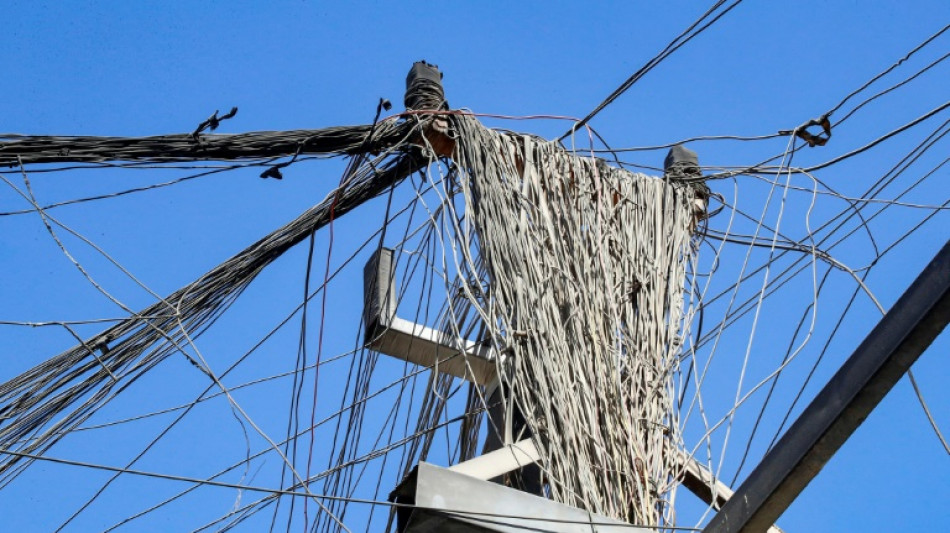
Energy crisis feared by Europe long a reality in Iraq / Photo: AHMAD AL-RUBAYE - AFP

 Irish heroine Taylor eyes fairytale finish to trailblazing ring career
 Weather and war push up food prices in August: FAO

 'No longer safe': Nepal flood survivors left landless
 Stocks mixed before US jobs data, oil dips
 Optimised urinals and buried underwear at 2026 Ig Nobels

 German factory orders rise again in latest recovery sign
 Nepal's 'Himalayan tsunami': what we know

 SPAYZ.io brings Africa’s payment growth story to Forex Expo Dubai 2026

 Zelensky slams his security services for 'unacceptable' shootout

 Farage's Reform UK meets as new donation scandal hits
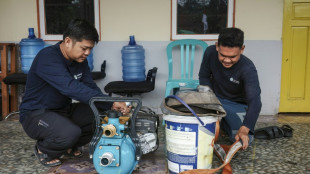 Volunteers fight uphill battle against Indonesian fires

 PU Prime Launches Australian Operations under ASIC Licence
 Night-owl Zverev goes distance to advance as upsets rock US Open

 Marathon man Zverev goes distance again to reach US Open third round

 US study tests psilocybin to fight cancer side effects

 Italy's Meloni throws party to celebrate record in power
 After heatwaves, will EU pivot back to the climate fight?

 South Korean football referee faces hearing over 'period' insult

 Toulouse eye Top 14 history after 'difficult' summer

 Springboks and All Blacks seek series lead after war of words

 Bundesliga brings the band back together in Premier League's shadow

 Asian stocks rally as traders pare rate bets ahead of jobs data
 War-bruised Myanmar finds relief in bareknuckle bloodsport

 Gauff downs Badosa to reach US Open third round
 New Zealand approves use of party drug MDMA to treat trauma

Europe may fear an energy crisis over the coming winter, but for Iraqis an unstable power supply and frequent blackouts have been a reality during decades of war and turmoil.
The Middle Eastern country is rich in oil, but endemic corruption and devastating conflict have taken a heavy toll on its infrastructure and forced most of its 42 million people to adapt.
The noise of privately owned generators can be heard all over the country as households and businesses try to make up for supply shortfalls from the national electricity company.
"Without generators, Iraq would go completely dark," Mohammed Jabr, a retired public servant, told AFP in his yard in Sadr City, a working-class district of the capital Baghdad.
Ensuring a stable power supply, he said, requires resourcefulness and money when the national grid can go down for four to 10 hours a day in peak summer consumption, according to electricity ministry data.
Generators "provide the electricity we need for the television, fridge, air cooler", said the 62-year-old former accountant.
He pays $50 a month in generator subscription fees -- but even that isn't always enough to keep a whole house running.
"A client may have to turn the fridge off to keep the air conditioner on," explained Khaled al-Shablawi, who has worked for a generator service for 13 years.
- 'Plunged into darkness' -
Soaring energy prices fuelled by Russia's war in Ukraine have forced a new reality upon European nations, where people are asked to limit the electricity they use for heating, lighting and cooking.
Some cities keep street lights on for shorter lengths of time, and in Paris, the lights illuminating the Eiffel Tower are switched off an hour earlier now to save energy.
But to Jabr, such a step "is normal".
"When there's a technical problem, the whole area could be left without power for a day or two before they fix it," he said.
Jabr recalled how immediately after the 2003 US-led invasion that toppled longtime dictator Saddam Hussein, "houses were plunged into darkness" after fighting destroyed infrastructure.
"There was very little electricity, only two or three hours" a day, he said. "People had their own generators. They would buy fuel and it would last a day or two."
In Iraq's long summer months, when temperatures can peak around 50 degrees Celsius (122 degrees Fahrenheit) and air-conditioner use surges, overloaded generator providers hike up prices.
Some regions were deprived of power altogether in the summer of 2021, triggering sporadic street protests by frustrated residents.
- Europe 'destabilised' -
Despite its oil wealth, the country relies heavily on energy supply from neighbouring Iran.
With its mighty Tigris and Euphrates rivers, Iraq has some hydro-electric power but no nuclear plants, and is just beginning to explore renewable energy options such as solar panels.
In a bid to overcome the common blackouts, Baghdad has nonetheless moved to increase domestic power production.
It now generates more than 24,000 megawatts per day, said electricity ministry spokesman Ahmed Moussa.
To secure stable nationwide power supply, however, 32,000 megawatts would be needed daily, he said.
For now, the national grid provides most regions with 14-20 hours of electricity a day in summer, Moussa added.
In one Sadr City avenue, private generators line the street, each feeding electricity to some 300 homes and a similar number of shops.
Ali al-Aaraji, who owns a private college for around 300 students, decried "astronomical" generator costs, which he estimated at $600 a month.
"Electricity is a constant problem for Iraqis," said Aaraji, 58, pinning the blame on "the American occupation" of years past.
"Iraqis have managed to put up with the situation for three decades," he added, questioning how Europe would cope with its looming power problem.
"Energy is the source of economic prosperity," Aaraji said.
"Europe is now destabilised. It's going to impact their economy, industry and commerce. They'll go backwards."
P.Sousa--PC