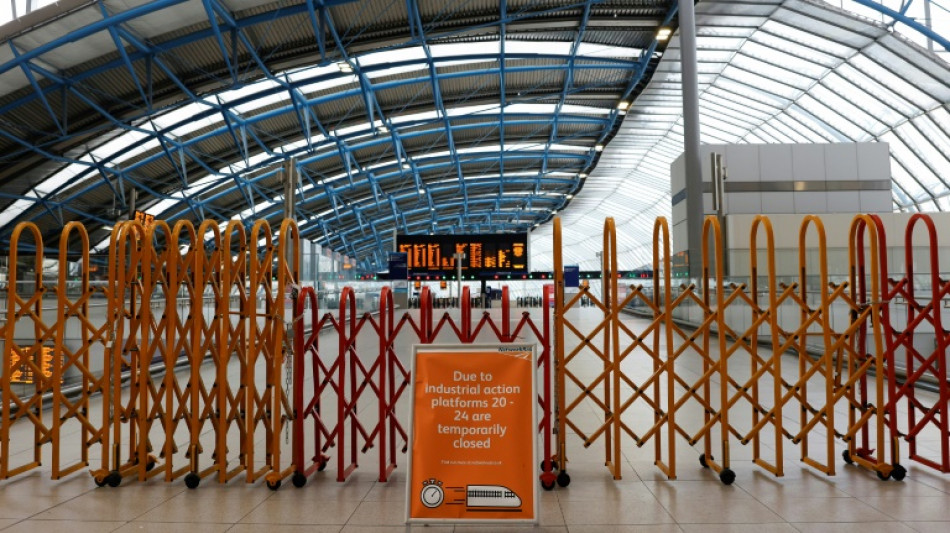
UK rail workers stage latest strike over pay / Photo: CARLOS JASSO - AFP

 Physicians Urge Arizona to Ban Medical Gag Clauses and Enable Private Lawsuits

 New Campaign Highlights Knowledge Gaps on Carbon Monoxide Safety Among Americans

 GoodData.AI Launches the Agentic Serving Plane, a New Category of Enterprise Data Infrastructure for AI Agents

 US Government Questions Effectiveness of Waymo’s School Bus Software Fix

 Panthers expected to begin 2027 NRL season away from new stadium

 Sweet As app launches restaurant discovery platform

 MLA seeks inquiry into reported sectarian gestures on Ormeau Road

 Louise O’Reilly attacks Simon Harris over unemployment remarks

 Virginia overwhelms Arkansas 91-72 behind balanced scoring

 Second major storm brings destructive winds and outages to British Columbia
 Godzilla Minus Zero leads North American box office with $31.6m

Train travel in Britain was disrupted on Wednesday by the latest in a string of strikes by railway workers over wages.
Picket lines appeared at stations including London's Kings Cross and Euston as workers from the Aslef and TSSA trade unions and thousands of drivers walked out.
The strike affected around a dozen rail companies.
Railway workers are demanding wage increases to keep pace with decades-high inflation amid a cost-of-living crisis.
The sector has spearheaded a wave of industrial action in recent months.
Tens of thousands of staff in various industries -- from the postal and legal systems to ports and telecommunications -- have also gone on strike across Britain since the summer.
Mick Whelan, general secretary of Aslef, which represents train drivers, said it the first railway dispute he had been involved in where transport unions had "the approval of the public".
"That's because it is barristers, it is teachers, it is lecturers, it is everybody across all sectors all feeling the pinch at the same time and this can only be down to the government," he said on a picket line at Euston.
RMT union general secretary Mick Lynch added that negotiations with the rail companies were continuing but had not produced anything "tangible" so far.
He pledged more strike action over the next six months if a settlement between transport unions and rail companies was not reached.
Railway workers from four unions -- RMT, Unite, Aslef and TSSA -- all walked out last Saturday resulting in only 11 percent of trains running nationwide.
Some parts of the country were left without any services.
The strikes come as workers face a huge hike in energy prices, rising interest rates and food costs. They have been the sector's biggest stoppages in decades with more expected this coming Saturday.
Prime Minister Liz Truss's government on Wednesday vowed to take on "militant unions", characterising them as part of an "anti-growth coalition" holding the country back.
Nogueira--PC

