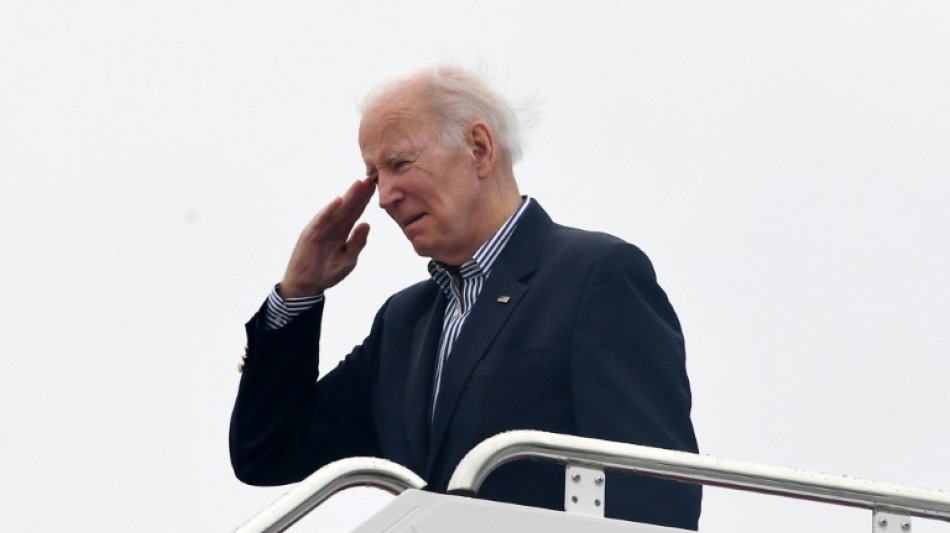
OPEC+ delivers Biden diplomatic slap with output cut / Photo: OLIVIER DOULIERY - AFP

 Physicians Urge Arizona to Ban Medical Gag Clauses and Enable Private Lawsuits

 New Campaign Highlights Knowledge Gaps on Carbon Monoxide Safety Among Americans

 GoodData.AI Launches the Agentic Serving Plane, a New Category of Enterprise Data Infrastructure for AI Agents

 US Government Questions Effectiveness of Waymo’s School Bus Software Fix

 Panthers expected to begin 2027 NRL season away from new stadium

 Sweet As app launches restaurant discovery platform

 MLA seeks inquiry into reported sectarian gestures on Ormeau Road

 Louise O’Reilly attacks Simon Harris over unemployment remarks

 Virginia overwhelms Arkansas 91-72 behind balanced scoring

 Second major storm brings destructive winds and outages to British Columbia

 Godzilla Minus Zero leads North American box office with $31.6m

President Joe Biden got a diplomatic slap in the face Wednesday with the OPEC+ cartel's decision to ignore both his efforts at isolating Russia and desperate attempts to hold down fuel prices ahead of midterm elections.
"The president is disappointed by the shortsighted decision by OPEC+," National Security Advisor Jake Sullivan and top economic advisor Brian Deese said in a statement.
That sounded like understatement.
Biden has been trying for months to walk an economic and geopolitical tightrope in which he lowers fuel costs for Americans while simultaneously cutting major energy exporter Russia from revenues needed to finance its war on Ukraine.
And with just five weeks before midterm elections where the Democrats hope to cling on to control of Congress, Biden was having some success. Average gasoline costs have fallen by more than $1 a gallon from politically damaging highs earlier this year, while the US-led Western coalition confronting Russia remains solid going into winter.
So the decision by Saudi-led OPEC and a set of Russian-dominated allies, collectively known as OPEC+, was a shock.
Saudi Arabia is one of the closest US allies and the biggest single purchaser of top-end US weaponry. Biden himself spent considerable political capital in July by visiting the kingdom and meeting with de facto leader Crown Prince Mohammed bin Salman, the man US intelligence has identified as approving the 2018 murder of Washington Post journalist Jamal Khashoggi.
White House Press Secretary Karine Jean-Pierre reflected the administration's frustration, saying "it's clear that OPEC+ is aligning with Russia with today's announcement."
Senator Chris Murphy, an ally of Biden, was blunter.
"I thought the whole point of selling arms to the Gulf States despite their human rights abuses, nonsensical Yemen War, working against US interests in Libya, Sudan etc, was that when an international crisis came, the Gulf could choose America over Russia/China," he tweeted.
- Price rise looms -
Higher fuel prices have already inflicted severe damage on Biden's standing this year. Unlike other areas of inflation, fuel prices are literally emblazoned on large signs at gas stations, while motorists in many cases have no option other than to pay up.
As president, however, there are limits on what Biden can do to fight the trend.
The White House said Biden was ordering another dip into the country's Strategic Petroleum Reserve, with 10 million barrels set to be put on the market next month in an attempt to dampen prices rises.
However, those reserves are fast emptying out after record withdrawals ordered by the administration, starting back in March. The reserves are now at their lowest level since July 1984 and it is not clear when the administration plans to purchase a refill.
The next releases will continue "as appropriate to protect American consumers and promote energy security, and (Biden) is directing the secretary of energy to explore any additional responsible actions to continue increasing domestic production in the immediate term," a White House statement said.
In addition, the administration will "consult with Congress on additional tools and authorities to reduce OPEC's control over energy prices," the statement said.
But Andy Lipow, from Lipow Oil Associates, said Wednesday's decision by OPEC+ demonstrates "the waning influence of the US on OPEC to maintain an adequate supply of oil."
"The US can't release strategic petroleum reserves forever, and eventually it will run out and OPEC knows it," he said.
The only solution, in his view, is to get "more oil out of the ground."
That, however, runs against Biden's climate crisis priorities and a major effort to move the country away from oil and gas.
"Today's announcement is a reminder of why it is so critical that the United States reduce its reliance on foreign sources of fossil fuels," the White House said.
A.Silveira--PC