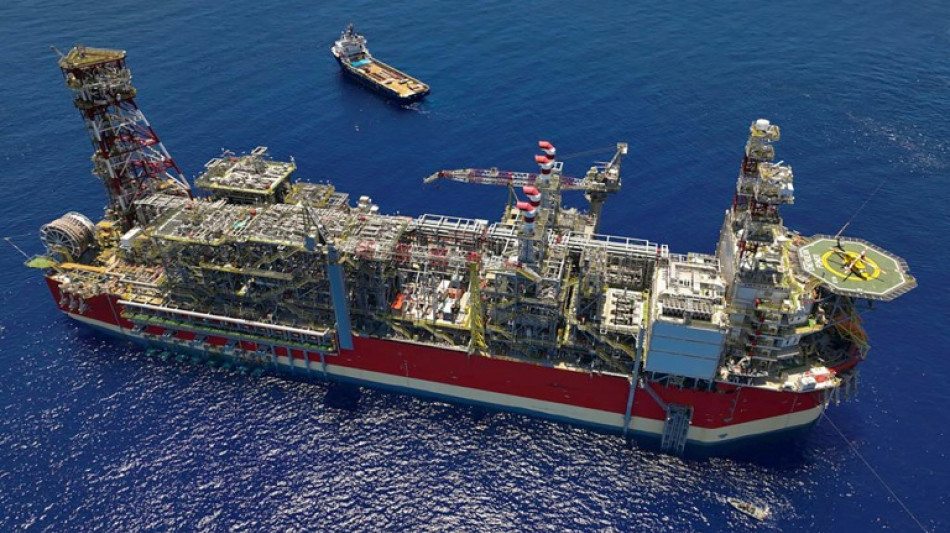
Energy firm starts tests at sensitive Israel-Lebanon border gas field / Photo: - - Energean Plc/AFP

 Physicians Urge Arizona to Ban Medical Gag Clauses and Enable Private Lawsuits

 New Campaign Highlights Knowledge Gaps on Carbon Monoxide Safety Among Americans

 GoodData.AI Launches the Agentic Serving Plane, a New Category of Enterprise Data Infrastructure for AI Agents

 US Government Questions Effectiveness of Waymo’s School Bus Software Fix

 Panthers expected to begin 2027 NRL season away from new stadium

 Sweet As app launches restaurant discovery platform

 MLA seeks inquiry into reported sectarian gestures on Ormeau Road

 Louise O’Reilly attacks Simon Harris over unemployment remarks

 Virginia overwhelms Arkansas 91-72 behind balanced scoring

 Second major storm brings destructive winds and outages to British Columbia

 Godzilla Minus Zero leads North American box office with $31.6m

London-listed firm Energean on Sunday began testing pipes between Israel and the Karish offshore gas field, a key step towards production from the eastern Mediterranean site, a source of friction between neighbours Israel and Lebanon.
Israel has maintained that Karish falls entirely within its territory and is not a subject of negotiation at ongoing, US-mediated maritime border talks with Lebanon. The two countries remain technically at war.
Lebanon has reportedly made claims to parts of Karish and the Iran-backed Shiite group Hezbollah, which holds huge influence in Lebanon, has previously threatened attacks if Israel began production from the field.
In a statement Sunday, Energean said that "following approval received from the Israeli Ministry of Energy to start certain testing procedures, the flow of gas from onshore to the FPSO has commenced", referring to the Karish floating production storage offloading facility.
The tests, set to take a number of weeks, were "an important step" towards extracting gas from the Karish, Energean said.
Lebanon and Israel have engaged in on-off indirect talks since 2020 to delineate their Mediterranean border, which could allow both countries to boost offshore natural gas exploration.
A draft agreement floated by US envoy Amos Hochstein aims to settle competing claims over offshore gas fields and was delivered to Lebanese and Israeli officials in recent days.
Israel had welcomed the terms set out by Hochstein and said they would be subjected to legal review, but gave no indication it sought substantive changes.
Lebanon presented its response to Washington's proposal on Tuesday.
Israel said two days later that it planned to reject Beirut's proposed amendment, even if that jeopardises a possible agreement.
Israel reiterated this week that production at Karish would begin as soon as possible, regardless of Lebanon's demands.
On Saturday, the French foreign ministry said Paris was "actively contributing to the American mediation".
Under the terms of the US draft agreement leaked to the press, all of Karish would fall under Israeli control, while Qana, another potential gas field, would be divided but its exploitation would be under Lebanon's control.
French company Total would be licensed to search for gas in the Qana field, and Israel would receive a share of future revenue.
S.Pimentel--PC

