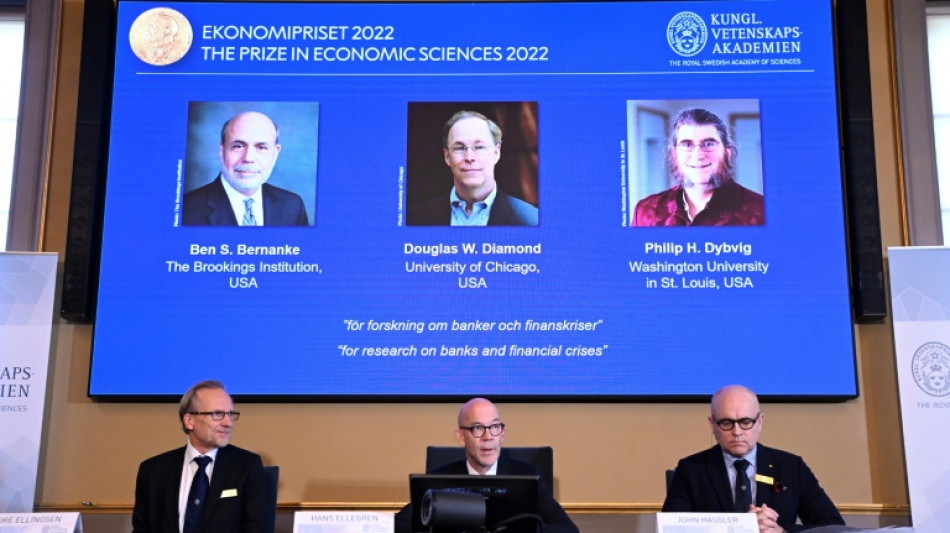
US trio, including ex-Fed chief Bernanke, win economics Nobel / Photo: Anders WIKLUND - TT NEWS AGENCY/AFP

 India hopes 'unique idea' will save athletes from cabin fever

 UK asserts 'unshakeable' Falklands commitment after Milei presses claim

 How a Dostoevsky novella took TikTok by storm

 Zverev goes the distance again to reach US Open third round

 German AfD's love for Simson mopeds dismays Jewish family behind brand
 Two trapped tunnel workers rescued in Nepal 'miracle'
 Ex-Pakistan coach Gillespie tells Javed 'look in the mirror' over sackings

 Monfils falls to Tien in US Open in Grand Slam farewell

 Arsenal brace for Chelsea test as Spurs seek spark
 Efficient Rybakina reaches US Open third round

 Taiwan boxer Lin considered 'graceful exit' after Paris Games gold
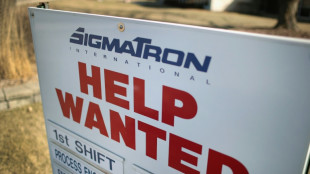
 'I miss my home': Cambodians displaced by conflict start over

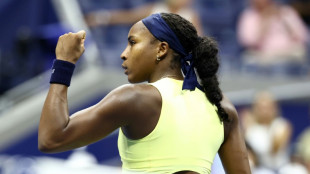
 Ailing Auger-Aliassime falls at US Open as Swiatek, Osaka and Gauff advance
 Tesla launches self-driving 'Cybercab' in Texas
 'Wallace & Gromit' creators turn 50 with spook-tacular Shaun yarn
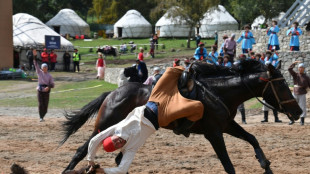
 New York's Muslims reclaim their city after 9/11 backlash
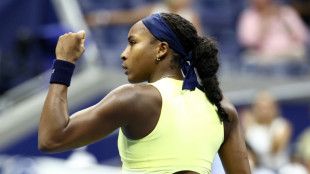
 Premier League transfer windfall a lifeline for ailing French clubs

 Chile protesters see shades of Pinochet in new security plan
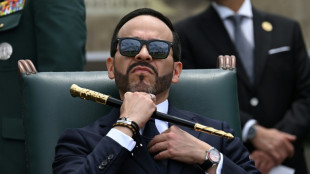
 Carreras reverts to fullback as Argentina change four for Australia Test

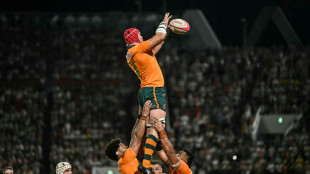 Wilson back to lead Australia as Kiss rotates team for Argentina
 Yen surges on new intervention talk, US stocks rally
 Japan's Ueda fires Lille top of Ligue 1 on debut

 Arsenal chief executive reveals 'dynasty' ambition
 Spanish PM says no 'solid proof' Morocco planned migrant rush

 Iran war is not a war, US VP Vance says

A US trio on Monday won the Nobel Economics Prize for research on banking's role in the economy, especially on the importance of avoiding collapses during financial crises.
Ben Bernanke, the former head of the US Federal Reserve, together with Douglas Diamond and Philip Dybvig were honoured for having "significantly improved our understanding of the role of banks in the economy, particularly during financial crises, as well as how to regulate financial markets," the jury said.
"Their analyses have been of great practical importance in regulating financial markets and dealing with financial crises," it added.
Bernanke, 68, the chair of the US Federal Reserve between 2006 and 2014, was highlighted for his analysis of "the worst economic crisis in modern history" -- the Great Depression in the 1930s.
Diamond, a professor at the University of Chicago born in 1953, and Dybvig, 67, a professor at Washington University in St. Louis, were in turn honoured for showing how "banks offer an optimal solution" for channelling savings to investments by acting as an intermediary.
The pair also showed how these institutions were vulnerable to so called banks runs.
"If a large number of savers simultaneously run to the bank to withdraw their money, the rumour may become a self-fulfilling prophecy –- a bank run occurs and the bank collapses," the Nobel Committee said.
The committee added that this dangerous dynamic can be avoided by governments providing deposit insurance and giving banks a life-line by becoming a lender of last resort.
"The laureates' insights have improved our ability to avoid both serious crises and expensive bailouts," Tore Ellingsen, chair of the Committee for the Prize in Economic Sciences, said.
"In a nutshell, the theory says that banks can be tremendously useful but they are only guaranteed to be stable if they are properly regulated", he added.
Of all the Nobels, the economics prize has the fewest number of female winners, just two since it was first awarded in 1969 -- Elinor Ostrom in 2009 and Esther Duflo in 2019.
- 'False Nobel' -
The economics prize, set up by the Swedish central bank, was the only award absent from the original five created by scientist Alfred Nobel, sometimes earning it the moniker of "false Nobel".
But like the other prizes it comes with a medal and an award sum of 10 million Swedish kronor (around $900,000).
The winners will receive the prize from King Carl XVI Gustaf at a formal ceremony in Stockholm on December 10, the anniversary of the 1896 death of scientist Alfred Nobel who created the prizes in his last will and testament.
Last year, the honour went jointly to Canada's David Card, Israeli-American Joshua Angrist and Dutch-American Guido Imbens for research that "revolutionised" empirical work in their field and brought better understanding of how labour markets work.
On Thursday the literature nod went to French author Annie Ernaux.
The Medicine Prize kicked off the season, going to Swedish paleogeneticist Svante Paabo, who discovered Neanderthal DNA and the previously unknown Denisova hominin.
The Physics Prize then honoured Alain Aspect of France, Austria's Anton Zeilinger and John Clauser of the United States for their discoveries in the field of quantum entanglement.
Another trio, Carolyn Bertozzi and Barry Sharpless of the United States together with Morten Meldal of Denmark won the Chemistry Prize, for their work on so called click chemistry.
L.Carrico--PC