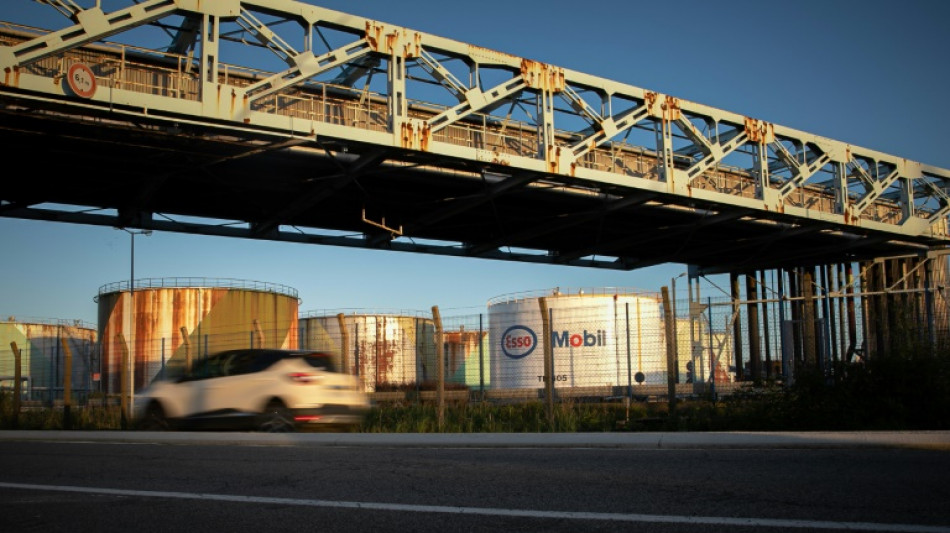
Striking French refinery workers defy government threats / Photo: Lou BENOIST - AFP

 Physicians Urge Arizona to Ban Medical Gag Clauses and Enable Private Lawsuits

 New Campaign Highlights Knowledge Gaps on Carbon Monoxide Safety Among Americans

 GoodData.AI Launches the Agentic Serving Plane, a New Category of Enterprise Data Infrastructure for AI Agents

 US Government Questions Effectiveness of Waymo’s School Bus Software Fix

 Panthers expected to begin 2027 NRL season away from new stadium

 Sweet As app launches restaurant discovery platform

 MLA seeks inquiry into reported sectarian gestures on Ormeau Road

 Louise O’Reilly attacks Simon Harris over unemployment remarks

 Virginia overwhelms Arkansas 91-72 behind balanced scoring

 Second major storm brings destructive winds and outages to British Columbia

 Godzilla Minus Zero leads North American box office with $31.6m

Striking French fuel refinery workers voted Wednesday to continue their stoppages and blockades, defying the government which began ordering some of them back to work in a bid to get supplies flowing.
Industrial action to demand pay rises has paralysed six out of seven fuel refineries in France, leading to shortages of petrol and diesel exacerbated by panic-buying from drivers.
Having previously threatened to use emergency powers enabling them to order essential workers back to the job, the government announced Wednesday that it would put them into use as the strikes entered their third week.
Personnel at a fuel depot at the Gravenchon-Port-Jerome refinery in northwest France, owned by US giant ExxonMobil, would be the first to be requisitioned, an official at the energy ministry told AFP.
"Faced with the continuation of the strike by some of the personnel at Port-Jerome in Normandy, the government is launching the requisitioning of essential workers at the depot," the official said.
Workers who refuse the summons will risk fines or jail time.
The right-wing government of former president Nicolas Sarkozy invoked the same powers in 2010 to break a refinery strike.
- Growing frustration -
The hard-left CGT union that is leading the stoppages had said Tuesday that any requisitioning would be "not necessary and illegal", raising the spectre of legal challenges.
It called requisitioning the "choice of violence", adding that it would lead the union to suspend "its participation in meetings with the government and business leaders during this period".
Until now, the government had been reluctant to inflame the conflict but was also aware of growing frustration and economic damage caused by drivers spending hours to fill up.
"Petrol is too important for us. It's been a nightmare for a week," Santiago, a delivery driver, told AFP in Paris.
The crisis comes at a time of high energy prices and inflation, while TotalEnergies' bumper profits have also caused anger, leading to calls for the group to face a windfall tax.
The CGT wants a 10-percent pay hike for staff at TotalEnergies.
The stand-off could add impetus to a march planned by left-wing political parties on Sunday against the policies of President Emmanuel Macron and the high cost of living.
"I hope this is the spark that begins a general strike," leading Greens party MP, Sandrine Rousseau, told Franceinfo radio Wednesday.
Macron is looking to push through a highly contentious pension reform by the end of the winter despite warnings from some allies about the risk of strikes and demonstrations.
Labour unions and left-wing political parties have vowed to try to block the reform, which would see the pension age raised to 64 or 65 for most people, from 62 currently.
A.Motta--PC

