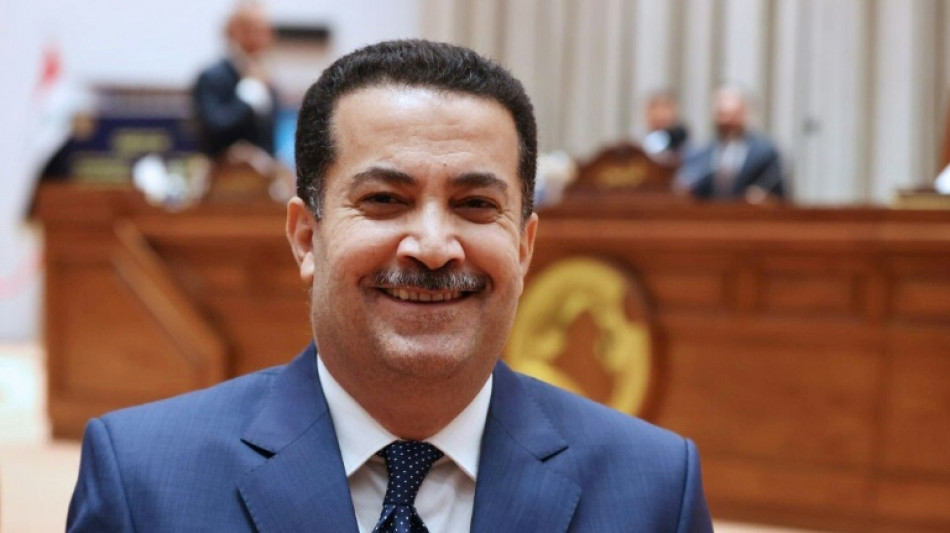
Braving rockets, Iraq MPs elect president who names PM after year of deadlock / Photo: - - IRAQI PARLIAMENT/AFP

 How a Dostoevsky novella took TikTok by storm

 Zverev goes the distance again to reach US Open third round
 German AfD's love for Simson mopeds dismays Jewish family behind brand
 Two trapped tunnel workers rescued in Nepal 'miracle'
 Ex-Pakistan coach Gillespie tells Javed 'look in the mirror' over sackings
 Monfils falls to Tien in US Open in Grand Slam farewell

 Arsenal brace for Chelsea test as Spurs seek spark
 Efficient Rybakina reaches US Open third round
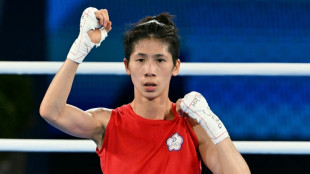 Taiwan boxer Lin considered 'graceful exit' after Paris Games gold
 'I miss my home': Cambodians displaced by conflict start over
 Ailing Auger-Aliassime falls at US Open as Swiatek, Osaka and Gauff advance
 Tesla launches self-driving 'Cybercab' in Texas
 'Wallace & Gromit' creators turn 50 with spook-tacular Shaun yarn
 New York's Muslims reclaim their city after 9/11 backlash
 Premier League transfer windfall a lifeline for ailing French clubs
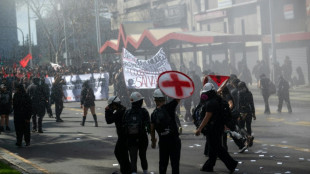 Chile protesters see shades of Pinochet in new security plan
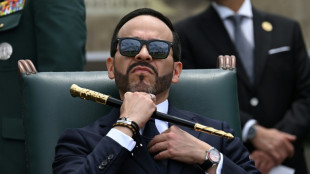
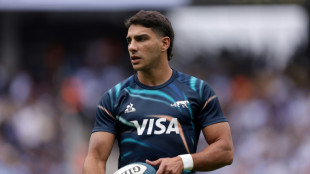 Carreras reverts to fullback as Argentina change four for Australia Test

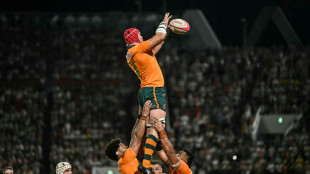 Wilson back to lead Australia as Kiss rotates team for Argentina
 Yen surges on new intervention talk, US stocks rally
 Japan's Ueda fires Lille top of Ligue 1 on debut
 Arsenal chief executive reveals 'dynasty' ambition
 Spanish PM says no 'solid proof' Morocco planned migrant rush

 Iran war is not a war, US VP Vance says

 Khachanov stuns third-seeded Auger-Aliassime in US Open second round
 Bordeaux facing sixth-tier football after French federation upholds relegation
Despite a rocket attack on Baghdad's Green Zone, Iraqi lawmakers Thursday elected a new president who swiftly named a prime minister in hopes of ending a year of political gridlock and violence in the war-scarred nation.
Abdel Latif Rashid, a 78-year-old Iraqi Kurd, was elected as head of state, replacing Barham Saleh, by the assembly in the capital's heavily fortified Green Zone government and diplomatic district.
Rashid won more than 160 votes against 99 for the incumbent Saleh, an assembly official said.
The new president swiftly named Shiite politician Mohammed Shia al-Sudani as prime minister-designate, tasking him with reconciling feuding Shiite factions and forming a government a whole year after Iraq last went to the polls.
The 52-year-old Sudani, who has the backing of influential pro-Iran factions, vowed to form a government "as quickly as possible" but faces the daunting task of winning over their rivals, the millions of diehard supporters of fiery cleric Moqtada Sadr.
When Sudani was first proposed in July, the move sparked mass protests by Sadr's followers, who breached the Green Zone and stormed parliament.
He now has 30 days to form a new government capable of commanding a majority in parliament.
A reminder of Iraq's troubles came Thursday as lawmakers headed into parliament, when a barrage of nine Katyusha-style rockets rained down on the area, the security forces said.
At least 10 people were wounded, including six members of the security forces or bodyguards of lawmakers, as well as four civilians in a nearby district, a security official told AFP.
US ambassador Alina Romanowski condemned the attack "in the strongest terms" on Twitter and warned that "the people of Iraq must resolve their political differences & grievances solely thru peaceful means.
"Attacks like these undermine democracy & trap Iraq in a perpetual cycle of violence."
- 'Crisis breeds instability' -
The democratic institutions built in oil-rich Iraq since the 2003 US-led invasion that toppled dictator Saddam Hussein remain fragile, and neighbouring Iran wields major influence.
For just over a year now, Iraq has had only a caretaker government to tackle an array of pressing problems, including unemployment, decaying infrastructure, corruption and the impacts of climate change.
The United Nations mission in Iraq warned this week that "the protracted crisis is breeding further instability" and that the divisive politics are "generating bitter public disillusion".
Lawmakers had made three previous attempts to elect a new head of state, in February and March, but failed to even reach the required two-thirds threshold for a quorum.
Under Iraq's post-Saddam power-sharing system, meant to avoid more sectarian conflict, the president by convention is Kurdish, the prime minister a Shiite Arab and the parliament speaker a Sunni Arab.
The presidency has usually been held by the Patriotic Union of Kurdistan (PUK) of Rashid and Saleh. This year the rival Kurdistan Democratic Party (KDP) had demanded the presidency but ultimately abandoned the bid.
Rashid, a hydraulic engineer versed in environmental issues, is seen as a compromise candidate for the polarised country.
Iraq's rival Shiite political factions, the most powerful players, have been bitterly vying for influence.
Sadr has pushed for parliament to be dissolved and new elections, while the rival Coordination Framework, to which the prime minister-designate belongs, has urged a new government before fresh polls are held.
The standoff has seen both sides set up protest camps in the Green Zone this year.
Tensions boiled over on August 29 when more than 30 Sadr supporters were killed in battles with Iran-backed factions and the army.
O.Gaspar--PC