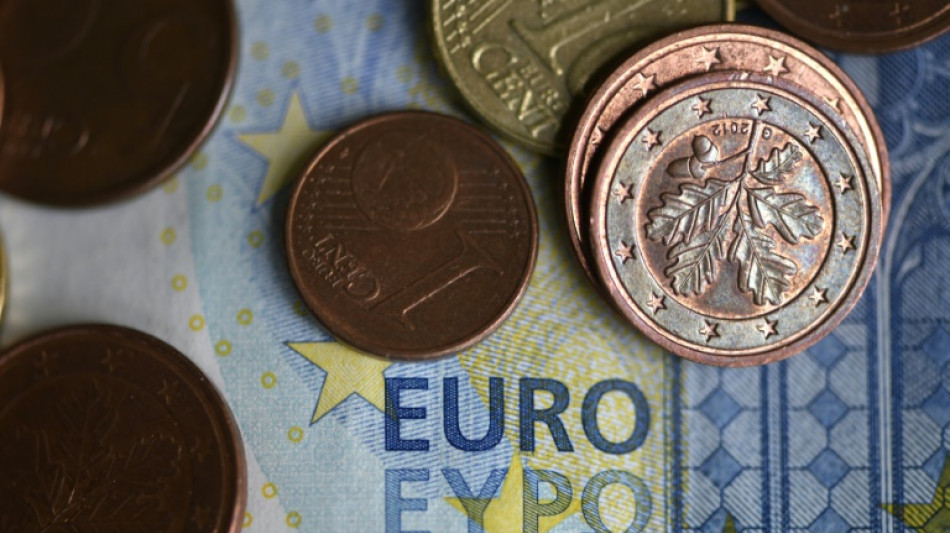
ECB again eyes jumbo rate hike to 'tame inflation beast' / Photo: INA FASSBENDER - AFP

 Kyrgios gets month ban for cocaine, enters treatment programme

 Colombian judge bans strikes on guerrillas if minors are present

 Khachanov shocks ailing Auger-Aliassime, Swiatek and Osaka advance at US Open

 Lone juror blocking verdict in US mother's child murder trial: defense
 'Kinda chic' - Williams sisters set to launch US Open doubles bid

 Volkswagen says cutting 100,000 jobs by end of decade

 Russia slaps curfew on charity director over army criticism

 Ailing Auger-Aliassime upset by Khachanov at US Open

 Richarlison omitted from Tottenham's Premier League squad

 How El Nino is choking the Panama Canal

 Hamilton drives his Ferrari dream at Monza

 Senegal has an IMF loan, now what?

 Auger-Aliassime upset by Khachanov at US Open

 Hugging Face, the French start-up that became AI's warehouse

 World Cup winner Llorente retires from Spain team at 31

 Osaka squeezes into US Open third round

 Apple faces £2 bn lawsuit in UK over app privacy feature
 Former champ Swiatek eases into US Open third round

 DR Congo latest to promise moving Israel embassy to Jerusalem

 War criminal Mladic's body returns to Serbia with military honours

 Pierre Cardin museum brings designer's futurist style to Venice

 Slovenian rookie Omrzel triumphs as Mas extends Vuelta lead

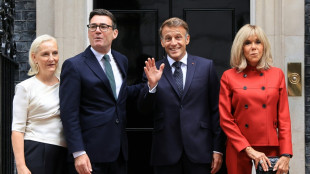 British, French leaders talk migrants, EU relations

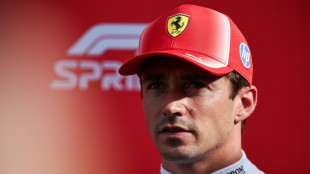 Heading for Ferrari's home race, Leclerc still dreams of world title

 Cafe at centre of Israel culture clash agrees to shut on Sabbath
The European Central Bank is expected to set aside recession worries and deliver another jumbo interest rate hike this week to cool inflation, as Russia's war on Ukraine sends energy prices soaring.
Inflation in the 19-nation eurozone climbed to an all-time high of nearly 10 percent in September, five times the ECB's target of two percent.
The ECB's governing council last month raised its key interest rates by an unprecedented 75 basis points, and many observers expect it to repeat the move at Thursday's meeting.
Households and businesses are bracing for a grim winter as Russia continues to squeeze gas supplies to Europe, raising fears of energy shortages and eye-wateringly high electricity and heating bills.
The war has also pushed up food costs, while pandemic-era supply chain snarls combined with higher manufacturing costs have added to price pressures on a range of goods.
"Those who thought inflation was dead now know better," said Joachim Nagel, the head of Germany's Bundesbank central bank.
"Now the beast has woken up from its slumber... it's up to monetary policymakers to tame it again," he recently told students at Harvard University.
Like other central banks, the ECB is using a series of rate hikes to bring inflation under control -- at the risk of slowing economic activity to such an extent that it triggers a downturn.
"The 75 basis point rate hike looks like a done deal," said ING economist Carsten Brzeski.
"The ECB has turned a blind eye on recession risks," he added.
Analysts from Capital Economics said they saw the ECB going even bigger, predicting a 100 basis-point jump followed by smaller hikes over the coming months.
- 'Not painless' -
In the United States, where inflation is running at a 40-year high, the Federal Reserve recently said there was no "painless" way to combat runaway prices.
A slowdown of economic growth and the US job market will be "required" to bring down inflation, said the Fed, which has hiked rates faster and more aggressively than the ECB.
ECB president Christine Lagarde has warned that the euro area was also facing "a significant slowdown".
If Russia completely cuts off gas flows to Europe, the eurozone economy could shrink by nearly one percent in 2023, ECB vice-president Luis de Guindos added.
It's a scenario that has become more likely after Russia in late August halted gas flows through the crucial Nord Stream 1 pipeline to Europe's biggest economy, Germany.
- Government spending -
The German economy, whose energy-hungry industries relied heavily on Russian gas before the war, is now forecast to shrink by 0.4 percent in 2023.
Chancellor Olaf Scholz has unveiled a 200-billion-euro ($197 billion) energy fund to help citizens cope with price shocks, irking European neighbours who can't afford the same fiscal largesse.
With other eurozone countries such as France and Spain also rolling out support measures, the ECB has warned governments not to fall into the trap of spending so much that they boost inflation.
Germany's hawkish Finance Minister Christian Lindner agreed, saying last week that fiscal policy "must not counter the measures of central banks" by strengthening demand.
The ECB is also expected to use this week's meeting to discuss bringing other monetary policy levers in line with its inflation-busting efforts.
Policymakers are likely to consider changes to the super cheap, long-term loans (TLTROs) offered to banks in recent years to help the eurozone through several crises -- sometimes at negative rates.
As a consequence of the ECB's rapid rate hikes since July, lenders can now make a profit by parking their excess TLTRO cash at the central bank and pocketing the new, higher deposit rate -- leaving the ECB looking for ways to incentivise early repayment of the loans.
The ECB may also ponder how best to shrink its multi-trillion-euro balance sheet, after years of hoovering up government and corporate bonds to drive up stubbornly low inflation.
But given the uncertain outlook and the risk of rattling financial markets, analysts say the start of any "quantitative tightening" is some way off.
E.Borba--PC