
Incoming PM Sunak inherits UK economy in crisis / Photo: Daniel LEAL - AFP

 Physicians Urge Arizona to Ban Medical Gag Clauses and Enable Private Lawsuits

 New Campaign Highlights Knowledge Gaps on Carbon Monoxide Safety Among Americans

 GoodData.AI Launches the Agentic Serving Plane, a New Category of Enterprise Data Infrastructure for AI Agents

 US Government Questions Effectiveness of Waymo’s School Bus Software Fix

 Panthers expected to begin 2027 NRL season away from new stadium

 Sweet As app launches restaurant discovery platform

 MLA seeks inquiry into reported sectarian gestures on Ormeau Road

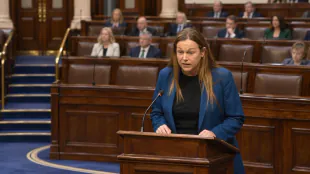 Louise O’Reilly attacks Simon Harris over unemployment remarks

 Virginia overwhelms Arkansas 91-72 behind balanced scoring

 Second major storm brings destructive winds and outages to British Columbia

 Godzilla Minus Zero leads North American box office with $31.6m

Britain's next prime minister, former finance chief Rishi Sunak, inherits a UK economy that was headed for recession even before the recent turmoil triggered by Liz Truss.
Outgoing Prime Minister Truss resigned after her budget of tax cuts funded by debt sent shockwaves through markets, crashing the pound.
That caused the government to U-turn on most of its budget, including scaling back a cap on soaring energy bills that have contributed heavily to a cost-of-living crisis for tens of millions of Britons.
Data Monday showed Britain's economic downturn has worsened in October, with private-sector output at a 21-month low.
"October's flash PMI data showed the pace of economic decline gathering momentum after the recent political and financial market upheavals," noted Chris Williamson, chief business economist at S&P Global Market Intelligence that helped compile the figures.
"The heightened political and economic uncertainty has caused business activity to fall at a rate not seen since the global financial crisis in 2009 if pandemic lockdown months are excluded."
Williamson added that upcoming data would likely show Britain already in recession.
The S&P Global/ CIPS flash UK composite purchasing managers index stood at 47.2 in October, below September's level of 49.1.
A figure under 50 indicates a contraction.
The UK is not alone, however, with separate S&P data pointing to "impending recession" in Germany, Europe's biggest economy.
- 'Sunak stability' -
Truss resigned last Thursday after just 44 days as prime minister. She had succeeded Boris Johnson on September 6 after a weeks-long campaign against Tory rival Sunak.
The former chancellor of the exchequer had warned in the battle to succeed Johnson that tax cuts promised by Truss when government debt had already soared on Covid interventions was the wrong policy to pursue.
He was proved right as the budget sent the pound crashing to a record-low close to parity with the dollar and triggered yields on government bonds to soar.
With Sunak seen as bringing stability to markets, sterling rose and yields fell Monday.
"Investors clearly hope Sunak will stabilise the economy and the political situation -- though it's hard to work out at this point which is the harder task," said AJ Bell financial analyst Danni Hewson.
"As well as the recovery in sterling and the reduced cost of government borrowing (as yields drop), Sunak will be pleased to see European gas prices" falling.
However, with UK inflation at a 40-year high above 10 percent, the Bank of England is set to unveil another bumper interest-rate hike at a regular policy meeting next week.
This will heap further pressure on borrowers, including homeowners who have seen mortgage rates surge in the wake of the government's costly budget.
Shevaun Haviland, director general of the British Chambers of Commerce, urged Sunak to also help out businesses struggling with huge energy bills.
"The political and economic uncertainty of the past few months has been hugely damaging to British business confidence and must now come to an end," she said in a statement after Sunak's new position was confirmed.
"The new prime minister must be a steady hand on the tiller to see the economy through the challenging conditions ahead.
"This means setting out fully costed plans to deal with the big issues facing businesses; soaring energy bills, labour shortages, spiralling inflation, and climbing interest rates."
L.Torres--PC

