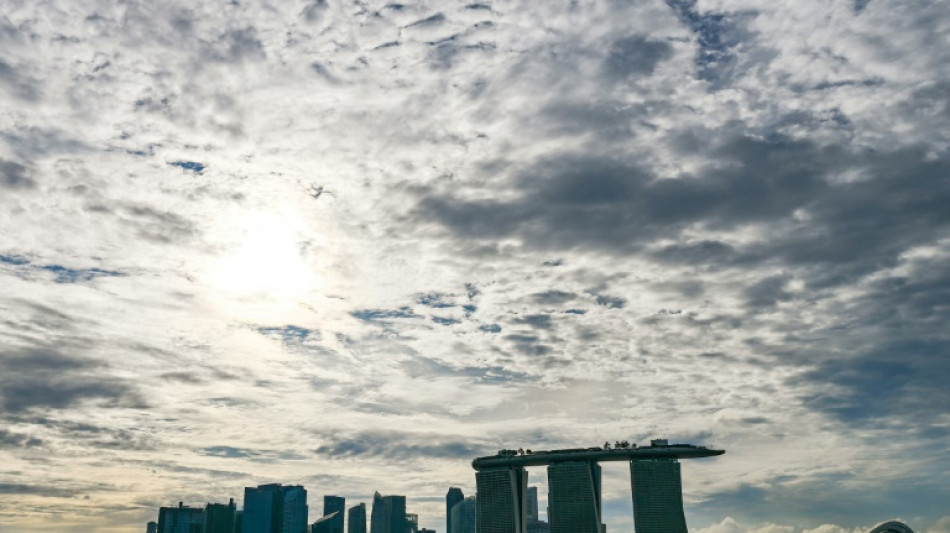
Would-be crypto investors in Singapore could face risk tests / Photo: Roslan RAHMAN - AFP

 Physicians Urge Arizona to Ban Medical Gag Clauses and Enable Private Lawsuits

 New Campaign Highlights Knowledge Gaps on Carbon Monoxide Safety Among Americans

 GoodData.AI Launches the Agentic Serving Plane, a New Category of Enterprise Data Infrastructure for AI Agents

 US Government Questions Effectiveness of Waymo’s School Bus Software Fix

 Panthers expected to begin 2027 NRL season away from new stadium

 Sweet As app launches restaurant discovery platform

 MLA seeks inquiry into reported sectarian gestures on Ormeau Road

 Louise O’Reilly attacks Simon Harris over unemployment remarks
People looking to trade cryptocurrency in Singapore may soon have to take a test to prove they understand what they are getting into, the central bank said Wednesday, as it looks to prevent clueless investors from bankrupting themselves.
The Asian finance hub has taken cautious steps to expand its digital assets market, but has warned against the risks from trading in digital coins, especially among small investors lured by stories of quick riches.
"Trading in cryptocurrencies is highly risky and not suitable for the general public," the Monetary Authority of Singapore (MAS) said as it unveiled proposals to protect traders.
"However, cryptocurrencies play a supporting role in the broader digital asset ecosystem and it would not be feasible to ban them."
Under the plan, which will face public scrutiny before it can become legislation, the MAS will require cryptocurrency service providers to be more transparent in telling consumers about the risks so they could make informed choices.
Would-be investors must also take a test to assess their understanding of the risks before they are allowed to trade, and they will be barred from using credit cards or payment apps to buy the units.
If an applicant fails to answer the questions correctly, service providers can give them "educational materials… to strengthen the customer's knowledge of the risks… This should not be limited to those questions to which the retail customer answered incorrectly".
Incentives encouraging consumers to invest in crypto are disallowed, and service providers must also adhere to certain standards on how to carry out their business, the MAS said.
There has been a global push to regulate the crypto market following wild swings and a string of high-profile collapses, some of which took place in the city-state, hitting its reputation as a potential crypto hub.
In June, Singapore-based cryptocurrency hedge fund Three Arrows Capital collapsed, while Hodlnaut -- a crypto lender based in the city-state -- has been placed under interim judicial management.
Fugitive South Korean national Do Kwon, founder of cryptocurrency Terra, was also based in the city-state.
Despite the risks, digital currencies continue to attract investors because of reported big gains made over short periods and promotional endorsements encouraging the public to get into the market, the MAS said.
Cryptocurrencies are not backed by real-world assets, making them subject to huge price swings and trading in them is highly speculative.
L.Henrique--PC

