
Japan govt spent $43 bn to bolster yen in October / Photo: Richard A. Brooks - AFP

 Physicians Urge Arizona to Ban Medical Gag Clauses and Enable Private Lawsuits

 New Campaign Highlights Knowledge Gaps on Carbon Monoxide Safety Among Americans

 GoodData.AI Launches the Agentic Serving Plane, a New Category of Enterprise Data Infrastructure for AI Agents

 US Government Questions Effectiveness of Waymo’s School Bus Software Fix

 Panthers expected to begin 2027 NRL season away from new stadium

 Sweet As app launches restaurant discovery platform

 MLA seeks inquiry into reported sectarian gestures on Ormeau Road

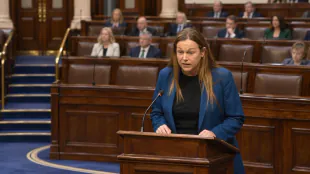 Louise O’Reilly attacks Simon Harris over unemployment remarks
Japan's finance ministry said Monday it spent $43 billion in October to bolster the value of the yen, which has tumbled against the dollar this year to lows not seen since the 1990s.
The ministry said it spent 6.35 trillion yen ($43 billion) on forex intervention operations between September 29 and October 27, without giving details of when or how often they had taken place.
It follows a similar decision to sell dollars and buy yen in September that cost 2.8 trillion yen (nearly $20 billion at the time) and was announced by authorities soon after it happened.
But the government had until now refused to confirm speculation by traders and analysts of further intervention this month, causing rollercoaster fluctuations in the yen's value.
The currency dropped beyond 151 per dollar earlier in October for the first time in 32 years, before rebounding sharply, then gradually falling again.
Around the time of Monday's announcement, one dollar bought 148 yen -- still dramatically weaker than February levels of around 115.
Behind the currency's slide is the contrast between the monetary policies of the US and Japanese central banks.
While the US Federal Reserve is fighting inflation with aggressive rate hikes, the Bank of Japan has stuck to its longstanding monetary easing programme, designed to encourage sustainable growth.
BoJ governor Haruhiko Kuroda said on Friday there would be no change "any time soon" to the bank's ultra-loose stance.
"Traders want to test the resolve of the Bank of Japan," Carol Kong, economist and currency strategist at Commonwealth Bank of Australia, told AFP.
The Japanese government has "a huge amount to spend on intervention", with more than $1 trillion left in its forex coffers after September's action, she said.
But to keep costs down, "they have instead used a lot of verbal intervention to try to keep dollar yen on the weaker side".
Kuroda and Finance Minister Shunichi Suzuki have repeatedly vowed tough action against rapid changes in forex rates.
As well as the impact of government interventions, the yen has also strengthened slightly in recent days because investors expect the Fed to soon temper its hawkish rate hikes, Kong said.
But as long as the Bank of Japan sticks to its guns, moves by the Japanese government to strengthen the yen can only have a limited effect, said Rakuten Securities chief strategist Masayuki Kubota in a recent commentary.
"Intervention can't stop the yen's depreciation, but if fundamentals -- the gap between Japanese and US interest rates -- change, the fall of the yen will stop," he wrote.
L.Henrique--PC

