
US authorities relax regulations on prescription opioids / Photo: Eric BARADAT - AFP/File

 Physicians Urge Arizona to Ban Medical Gag Clauses and Enable Private Lawsuits

 New Campaign Highlights Knowledge Gaps on Carbon Monoxide Safety Among Americans

 GoodData.AI Launches the Agentic Serving Plane, a New Category of Enterprise Data Infrastructure for AI Agents

 US Government Questions Effectiveness of Waymo’s School Bus Software Fix

 Panthers expected to begin 2027 NRL season away from new stadium

 Sweet As app launches restaurant discovery platform

 MLA seeks inquiry into reported sectarian gestures on Ormeau Road

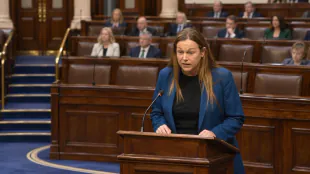 Louise O’Reilly attacks Simon Harris over unemployment remarks
US health officials issued new recommendations Thursday to relax restrictions for doctors prescribing opioids for pain, despite the risk of addiction.
The Centers for Disease Control (CDC) revised principles issued in 2016 in an attempt to curb the opioid overdose epidemic in the United States.
Unlike the previous document, the new guide refrains from setting thresholds in terms of dosage or prescription duration.
These had led doctors to suddenly cut or drastically reduce patients' doses. States and insurance companies were also inspired to set their own limits.
Chronic pain patients had complained that they no longer had access to the drugs that would allow them to lead a normal life, and had warned of the increased risk of suicide in their ranks.
The new recommendations, compiled in a 200-page report, seek a balance. One in five Americans suffers from chronic pain and "opioids can be essential medications for the management of pain, however, they carry considerable potential risk," the authors of the document wrote.
The guidelines are not "a replacement for clinical judgment or individualized, person-centered care" or "intended to be applied as inflexible standards of care," the report says.
But it recommends caution, warning that opioids should be considered only after other pain treatments have failed, and at each step, physicians should discuss the issue with their patients.
If they decide to use opioids, they should first prescribe the lowest effective dose and then closely monitor the effects of the treatment.
If problems arise, physicians should also avoid abruptly terminating opioid prescriptions and should ensure appropriate care for those with complications.
As a precautionary measure, the agency recommends that people using opioids over a prolonged period be offered Naloxone, an antidote that can save someone who is overdosing, said Christopher Jones, a senior CDC official, at a press briefing.
Opioid prescriptions increased fourfold between 1999 and 2010 in the United States. Although the trend has reversed since 2016, they have created addictions and driven some patients to drugs like heroin and fentanyl.
Last year, the US had a record 107,000 overdose deaths, more than 70 percent of which were from illegal synthetic opioids.
M.Gameiro--PC

