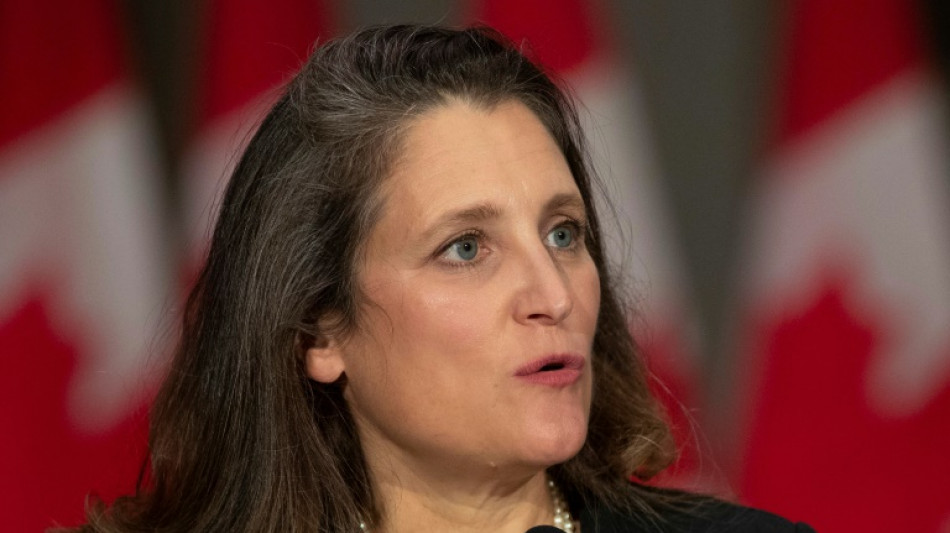
Canada sees lower deficit in updated fiscal plan, possible 2023 recession / Photo: Lars Hagberg - AFP/File

 Physicians Urge Arizona to Ban Medical Gag Clauses and Enable Private Lawsuits

 New Campaign Highlights Knowledge Gaps on Carbon Monoxide Safety Among Americans

 GoodData.AI Launches the Agentic Serving Plane, a New Category of Enterprise Data Infrastructure for AI Agents

 US Government Questions Effectiveness of Waymo’s School Bus Software Fix

 Panthers expected to begin 2027 NRL season away from new stadium

 Sweet As app launches restaurant discovery platform

 MLA seeks inquiry into reported sectarian gestures on Ormeau Road

 Louise O’Reilly attacks Simon Harris over unemployment remarks
Canada's government announced modest new spending in an updated fiscal plan Thursday, as windfall revenues allow it to slash its budget deficit ahead of a possible economic downturn.
Under pressure to tighten the belt, Finance Minister Chrystia Freeland said spending measures, including eliminating interest on student loans and lowering credit card transaction fees for small businesses -- amounting to about Can$30 billion (US$22 billion) over six years -- would not fuel inflation.
She also introduced investment tax credits for clean energy projects such as the production of hydrogen from renewable sources, and taxes on corporate share buy-backs.
"Canada cannot avoid the global slowdown to come, any more than we could have prevented Covid from reaching our shores once it had begun to infect the world," Freeland said in a speech to parliament.
"But we will be ready."
The minister pointed to "targeted inflation relief" for those in need, adding that "we cannot support every single Canadian in the way we did with emergency measures at the height of the pandemic."
Continued robust economic stimulus spending, she explained, would run counter to the central bank's fight against surging consumer prices.
Inflation soared to a June peak of 8.1 percent before falling bit by bit to 6.9 percent in September.
The Bank of Canada responded with several outsized interest rate hikes, to 3.75 percent, and signaled more to come.
That is sure to cool the economy and possibly send it into a recession, after it roared back from a relatively brief pandemic downturn.
In the government's April budget, the economy was forecast to grow 3.9 percent this year. In Freeland's fiscal update, growth is now expected to come in at 3.2 percent and 0.7 percent next year.
In a worst case scenario, Canada could enter "a mild recession" at the beginning of 2023, it noted.
Canada's main opposition Conservatives have pressed the ruling Liberals to act on inflation and the resulting high cost of living, and demanded the government end its pandemic splurge.
In her April budget, Freeland had already slashed spending after the government doled out significant pandemic aid that pushed the national debt to a record Can$1.16 trillion this year.
On Thursday, she reported a 30 percent lower deficit in fiscal 2022-2023 than originally forecast to Can$36 billion.
Canada's debt-to-GDP ratio, meanwhile, is expected to narrow a bit more than previously stated, to 42.3 percent.
C.Cassis--PC

