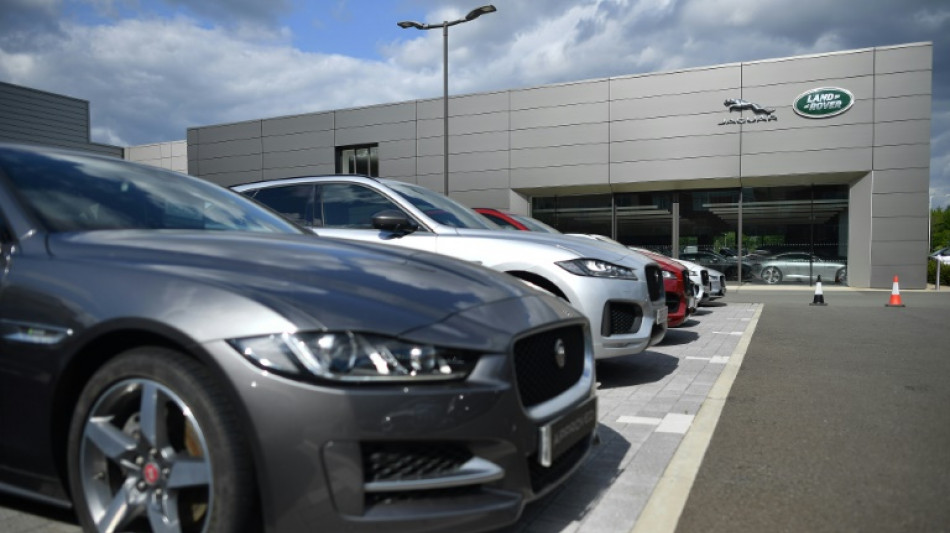
Tata Motors extends losses on chip woes, weak exports / Photo: Ben STANSALL - AFP/File

 Physicians Urge Arizona to Ban Medical Gag Clauses and Enable Private Lawsuits

 New Campaign Highlights Knowledge Gaps on Carbon Monoxide Safety Among Americans

 GoodData.AI Launches the Agentic Serving Plane, a New Category of Enterprise Data Infrastructure for AI Agents

 US Government Questions Effectiveness of Waymo’s School Bus Software Fix

 Panthers expected to begin 2027 NRL season away from new stadium

 Sweet As app launches restaurant discovery platform

 MLA seeks inquiry into reported sectarian gestures on Ormeau Road

 Louise O’Reilly attacks Simon Harris over unemployment remarks
India's Tata Motors announced a seventh consecutive quarter of losses Wednesday as chip shortages and weak demand in export markets hurt sales.
Net losses at the Mumbai-headquartered automaker narrowed to 9.45 billion rupees ($116 million) in the July-to-September quarter, compared to a loss of 44.42 billion rupees in the same period last year.
But revenue from operations rose nearly 30 percent year-on-year to 796.11 billion rupees, as wholesale demand improved despite continued supply chain bottlenecks, such as semiconductor chip shortages.
"Demand continues to remain strong," the company said in a stock exchange filing, but warned it remained vulnerable to "global uncertainties".
Covid-19 lockdowns in China have also hurt sales this year.
But Tata Motors said "improving chip supply and cooling commodity prices" will aid business recovery in the quarters ahead.
Revenues at British subsidiary Jaguar Land Rover (JLR) rose 35.9 percent to £5.26 billion ($6 billion) in the quarter as production of new Range Rover models improved, but it still lost £173 million.
"Demand for our most profitable and desired vehicles remains strong," JLR chief Thierry Bollore said in a statement.
"We expect to continue to improve our performance in the second half of the year, as new agreements with semiconductor partners take effect," he added.
Pending orders at JLR, Britain's biggest carmaker, stood at 205,000 units at the end of September, as chip supply constraints persisted.
Revenue from Tata Motors' commercial vehicle business jumped 35 percent year-on-year to 164.20 billion rupees, as India bounced back from a 2021 pandemic sales dent.
But commercial vehicle exports fell 22 percent in the quarter, impacted by "financial crisis in (a) few export markets", with commodity price inflation and foreign exchange movements also eating into profit margins.
Demand for passenger vehicles remained strong, with revenues up 71 percent on-year to 125.47 billion rupees, buoyed by Indian festival season demand during the quarter.
Shares in Tata Motors closed 0.44 percent lower in Mumbai ahead of the earnings announcement.
B.Godinho--PC

