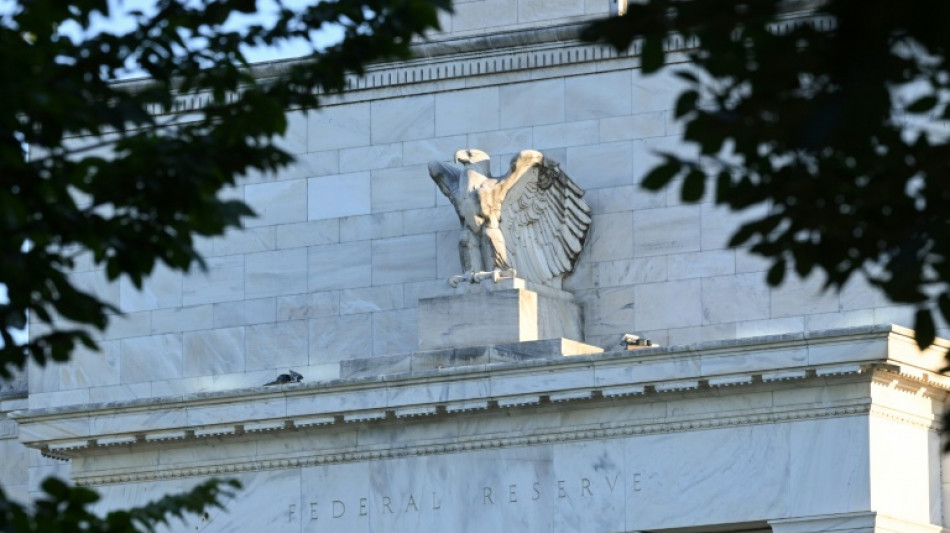
US Fed official open to slower rate hike in December / Photo: MANDEL NGAN - AFP/File

 Physicians Urge Arizona to Ban Medical Gag Clauses and Enable Private Lawsuits

 New Campaign Highlights Knowledge Gaps on Carbon Monoxide Safety Among Americans

 GoodData.AI Launches the Agentic Serving Plane, a New Category of Enterprise Data Infrastructure for AI Agents

 US Government Questions Effectiveness of Waymo’s School Bus Software Fix

 Panthers expected to begin 2027 NRL season away from new stadium

 Sweet As app launches restaurant discovery platform

 MLA seeks inquiry into reported sectarian gestures on Ormeau Road

 Louise O’Reilly attacks Simon Harris over unemployment remarks
Recent signs of easing inflation pressures and a slowing US economy could allow the central bank to dial back the pace of interest rate hikes, Federal Reserve Governor Christopher Waller said on Wednesday.
The Fed has embarked on an aggressive campaign to rein in surging prices this year, raising its benchmark lending rate six times, including four consecutive mammoth moves of 0.75 percentage points.
But positive developments in the latest data "have made me more comfortable considering stepping down to a 50-basis-point hike" in December, Waller said in a speech, although he stressed that more rate increases are still needed to bring inflation down.
His comments came after reports showing inflation eased in October, with the consumer price index logging its lowest annual pace since January -- fueling hopes that soaring costs will start to pull back.
Russia's war in Ukraine this year has sent food and fuel prices soaring, and the US annual inflation rate reached a harsh 9.1 percent in June, its highest in four decades.
Waller noted that the pullback in prices was "widespread," involving a deceleration in services costs and the first drop since March in core goods prices, which strip out the volatile food and energy segments.
But he cautioned that "one report does not make a trend," adding that it remains too early to conclude that prices are heading sustainably down.
"More interest rate hikes are needed to get inflation down," he said in the speech prepared for delivery to a conference in Phoenix, Arizona.
- Still 'significant' -
While inflation remains well above the Fed's two percent target, there has been a growing number of voices advocating for smaller steps in the coming months.
Fed Vice Chair Lael Brainard said Monday it would likely be "appropriate soon" for the US central bank to slow the pace of interest rate increases, but she agreed more moves will be needed in the fight against inflation.
She noted that it will take time for the Fed's policy moves to flow through to the economy, adding that moving at a more "deliberate" pace would allow officials to assess the data.
Fed officials walk a tightrope to try and tamp down prices while avoiding an economic downturn.
The central bank's actions have rippled through the economy, with the interest-sensitive housing sector slowing most significantly.
Further rate hikes are expected to dampen consumer and business spending, making it more attractive to save rather than spend.
And Waller said even if the policy-setting Federal Open Market Committee shifted to a half-point step at the December meeting, "this would still be a very significant tightening action," and the final path will depend on how the economy behaves.
X.Brito--PC