Medical community frets over fate of Twitter / Photo: Douglas E. CURRAN - AFP/File

 In Ghana, larger-than-life coffins tell the stories of the dead
 Menoncello, Reece headline Top 14 new-season signings
 Families descend on Nepal in search of missing tourists
 Far-right AfD eyes huge win in east German state vote

 Brazil-Japan to play World Cup rematch at Singapore tournament
 Defence chiefs back boosting US military presence in Australia
 Nepal seeks climate justice after Himalayan disaster
 Stocks rise, yields ease as oil slips on Trump hint at short bombing campaign

 Brussels Diamond League finals Day 1 - five events to watch

 Thailand's 'Jurassic Park' shines light on dinosaur evolution
 'Role model' Stokes set to open for Adelaide Strikers

 Palau urges 'unified' Pacific response to China missile test
 Grinding away: in remote Appalachia, old mills fuel US clean food dreams

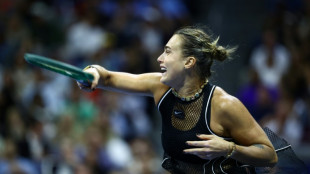
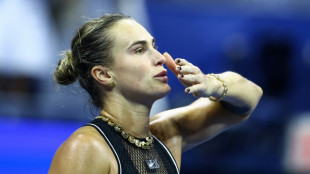 Sabalenka races into US Open third round
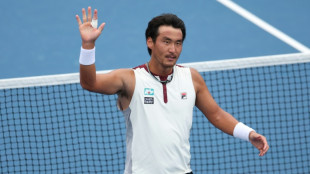 Chinese lucky loser stuns Jodar at US Open
 US Open under the influence: content creators spark debate
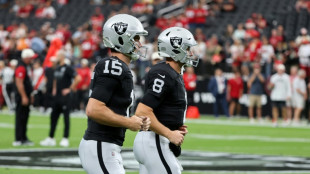
 NBA hammers Clippers over Leonard salary cap violations
 NBA strips five first-round draft picks from Clippers for Leonard salary cap violations
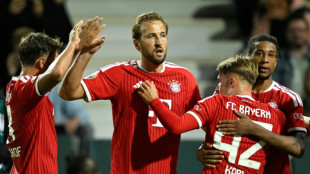 Kane brace helps Bayern win German Cup opener
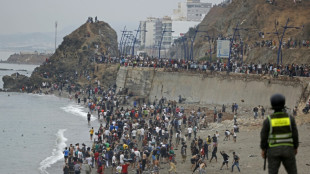
 Migrant plight, local anger divide Ceuta one month after influx
 Outrage as Maltese tycoon acquitted of reporter's murder
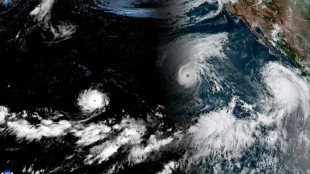 Rare train of Pacific cyclones fueled by historic El Nino
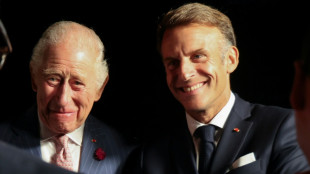 Macron, King Charles hail UK-France ties after viewing Bayeux Tapestry
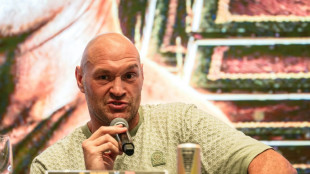 Fury hits out at 'coward' Joshua as 'Battle of Britain' talks go on
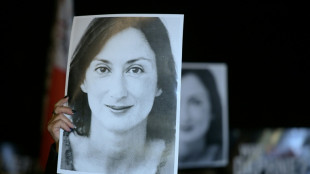 Maltese tycoon acquitted of masterminding reporter's murder
For days, doctors, scientists and public health experts have been telling their Twitter followers where to find them on other platforms if Elon Musk's newly-acquired company tanks.
The social media giant symbolized by the blue bird has laid off half of its 7,500 employees, while several hundred others have resigned, creating doubts over its future.
Even if it survives, the unpredictability of the new boss has raised fears his policies could profoundly alter the character of the so-called digital town square.
That would be a deep loss for medical experts, who have used Twitter since the start of the Covid pandemic as a tool to quickly gather information, share their research, communicate public health messages and forge new collaborations.
The pandemic was a "tipping point for the use of social media as a primary resource for researchers," Jason Kindrachuk, a virologist at the University of Manitoba in Canada, told AFP.
As the coronavirus began its global march in January 2020, researchers embarked on studies to understand how the virus spreads, its health effects, and how best to protect oneself.
They shared findings immediately on Twitter to assist the wider medical community and an anxious public, often in the form of "preprints" -- early versions of scientific papers before they are submitted to a journal.
"In the middle of a pandemic, the ability to rapidly share information is critical for knowledge translation and dissemination, and Twitter is able to do this in a way that is typically not feasible for textbooks or journals," said a commentary published in the Canadian Journal of Emergency Medicine.
The process of peer review effectively took place in real time on Twitter, with scientists publicly sharing their interpretations and critiques of each new study.
Of course, there was also a downside: unworthy work received outsized attention, and non-specialists held forth on subjects far from their areas of expertise.
- International collaborations -
On the other hand, it was thanks to Twitter that experts from around the world were able to find one another easily and team up.
"There are people that I collaborate with now that have been based on interactions that were born out of Twitter," said Kindrachuk, who has around 22,000 followers.
"To think that that could change in the very near future, that to me does kind of bring some feelings of concern and regret."
For example, it was the vital work of researchers from South Africa and Botswana that alerted the world to the dangerous Omicron variant in late 2021.
The loss of Twitter would be compounded by the fact it has long been frequented by experts of another profession: journalism.
"Because Twitter is a platform that is followed by a lot of journalists, it helps, there's a feedback loop. It gets amplified," explained Celine Gounder, an infectious disease specialist and epidemiologist with 88,000 followers.
She added she had moved a private Twitter discussion with a dozen colleagues to Signal, and started once more posting her thoughts to LinkedIn as well as the Post News platform.
Many experts have now put their handles on rival service Mastodon on their Twitter bios, or directed their followers to their newsletters on Substack.
If Twitter doesn't work out, "we will all adapt, we will find other social media platforms," said Kindrachuk.
"But it will take time and unfortunately, infectious diseases don't wait for us to find new mechanisms to communicate."
P.Queiroz--PC