-
 Trump's beef policies irk Texas ranchers, testing their loyalty
-
Kennedy Center: future unclear for iconic Washington arts hub

-
 Nvidia, OpenAI CEOs to attend Xi dinner at White House
-
Trump claims 'infinite' Greenland security deal with Denmark

-
 Anthropic picks Accenture for in-house AI safety evaluation
-
Helicopters battle wildfire threatening Ecuador's capital

-
 Balogun returns as Monaco beat Lens to continue strong Ligue 1 start
-
Brentford batter Chelsea to undo Alonso's promising start

-
 'Pause' on overt repression in Venezuela, but reforms still needed: HRW
-
Kane hits Bundesliga century as Bayern rout Union

-
 Global stocks mixed as yen falls despite Bank of Japan rate hike
-
Trump says CNN, MS NOW, Politico banned from White House

-
 Cuba hit with seventh major blackout of the year
-
Hushing and hedging: US companies retreat on climate

-
 Murray out with concussion so Wentz will start for Vikings
-
Springboks to face Fiji before 2027 Rugby World Cup

-
 UN chief 'deeply regrets' US visa refusal to Abbas for annual meeting
-
Nigeria miners struggled to breathe in cell before 37 died: survivors

-
 England quick Carse to face no charges over alleged nightclub assault
-
McIlroy on the charge at PGA Championship as Reed withdraws

-
 Mancini brings nine newcomers into the first squad of his Italy comeback
-
McIlroy on the charge at PGA Championship

-
 Czechs level Davis Cup tie against USA as South Korea eye Finals
-
Crisis-wracked Volkswagen warns of 10-bn-euro hit to profits

-
 New France boss Zidane confirms Mbappe as captain after naming first squad
-
Costa Rica's Grynspan tops third informal poll for UN chief: diplomat

-
 California governor signs order to explore AI 'kill switch'
-
Stock markets retreat after central bank rate hikes

-
 Head leads run spree as Australia win Zimbabwe ODI series
-
Russia labels director of Cannes Grand Prix winner a 'foreign agent'

-
 In-form Raphinha wants to finish career at Barcelona
-
Macron warns of Russian 'hybrid' threat after meeting presidential hopefuls

-
 Warren Buffett steps down as Berkshire Hathaway chairman
-
UN holds third informal poll for new chief

-
 Carrick confident Man Utd can 'work through' tough time
-
Kulusevski return can spark Spurs: De Zerbi

-
 Mbappe ends Nike partnership to join Swiss brand On
-
Shakira to cap off world tour with Madrid 12-gig run

-
 Liverpool boss Iraola puts Bournemouth love affair on hold
-
Isolated Syrian-Druze city blames Damascus for shortages

-
 'A disaster' if Man City do not win says Maresca after flawless start
-
Isolated Syrian-Druze city shortages

-
 Kerry James Marshall: American 'blackness' painter celebrated in Europe
-
Dutch drop Depay for Germany match in Xavi's first pick

-
 Spain coach De la Fuente offers 'full support' to people of Ceuta
-
Ronaldo named in Portugal squad for Nations League

-
 Russia seizes assets of Nestle, French firms over West's Ukraine support
-
Stock markets diverge after central bank rate hikes

-
 England can build on World Cup 'spirit', says Tuchel
-
Anti-Assad music star makes triumphant return to Syria
Headscarf debate reaches Turkish parliament ahead of elections
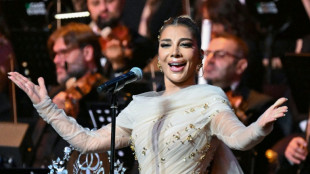
Turkey's Islamic-rooted ruling party on Friday submitted a constitutional amendment to parliament enshrining women's right to wear headscarves at work and in daily life, reviving a hugely divisive issue in the officially secular state.
The highly-politicised decision by President Recep Tayyip Erdogan's AKP party comes six months before the next election -- one that promises to be a heated and tight race.
The overwhelmingly Muslim country's founder Mustafa Kemal Ataturk had sought to settle the issue when he forged a more European-focused Turkey out of the Ottoman Empire's ashes a century ago.
But headscarves still polarise the nation of 85 million, and a coalition of conservative lawmakers led by Erdogan's party submitted the constitutional amendment to the parliamentary speaker after collecting 336 lawmakers' signatures.
Parliamentary debates are expected to begin in the second half of the month, turning headscarves into a headline issue of the upcoming election campaign.
Erdogan's 20-year stint as prime minister and president saw him champion the rights of conservative Muslims -- including veiled women -- after decades of more secular rule.
But it was his likely presidential rival from Ataturk's secular CHP party who appeared to push Erdogan to mull constitutional changes that could be up for a referendum.
Kemal Kilicdaroglu -- trying to woo Erdogan's core supporters and strip away some of the AKP's vote -- accused the president of trying to "hold veiled women hostage".
He conceded the CHP had "made mistakes in the past" by imposing headscarf curbs and now wanted to write women's right to cover themselves in schools and at work into law.
- Lifting restrictions -
Erdogan immediately went on the offensive.
"Is there discrimination against veiled or unveiled women in schools or in public service? No!" Erdogan said.
"We were the ones who achieved this."
Discouraged in the name of modernity when Ataturk formed contemporary Turkey in 1923, headscarves were gradually banned from schools and offices.
The AKP began to change that in 2008, lifting the ban at universities, colleges, and then in the civil service, parliament and the police.
Turkish women overwhelmingly hailed these measures, said historian Berrin Sonmez, who is also an ardent defender of women's rights.
"Those who view the headscarf as a religious symbol that contradicts the principles of secularism should understand that (their thinking) is discriminatory," Sonmez said.
"Prohibited or compulsory, the headscarf violates women's rights only if the rules for wearing it are imposed by the state," said Sonmez, who is veiled.
Weighed down by criticism from some feminists, veiled women would benefit from guarantees to safely stay covered up while going to school or work, Sonmez said.
In the absence of more recent studies, she cited a 2012 survey showing 65 percent of Turkish women wearing a headscarf.
She estimated that half of them do so today.
- 'Ideal woman' -
Fervent supporters of the women's revolt movement convulsing neighbouring Iran, Turkish feminists largely view Erdogan's headscarf efforts as a bid to secure the support of the most conservative fringes.
"Both the secularists' ban on the headscarf and Erdogan's 'democratisation package' that lifted it were launched in the name of emancipating women," Gonul Tol, Turkey programme director at the US-based Middle East Institute, wrote in an online report.
"In reality, however, they both sought to impose their own version of the ideal woman on society," she said.
The ban's lifting "was emblematic of Erdogan's broader Islamist populist agenda".
Tol suggested that the 68-year-old leader "never truly intended to liberate" women as he largely views them as "mothers or wives, not as individuals".
"The key to truly liberating women is to empower them as individuals and legislate women's right to choose."
The debate rages on both sides.
One Turkish website, whose title translates as "You will never walk alone", is aimed at women who are forced to wear a headscarf and now want to take it off.
On the opposite end of the spectrum, the AKP has publicly backed a series of demonstrations supporting the "defence of the family" at the expense of LGBTQ rights.
Almost all the women at those rallies appear veiled.
X.M.Francisco--PC