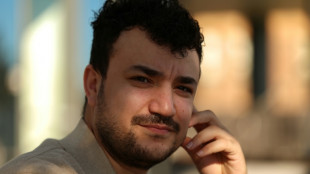
Columbia University president resigns months after anti-war protests / Photo: Drew ANGERER - AFP

 Hong Kong court set to sentence activist Joshua Wong in security case
 Australia raises benchmark rate to highest level in 18 years

 'The Remarried Empress' Cast Discusses Bringing Fantasy Royal Drama to Life

 Asian stocks retreat as AI worries outweigh steep oil-price drop

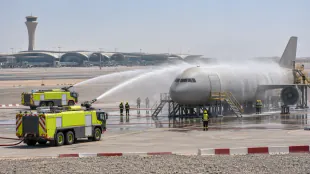 Hamad International Airport stages emergency drills during WATAN 2026

 Global failure to punish attacks leaves journalists at continuing risk

 Researchers Warn 'Bookkeeping Trick' Masks Beef Industry's Methane Emissions

 Climate Change Intensified Atlantic Hurricanes, Study Finds

 Qatar solar expansion opens scope for technical performance gains

 IXOPAY Announces IXO One, a Modular Payments Platform Built for an Era of Fluid Commerce
The president of New York's Columbia University has resigned, US media reported Wednesday, months after pro-Palestinian protests brought national scrutiny to the institution and just weeks before the start of the new school year.
Anti-war protests and encampments at Columbia and campuses across the United States were a flashpoint in debates about US support for Israel in its campaign against Hamas in Gaza.
Critics said the protests at Columbia and elsewhere veered into anti-Semitism and intimidation, culminating in Columbia President Minouche Shafik being questioned before the US Congress along with other university presidents and accused of not keeping Jewish students safe.
Protesters -- many of whom were themselves Jewish -- said demonstrators' anti-Israel views were being conflated with anti-Semitism. They also said that individual allegations of hate incidents were being used to distract from calls for a ceasefire due to the spiraling civilian death toll.
"Over the summer, I have been able to reflect and have decided that my moving on at this point would best enable Columbia to traverse the challenges ahead," Shafik wrote in an email announcing the move, according to student newspaper the Columbia Spectator.
"I am making this announcement now so that new leadership can be in place before the new term begins."
As protests and encampments spread across US universities, protesters at times occupied buildings. In some cases there were clashes with police, while at other times pro-Israel protesters attacked the encampments.
Hamas's October 7 attack on southern Israel resulted in the deaths of 1,198 people, mostly civilians, according to an AFP tally of Israeli official figures.
Militants also seized 251 people, 111 of whom are still held captive in Gaza, including 39 the military says are dead.
Israel's retaliatory military offensive in Gaza has killed at least 39,965 people, according to the territory's health ministry, which does not provide a breakdown of civilian and militant deaths.
Nogueira--PC