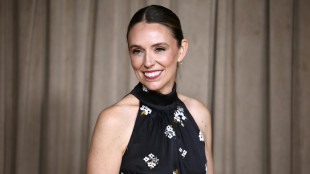
Afghan women continue medical studies in Scotland after Taliban ban / Photo: Andy Buchanan - AFP

 Hong Kong court set to sentence activist Joshua Wong in security case
 Australia raises benchmark rate to highest level in 18 years

 'The Remarried Empress' Cast Discusses Bringing Fantasy Royal Drama to Life

 Asian stocks retreat as AI worries outweigh steep oil-price drop

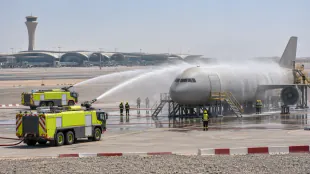 Hamad International Airport stages emergency drills during WATAN 2026

 Global failure to punish attacks leaves journalists at continuing risk
 Researchers Warn 'Bookkeeping Trick' Masks Beef Industry's Methane Emissions

 Climate Change Intensified Atlantic Hurricanes, Study Finds

 Qatar solar expansion opens scope for technical performance gains

 IXOPAY Announces IXO One, a Modular Payments Platform Built for an Era of Fluid Commerce
When the Taliban banned women from attending university in Afghanistan, Zahra Hussaini thought her dream of becoming a doctor was over. Now, she is continuing her medical degree in Britain.
"Coming to Scotland, it changed everything. It has given me hope for a better future," the 20-year-old told AFP in Glasgow, where she arrived last month to resume her studies.
"I can become a doctor, I can become independent financially and I can serve my family, my community to the best of my ability," she added.
Hussaini is one of 19 female medical students from Afghanistan who landed in Scotland on August 21 following a three-year campaign by the Linda Norgrove Foundation.
Norgrove was a 36-year-old Scottish aid worker who was kidnapped by Islamist militants in Afghanistan and killed during a failed rescue attempt by US special forces in 2010.
The foundation, formed by her parents in her name, said that the students had often been confined to their homes since the Taliban issued its ban on women studying at universities in December 2022.
The Taliban authorities have implemented an austere interpretation of Islamic law since returning to power in Afghanistan in August 2021 following the withdrawal of US forces.
Women have borne the brunt of restrictions that the United Nations has labelled "gender apartheid".
"They didn't allow me to get my specialisation in Afghanistan," said 25-year-old medical student Fariba Asifi, who is also now studying at Glasgow University.
"Now I consider I am the luckiest person that I am here and I can continue my education and I achieve this opportunity to continue my education and follow my dream. I'm so excited and I'm really happy."
The woman arrived in Scotland after the devolved Scottish government in Edinburgh amended funding legislation to ensure that they would be treated like Scottish students and be eligible for free tuition.
Some are studying at St Andrews, Dundee and Aberdeen.
The foundation said it had to clear a number of hurdles for the women to make it to Scotland, including negotiating travel to Pakistan to apply for UK visas, organising English language tests and university interviews over Skype.
It also secured accommodation and UK bank accounts and said it had spent £60,000 ($79,000) in all.
"Finally, these 19 incredibly talented young women get their future back with the opportunity of a tremendous education and a career. The alternative for them in Afghanistan wasn't good," Linda's father John Norgove said in a statement.
Asifi said she hoped to be able to return to Afghanistan to work as a doctor one day.
"It's not a permanent situation, it's temporary, it will change and one day we will have a bright Afghanistan, a peaceful country.
"And one day, I'm pretty sure we will see all girls, all ladies can do, can get education, get working and getting their fun. And we should be optimistic we will have a bright Afghanistan. It's near."
video-pdh/phz/yad
A.Aguiar--PC