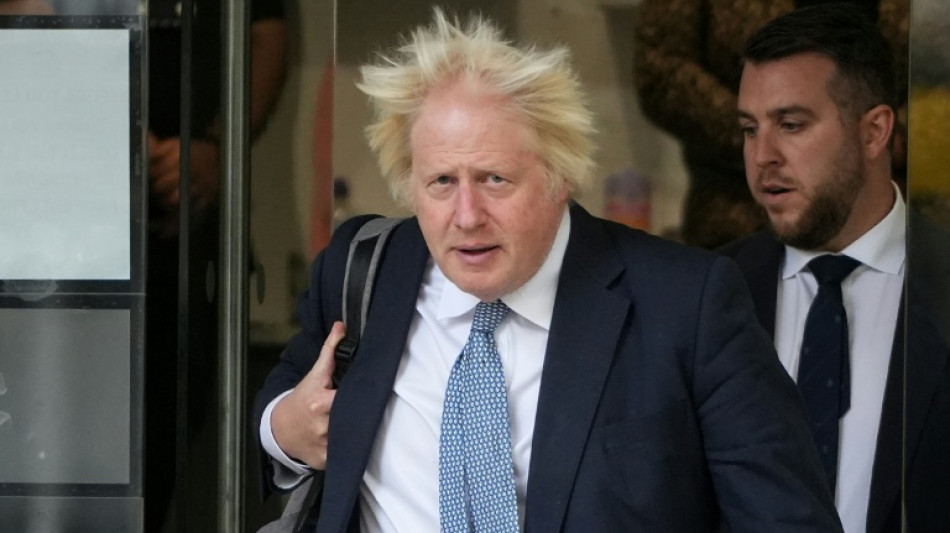
Covid inquiry finds UK inaction cost thousands of lives / Photo: Niklas HALLE'N - AFP

 Drones hit Moscow as Russians go to the polls

 New England boss Fleming says 'wrong' to ask Stokes to end retirement

 Germans vote in elections threatening fresh blow to Merz

 US fears rapid escalation in Mideast after Houthis attack Riyadh

 Japan triathlete Hojo wins first gold of Asian Games

 IOC president impressed by 'beautiful' Asian Games wooden huts

 First Asian Games gold goes to Japan as China's 13-year-old Yu lights up pool

 Data centre command hub keeps AI up and running

 Pope Leo in France: the issues on the table

 Packing for a pope: behind the scenes on foreign trips

 Republicans find transgender issues a powerful political weapon in midterm campaigning

 German state elections threaten new shock waves for Merz

 Chile's Bachelet quits race to be next UN chief

 Raphinha treble fires perfect Barca to win at Sevilla

 Thiam makes winning heptathlon return at Decastar meet

 Czechs beat USA to qualify for Davis Cup finals

 Dortmund sink Stuttgart to climb to Bundesliga summit

 Trump says will not tolerate attempts to slow AI growth

 'It has to stop': runners protest women's murders in S.Africa district

 Fire erupts near Riyadh airport as Houthis claim strikes

 Cuba works to restore power after another blackout

 England thrash Sri Lanka again to return to top of T20 rankings

 Arsenal thrashed by Brighton, sorry Spurs lose again

 South Korea, Austria qualify for Davis Cup finals
 Seare shocks Ingebrigtsen to win world 5km gold
About 23,000 deaths could have been prevented in England if the first Covid-19 lockdown had been introduced sooner at the start of the pandemic, a UK public inquiry found Thursday, also slamming a "toxic" and misogynistic culture at the top of government.
The second report from an inquiry into the UK response to the Covid-19 pandemic criticised the government led by Boris Johnson for a "lack of urgency" in the early days of the pandemic in 2020, adding the lockdown was "too little, too late".
Inquiry chair Heather Hallett said there was a "serious failure" by the government to "appreciate the level of risk and the calamity that the UK faced and the need to inject urgency into the response".
Modelling shows that if the first lockdown had been imposed earlier, it could have prevented 23,000 deaths in England alone in the first wave, according to the 800-page report.
"Had the lockdown been imposed one week earlier than March 23, the evidence suggests that the number of deaths in England alone in the first wave up until July 1, 2020 would have been reduced by 48 percent," Hallett, a retired senior judge said.
The inquiry chair called February 2020 a "lost month", adding that if restrictions had been introduced sooner, the mandatory lockdown could have been shorter, or "might not have been necessary at all".
The report also criticised "repeated" failures and delays in introducing sufficient restrictions to control subsequent Covid-19 waves.
- 'Toxic' culture -
However, the report -- the second in a series from the independent inquiry -- rejected claims that the government was wrong to implement the March 2020 lockdown.
"Without it, the growth in transmission would have led to an unacceptable loss of life," the report said.
The UK suffered one of the worst Covid-19 death tolls in Europe, recording more than 128,500 fatalities by mid-July 2021.
More than 226,000 people have died from Covid in Britain since the start of the global pandemic in early 2020.
Johnson, who was prime minister from 2019 to 2022, has been criticised on various fronts for the pandemic response, including a lack of preparedness and failing to have enough protective equipment for frontline staff.
The report found a "lack of trust" between Johnson and leaders of Wales, Scotland and Northern Ireland, which have devolved public healthcare systems, as well as a "toxic" culture in government.
"At the centre of the UK government there was a toxic and chaotic culture," the report stated, adding the cabinet was "often sidelined in decision-making" and women's voices "often went ignored".
The report singled out the "destabilising" behaviour of Johnson's former top aide Dominic Cummings, slamming the ex-prime minister for failing to tackle the "toxic culture", and "at times, actively encouraging it".
- 'Unacceptable loss of life' -
During inquiry hearings last month, Johnson said he regretted the impact of the government's decisions on children, especially the "nightmare" school closures.
The first inquiry report published in July 2024 found that UK ministers and officials had been woefully underprepared for a global pandemic.
In a statement, a group representing families who lost loved ones during the pandemic slammed the government's "catastrophic mishandling".
"We now know that many of our family members would still be alive today if it weren't for the leadership of Boris Johnson and his colleagues," Covid-19 Bereaved Families for Justice UK said.
The report recommended changes including reforming decision-making structures during emergencies and improving consideration of the impact of decisions on vulnerable groups.
UK public inquiries are government-funded but have an independent chair. They investigate matters of public concern, establishing facts about what happened, why and what lessons can be learned.
They do not rule on civil or criminal liability, and any recommendations are not legally binding.
The Covid-19 inquiry, which began in 2023, is scheduled to wrap up hearings in 2026.
X.Matos--PC