Trials of two Ebola treatments to start in DRC next week: WHO / Photo: Benediction MURHABAZI - AFP

 How Britain's mapmakers track climate change

 Australian delivery drivers win 'world-leading' pay rise

 Meta meets its own 'tobacco' moment in court

 Art or medicine? Japan's cosmetic tattoo artists in limbo
 Rybakina ousts Osaka to book Toronto semi-final against Gauff
 Colombia rescuers find woman alive as quake death toll passes 240
 Charges dropped against Bondi Beach attack hero

 Parched and desperate for rain, Kazakhstan turns to cloud-seeding
 The perfect storm that turbocharged Venezuela's twin quakes
 2.4 million girls banned from Afghan schools since Taliban return: UNESCO
 Colombians dig through rubble as quake death toll surpasses 240

 New Zealand's ruling party meets to decide PM Luxon's fate

 Total solar eclipse to spellbind Europe

 Jodar, Nakashima to make Masters semis debuts in Montreal

 Chilean veteran Sanchez signs with MLS club Montreal

 Cristiano Ronaldo marries long-term partner Georgina Rodriguez

 Oil prices higher, stocks mixed ahead of inflation report
 Jacobs into 100m final with eye on third title
 Eight-try New Zealand cruise to tour victory over Sharks
 Trump's secret plane swap triggers questions and confusion
 California calls Paramount's threat to leave state 'blackmail'

 PSG 'want to win everything', says Luis Enrique

 Barred from elections, Russia's anti-war party vows to fight on
 Jaissle states Newcastle ambition but urges patience

 NBA star Cooper Flagg trading card a slam dunk for lucky buyer
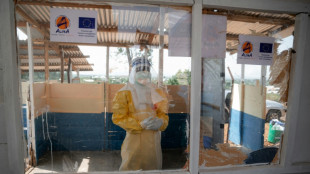
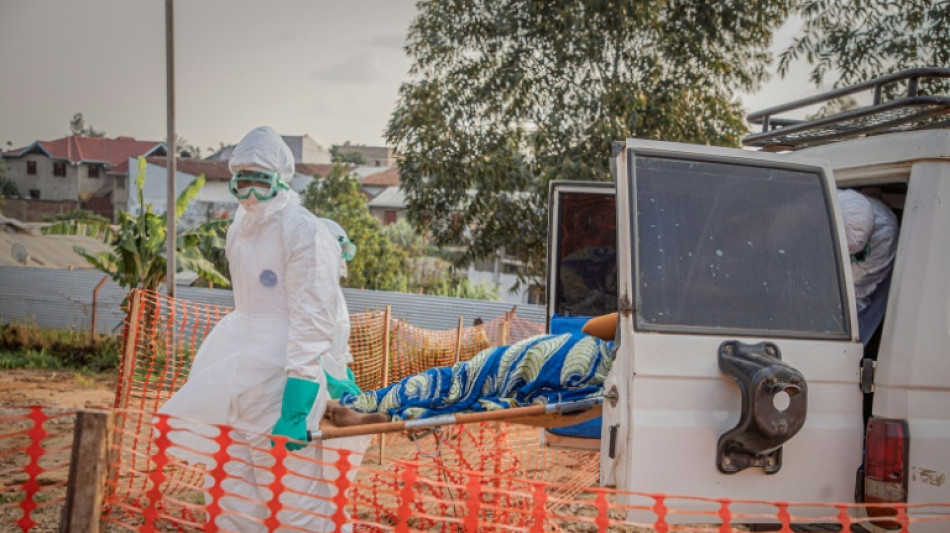
Trials of two separate potential treatments to fight the deadly Ebola outbreak in the Democratic Republic of Congo are expected to begin next week, the World Health Organization said on Wednesday.
A total of 1,048 Ebola cases, including 277 deaths, have been confirmed in DR Congo since the outbreak was declared on May 15 -- although many experts believe the true toll is significantly higher.
This outbreak is down to the rare Bundibugyo species of Ebola virus -- for which there are no approved vaccines or treatments.
WHO chief Tedros Adhanom Ghebreyesus said Wednesday that "preparations are now complete for a trial of two therapeutics that's expected to start in DRC next week".
The trial, he said, would evaluate whether the monoclonal antibody MBP134 and the antiviral drug remdesivir "can help to reduce mortality in patients with Bundibugyo virus -- alone, or in combination".
Tedros thanked the United States and Gilead Sciences for donating the doses needed for the trial.
The trials will start at a hospital in DRC's northeastern Ituri province -- where the vast majority of cases have been detected -- Vasee Moorthy, who leads the WHO's research and development blueprint arm, told AFP.
The numbers of patients required would depend of how effective the therapeutics appear to be: the more effective they are, the fewer patients who would be needed, Moorthy said.
Between 500 to 1,000 people were expected to take part, he added.
Moorthy said preparations were all but complete, and the trials should provide answers as to whether each treatment, as well as both in combination, were safe and effective.
Tedros said the WHO and its partners were working closely with affected communities "to inform and involve them in the trial".
"We are also working to ensure the communities have access to the therapeutics, should they prove safe and efficacious," he said.
Tedros said the trial would be conducted by the WHO and a consortium of partners, including DRC's National Institute for Biomedical Research, the Alliance for International Medical Action (ALIMA) and Oxford University.
- Outbreak outpacing response -
The WHO chief hailed the ramping up of the Ebola response.
Over the past five weeks, the number of treatment beds had gone up from 10 to more than 500, while testing capacity in the DRC has gone up from 30 a day to more than 3,000, he said.
But he stressed that efforts to rein in the virus still faced "major challenges".
"The outbreak is continuing to outpace the response," he warned.
Capacity at treatment and isolation centres was still insufficient, while financial support for fighting the outbreak was lagging, Tedros said.
Also proving difficult, he said, was ensuring safe and dignified burials of the highly infectious bodies of those who have died from the virus, which spreads through close contact and infected bodily fluids.
Tedros voiced particular concern that contact tracing was still not at the level needed.
More than 8,200 contacts of cases have been traced -- a rate of just over 70 percent, but still short of the 95 percent target thought necessary to get on top of the virus.
Tedros said one thing hampering contact tracing efforts was the "reduced incentive" of having no vaccine to offer people coming forward -- unlike previous outbreaks with the more common Zaire strain.
Affected daily labourers for instance faced a stark choice, he said.
If they identify themselves as contacts, "they don't get vaccines", but still risk being placed in quarantine, so "they can't have even (earn) their daily bread", Tedros pointed out.
The WHO and the African Union's health agency have a joint continental preparedness and response plan which is seeking $518 million.
V.F.Barreira--PC