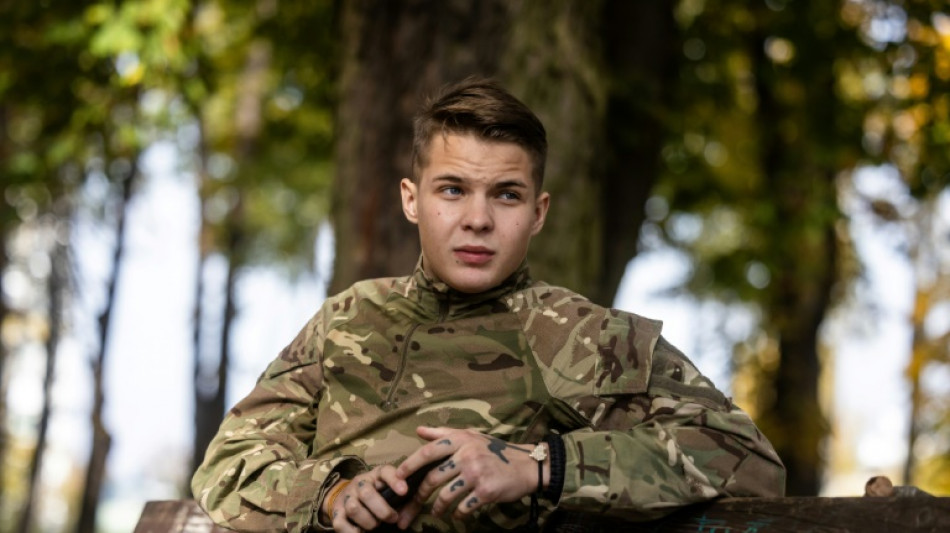
Teen fighter says no regrets despite Ukraine ordeal / Photo: Wojtek RADWANSKI - AFP

 US warns of rapid escalation in Mideast war
 Iran 'put hearts on the court' to win Asian Games basketball bronze
 School girl Yu helps China dominate in Asian Games swimming openers
 Myanmar win first Asian Games teqball gold as Spain great Puyol watches
 China's 13-year-old Yu scorches to first major gold at Asian Games
 Russians vote on last day of parliamentary elections
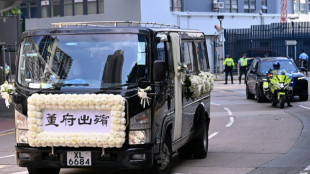 Hong Kong pays final respects to former city leader Tung
 Typhoon put people off Asian Games opening ceremony, official says
 China's 13-year-old Yu cruises as Asian Games swimming begins
 AI 'warning shots' focus Beijing on national security risks

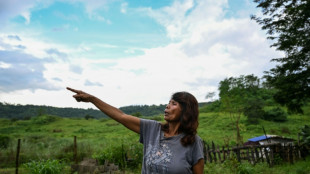 Philippine tribe in limbo over US-led tech hub
 Leo XIV, first US pope transcends his restrained style
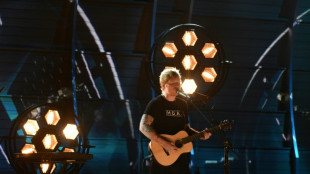 Singer Ed Sheeran says Gaza situation 'unjustifiable' following controversy
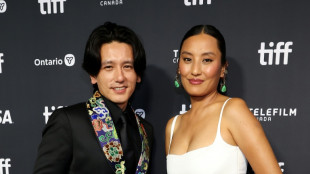 In 'Tenzing', a Sherpa mountaineer gets his due
 Ed Sheeran set to return to stage after Palestinian controversy
 Toulouse edge Vannes, Lyon beat Pau to take Top 14 summit
 Germans arrested for Louvre stunt in Mona Lisa hall
 Saudi-led coalition says Houthis fired ballistic missile at Riyadh
 France's debt climbs to highest since 1978: ministry
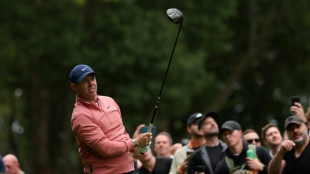 McIlroy two shots off the lead at Wentworth after eagle on 18
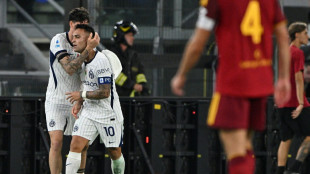 Martinez brace saves Inter in Serie A top-two clash with Roma
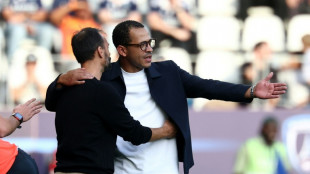 Rosenior abused but guides Paris FC past old club Strasbourg
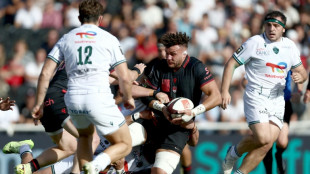 Seven-try Lyon beat Pau, climb to Top 14 summit
 Brighton defeat a 'big lesson' against complacency for Arsenal, says Arteta
 Thousands protest inaction over climate crisis in Switzerland
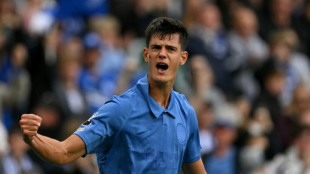
Belarusian teenager Gleb Gunko left the front line in Ukraine with shrapnel in his legs, constant nightmares and post-traumatic stress disorder -- but no regrets about volunteering to fight the Russians.
"I wanted to stay on but the doctor said no," the 18-year-old said. "I lost many friends there. My commander too."
The soft-spoken Minsk native is among many ordinary Belarusians who -- unlike their Kremlin-aligned leader -- chose to put their lives on the line to defend Ukraine.
"Before war I thought I was at peace with the fact that death is death and everyone dies eventually. But it was all too much," he told AFP in Grojec, Poland, where he is now living in exile.
When AFP first spoke to Gunko in early March, the day he left to go to war, he said he had volunteered in order to "fight for Ukraine but also to fight for Belarus.
"Because our freedom also depends on the situation there."
Gunko, whose knuckles are tattooed with the words "Born Free", left his homeland in 2020 after Belarusian President Alexander Lukashenko launched a ferocious crackdown on opponents.
The veteran leader, who has been in power for decades, has since drawn international condemnation for actively supporting and enabling Russia's invasion of Ukraine.
Even though he is opposed to the regime in Minsk, Gunko said he still feels responsible as a Belarusian citizen for what is happening.
- Guilt -
"I bear guilt for the fact that rockets are being fired on Kyiv from Belarus. I feel guilty about that," he said.
"I could have done more," he added of his four-month stint in Ukraine, which ended in July.
Gunko went to war through the Belarusian House Foundation in Warsaw, which helps Belarusian volunteers to go to Ukraine to fight.
"Belarusians cannot help Ukraine with weapons... but they cannot stand aside, so they are going to fight for (our) brotherly country's independence," the group said on Facebook.
After arriving in Ukraine, Gunko received two weeks of military training. He then fought alongside other international volunteers in Kyiv as well as in the trenches around Kherson.
He said he saw many dead civilians in Bucha, the Kyiv suburb where hundreds of bodies were discovered after the Russian army was driven out in March.
"We were driving in and I saw children at a bus stop... A child waves, smiles and I see that right alongside there's a person lying there with no head," Gunko said.
"That was hard," he added.
He recalled other traumatic moments, like being pinned down for hours under fire from the cannon of a Russian BMP-3 fighting vehicle, with shrapnel from one explosion still lodged in his limbs.
He also witnessed Russian troops pick off a volunteer British sniper outside Kherson, a comrade whose body he then helped carry.
Noticeably thinner and more subdued than when he left for war, Gunko recounted his experiences to AFP on a park bench in Grojec, the city just south of Warsaw where he has led a quiet life since returning in July.
"The military makes you a better person," said the teenager, who wore his combat fatigues for the interview. "I've changed, yeah. Everyone says so. I'm calm. I think a lot," he added.
"It's just like in war. I observe people, wait to see what happens. And I guess I expect it to be bad."
X.M.Francisco--PC