
South African rhino-lover seeks for billionaire successor / Photo: Luca Sola - AFP

 Galloway accuser could not foresee publishing-sector fallout, lawyer argues

 New York City Center revives In the Heights as a timely community story

 Godzilla Minus Zero shifts focus toward postwar human drama

 Mehbooba Mufti urges dialogue and renewed Central Asia links for Kashmir

 Seacliff Healthcare Seeks Specialist GP in Thirroul

 US stocks fall before midterm Election Day as technology shares weaken

 BLS Polymers makes strong market debut at ₹248 per share

 Petrol and diesel prices remain broadly steady across major Indian cities

 Reliance shares remain in focus after near-12% surge

 2026 Arizona Midterms: Key Races, Ballot Measures, and Voter Deadlines

 Coal India prepares possible $1 billion Mahanadi Coalfields listing

 Julia Stiles and Ezra Sosa Share Emotional Farewell After 'DWTS' Elimination

 US Buildings Threatened by Wildfires Could Triple by 2060

 Why Pregnancy Cost Estimates Fail: A Family’s $9,000 Surprise

 US Strikes Iranian Targets in Strait of Hormuz Ahead of Midterms

 Brodeur’s Overtime Goal Secures Bethlehem’s Second Consecutive Sectional Title

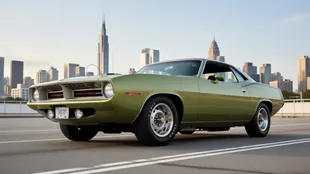 Rare 1970 Plymouth ‘Cuda 426 Hemi Listed for $400,000

 The Digital Burden: Why Instant Messaging Feels Like a Full-Time Job

 Alberta Tabled Controversial Riding Boundary Maps Amid Gerrymandering Accusations

 Hong Kong court set to sentence activist Joshua Wong in security case

 Australia raises benchmark rate to highest level in 18 years

 'The Remarried Empress' Cast Discusses Bringing Fantasy Royal Drama to Life

 Asian stocks retreat as AI worries outweigh steep oil-price drop

 Hamad International Airport stages emergency drills during WATAN 2026

 Global failure to punish attacks leaves journalists at continuing risk

He spent his vast fortune on a 30-year quest to save the rhinoceros.
Today, at 81, his money is all but gone, and South African conservationist John Hume is throwing in the towel.
Later this week, Hume will auction off his rhino farm -- the world's largest -- to the highest bidder.
"I'm left with nothing except 2,000 rhinos and 8,000 hectares (20,000 acres) of land," Hume quipped in an interview with AFP ahead of the sale.
South Africa is home to nearly 80 percent of the world's rhinos, making it a hotspot for poaching driven by demand from Asia, where horns are used in traditional medicine for their supposed therapeutic effect.
The government said 448 of the rare animals were killed across the country last year, only three fewer than in 2021 despite increased protection at national parks such as the renowned Kruger.
Poachers have increasingly targeted privately-owned reserves in their hunt for horns, which consist mainly of hard keratin, the same substance found in human nails.
They are highly sought after on black markets, where the price per weight rivals that of gold and cocaine at an estimated $60,000 per kilogramme.
- 'Worth it' -
Hume said that, through the years, he had lavished around $150 million on his massive philanthropic project to save the world's second largest land mammal.
"From a rhino point of view, it was definitely worth it," the bespectacled octogenarian, wearing a chequered shirt, said in a Zoom interview.
"There are many more rhinos on Earth than when I started the project."
A former businessman who made his fortune developing tourist resorts, Hume said he fell in love with the animals somewhat by accident having bought the first specimen after retiring with dreams of running a farm.
"I've used all my life savings spending on that population of rhinos for 30 years. And I finally ran out of money," he said.
His heavily guarded farm, at an undisclosed location in North West province, has around 2,000 southern white rhinos -- a species that was hunted to near extinction in the late 19th century but gradually recovered thanks to decades of protection and breeding efforts.
Today, the Red List compiled by the International Union for Conservation of Nature (IUCN) categorises white rhinos as "near threatened", with around 18,000 left following a decline in the last decade.
Miles of fences, cameras, heat detectors and an army of rangers patrol the site, which employs about 100 people.
The tight security is meant to dissuade would-be poachers sending the message that "they don't stand a chance", said the farm's head of security, Brandon Jones.
Speaking from the control room however Jones said the exercise is only partially successful, as poachers will merely go and kill rhinos somewhere else.
"We are simply diverting them from our reserve. We know that they will target areas where it is easier to penetrate and where the risk-reward ratio is to their advantage," he said.
- Rhino or yacht? -
The full extent of the security measures taken and the number of armed rangers on guard are kept secret.
Yet Hume said surveillance is the farm's biggest cost -- and potential buyers will need deep pockets.
"I'm hoping that there is a billionaire that would rather save the population of rhinos from extinction than own a superyacht," Hume, a gruff outspoken man, said.
"Maybe somebody for whom five million dollars a year is small change."
Bids start at $10 million.
The online auction opens on Wednesday and on offer is the farm with its animals, land and machinery.
Adding its 10-tonne stock of rhino horns to the lot is negotiable, said Hume.
The horns were preventively cut off as a way to dissuade poachers from killing the animals -- and would be worth more than $500 million on the black market.
Hume believes they should be sold to fund conservation projects, creating a legal market for them.
"I have the solution. But the rest of the world and the NGOs don't agree. And we are losing the war," laments Hume angrily.
"Unfortunately, on the black market, a rhino horn from a dead rhino is still worth more than a live rhino".
P.Cavaco--PC


