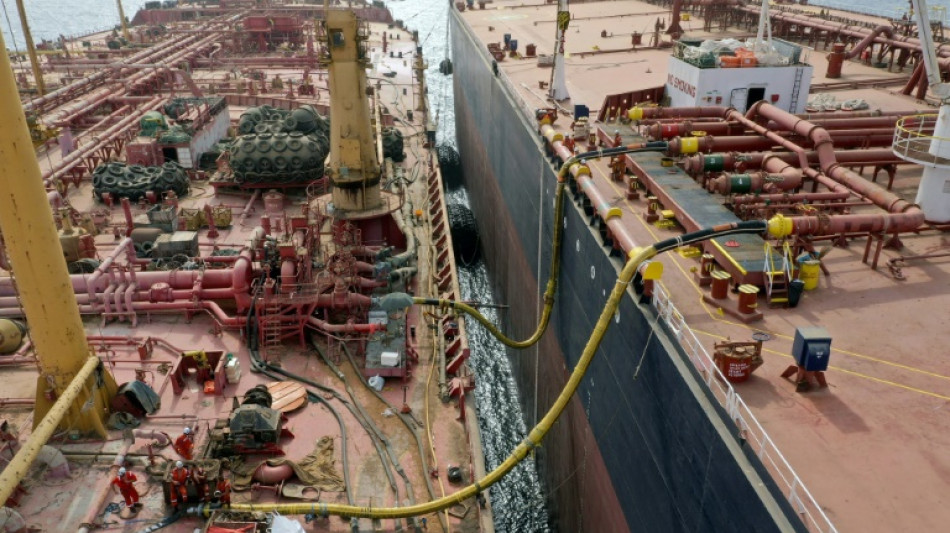
UN finishes removing oil from decaying Yemen tanker / Photo: - - AFP/File

 Abdul El-Sayed declares victory in Michigan Senate contest

 Democrats capture US Congress in sweeping midterm victory

 Manchester United rallies past Roma as PSG dominates in Champions League

 Qatar sees tentative opening for renewed regional diplomacy

 Qatar Tourism joins Pacific Asia Travel Association at London travel market

 Abdul El-Sayed Wins Michigan Senate Seat in Historic Election

 Qatar media bodies discuss support for humanitarian initiatives

 Galloway accuser could not foresee publishing-sector fallout, lawyer argues

 New York City Center revives In the Heights as a timely community story

 Godzilla Minus Zero shifts focus toward postwar human drama
The United Nations said Friday that it had successfully transferred more than one million barrels of oil from a dilapidated Yemeni tanker, removing the imminent risk of a spill.
UN Secretary General Antonio Guterres "welcomes the news that the ship-to-ship transfer of oil from the FSO Safer to the Yemen replacement vessel has been safely concluded today, avoiding what could have been a monumental environmental and humanitarian catastrophe," a statement said.
The milestone means that "the core aspect" of a years-long effort to address the threat posed by the Safer, often referred to as a "ticking time bomb", is now finished, said UN Development Programme head Achim Steiner.
"That removes the imminent and immediate threat that had become the focus of attention across the whole world: a tanker that could break apart or explode in the Red Sea," Steiner told AFP.
Yet the Safer saga is not over.
The UN has previously warned that even with its oil cargo removed, the vessel "will pose a residual environmental threat, holding viscous oil residue and remaining at risk of breaking apart."
The next phase of the project, stripping and cleaning the Safer's tanks and preparing it for towing and scrapping, is expected to take "anywhere between two to three weeks", Steiner said.
The Safer, a floating storage and offloading facility, has been moored around 50 kilometres (30 miles) from the Yemeni port of Hodeida since the 1980s.
It has not been serviced since war broke out more than eight years ago between Yemen's Huthi rebels, who control the capital Sanaa and the waters where the Safer is positioned, and a Saudi-led coalition backing the internationally recognised government based in the southern port city of Aden.
The ageing vessel, with its corroding hull, was carrying 1.14 million barrels of Marib light crude, four times as much oil as was spilled in the 1989 Exxon Valdez disaster off Alaska.
E.Paulino--PC



