Carbon-cutting benefit of cookstoves vastly overestimated: study
/ Photo: FRANCK FIFE - AFP/File

 Inter Milan and Italy icon Mazzola dies aged 83

 Saudi capital issues first air raid alert since renewed fighting in Yemen

 Martin edges title rival Marquez for Austrian MotoGP pole

 Indonesia accepts Malaysia's help to tackle wildfires

 Indians living in Japan on stand-by to house Asian Games athletes

 Trump signs bill authorizing sweeping Russia sanctions

 Protesters form human chain at Kennedy Center after Trump threat

 Death toll from attack at police HQ in Pakistan rises to 31

 Trump says Denmark to give US 'permanent control' over Greenland security

 Kennedy Center: future unclear for iconic Washington arts hub

 Trump claims 'infinite' Greenland security deal with Denmark

 Helicopters battle wildfire threatening Ecuador's capital

 Brentford batter Chelsea to undo Alonso's promising start

 Kane hits Bundesliga century as Bayern rout Union

 Trump says CNN, MS NOW, Politico banned from White House

 Hushing and hedging: US companies retreat on climate

 Springboks to face Fiji before 2027 Rugby World Cup

 Nigeria miners struggled to breathe in cell before 37 died: survivors

 McIlroy on the charge at PGA Championship as Reed withdraws

 McIlroy on the charge at PGA Championship

 Crisis-wracked Volkswagen warns of 10-bn-euro hit to profits

 Costa Rica's Grynspan tops third informal poll for UN chief: diplomat

 Stock markets retreat after central bank rate hikes

 Russia labels director of Cannes Grand Prix winner a 'foreign agent'

 Macron warns of Russian 'hybrid' threat after meeting presidential hopefuls

The greenhouse gas-reducing benefit of replacing highly polluting cookstoves has been overestimated by up to 10-fold, researchers reported Tuesday.
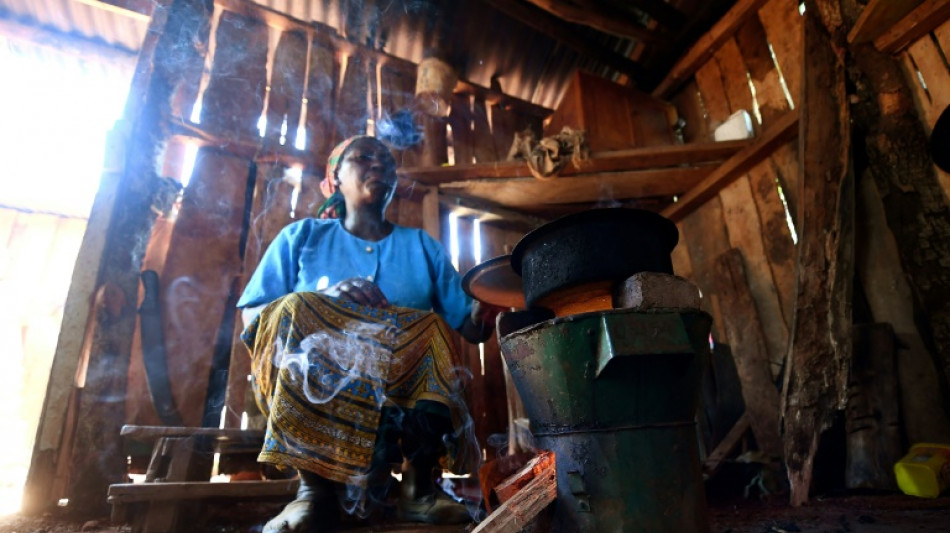
A peer-reviewed study looked at carbon offset schemes based on getting rid of primitive charcoal- or wood-burning home stoves used by some 2.4 billion people that contribute to global warming and cause millions of pollution-related deaths every year.
Projects to provide cleaner, more efficient alternatives often raise funds by the sales of credits, which are based on estimates of how much carbon the new cookers keep out of Earth's atmosphere -- one credit should equal one tonne of carbon dioxide.
The problem, according to the study published in the journal Nature Sustainability, is that a lack of methodological ”rigour" is causing overestimation.
The scientists evaluated five methodologies used to measure emission reductions of cookstove projects system, and found them all wanting.
Data covering some 40 percent of cookstove credits worldwide showed that 26.7 million carbon credits barely avoided a tenth of the CO2 emissions claimed, about 2.9 million tonnes.
In carbon markets, one credit corresponded to one tonne of CO2.
Extrapolating out across all cookstove projects, the authors estimated credits were overvalued by more than 10-fold.
Carbon credits allow corporations -- or countries under certain conditions -- to offset greenhouse gas emissions by investing in projects that avoid CO2 emissions, or remove CO2 from the air.
Over-crediting damages the credibility of carbon markets, Annelise Gill-Wiehl, a researcher at the University of California at Berkeley, told AFP.
"No one has trust that one carbon credit represents one metric tonne of reduced emissions", she told AFP.
"Whoever is buying the credits is allowed to emit one more tonne of CO2 under the premise that they're not actually emitting it."
The research caused a stir in the so-called voluntary carbon market even before it was published when a review draft was widely circulated.
Investors, project developers and other industry representatives proactively contacted journalists, urging them not to "exaggerate the exaggerations".
But the researchers insisted their work would help strengthen the trade in carbon offsets.
"A carbon credit market built on exaggerations is destined to fail," said co-author Barbara Haya, an expert on offset quality and director of the Berkeley Carbon Trading Project.
"Our study offers specific recommendations that could make clean cookstoves a trusted source of quality carbon credits, and carbon credits a stable source of funding for clean cookstoves and all of their benefits for people and forests."
P.L.Madureira--PC