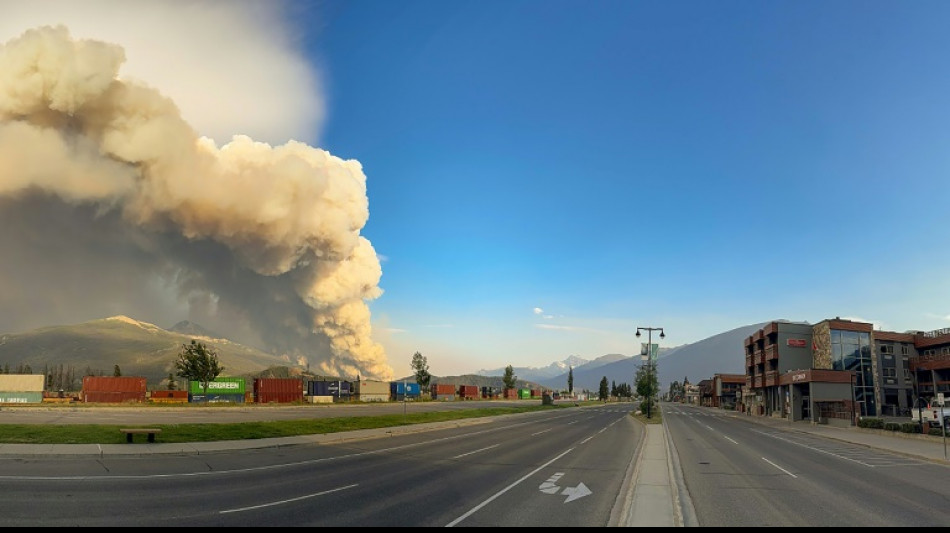
Canadian insurers face record costs from 2024 extreme weather / Photo: Handout - Jasper National Park/AFP

 Indian crude-sensitive shares gain after 13% oil-price decline

 Stocks and dollar fall as Democratic election gains reshape markets

 Kuwait marks key events and anniversaries from national history

 Trump congratulates Democrats and signals willingness to cooperate

 Qatar prime minister advances mediation through diplomatic calls

 Greenland parliament approves security agreement with United States

 Qatar envoy meets incoming UN General Assembly president

 Trump Signals Willingness to Work With Democrats After Midterm Defeat

 Pitches and Keynote Speakers Are Confirmed for Blue Magic Netherlands on November 17
Damage from extreme weather in Canada last year pushed the bill facing insurers to an unprecedented CAN$8.5 billion ($5.9 billion), the Insurance Bureau of Canada said Monday.
Events that cause significant destruction "are escalating at a shocking rate and Canada is simply not prepared," said Celyeste Power, president of the IBC, an industry association representing Canadian insurers.
The IBC said the insured damage estimate for 2024 was 12 times higher than the annual average of CAN$701 million recorded from 2001 to 2010.
"The summer of 2024 stands out as the most destructive season in Canadian history for insured losses due to wildfires, floods and hailstorms," the group said in a statement.
In July and August alone, "four catastrophic weather events" caused more than CAN$7 billion in losses, it said.
Those included a wildfire in Jasper National Park in the Canadian Rockies and flash flooding in Toronto.
Previously, the most costly year for Canadian insurers was 2016, when a massive wildfire in an Alberta oil region contributed to insured damage costs of CAN$6.2 billion.
Across the world, excess heat caused by climate change is increasing the severity of extreme weather events.
The US city of Los Angeles is currently battling deadly wildfires that have destroyed thousands of buildings and forced tens of thousands to flee their homes.
"As we watch the devastating wildfires in California where insurability of homes is at real risk, Canada's property insurers are raising the alarm that regions of Canada could potentially face similar challenges," the IBC said.
Insurance covering wildfires remains widely available in Canada, but the cost of that coverage could continue to rise, according to the insurance bureau.
F.Santana--PC



