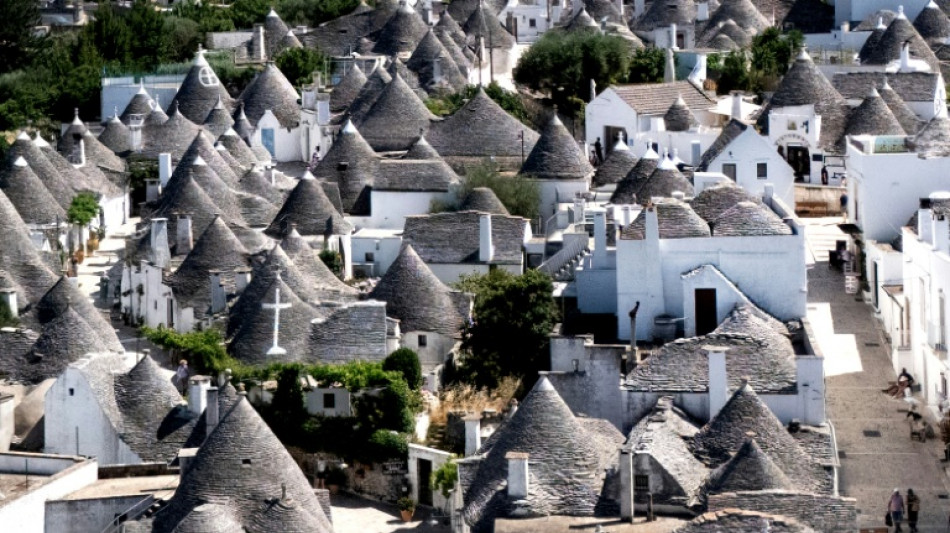
Heat-struck Italians cool off in ancient stone 'trulli' / Photo: Tiziana FABI - AFP

 Meta meets its own 'tobacco' moment in court

 Art or medicine? Japan's cosmetic tattoo artists in limbo
 Rybakina ousts Osaka to book Toronto semi-final against Gauff

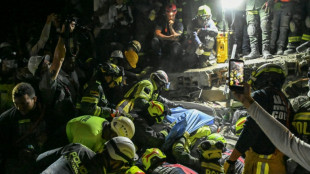 Colombia rescuers find woman alive as quake death toll passes 240

 Charges dropped against Bondi Beach attack hero

 Parched and desperate for rain, Kazakhstan turns to cloud-seeding

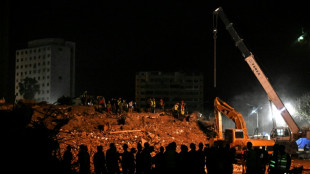 The perfect storm that turbocharged Venezuela's twin quakes

 2.4 million girls banned from Afghan schools since Taliban return: UNESCO

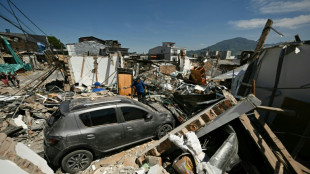 Colombians dig through rubble as quake death toll surpasses 240

 New Zealand's ruling party meets to decide PM Luxon's fate

 Total solar eclipse to spellbind Europe

 Jodar, Nakashima to make Masters semis debuts in Montreal

 Chilean veteran Sanchez signs with MLS club Montreal

 Cristiano Ronaldo marries long-term partner Georgina Rodriguez

 Oil prices higher, stocks mixed ahead of inflation report

 Jacobs into 100m final with eye on third title
 Eight-try New Zealand cruise to tour victory over Sharks

 Trump's secret plane swap triggers questions and confusion
 California calls Paramount's threat to leave state 'blackmail'

 PSG 'want to win everything', says Luis Enrique

 Barred from elections, Russia's anti-war party vows to fight on

 Jaissle states Newcastle ambition but urges patience

 NBA star Cooper Flagg trading card a slam dunk for lucky buyer
 ForumPay Expands Payment Infrastructure with New Card and Bank Transfer Acceptance Solution
 Oil prices higher, stocks flat ahead of inflation report

Once relics of a bygone way of life, the iconic dry-stone dwellings with conical roofs dotted across Puglia are in increasing demand as cool havens in Italy's sweltering south.
Beyond its emerald coastline and olive groves, Puglia is an arid region and the heat can be punishing -- but step inside the centuries-old grey and white "trulli", and the temperature dips sharply.
"There are between seven and 10 degrees (centigrade) difference between inside and outside a standard trullo. But sometimes there can even be 15-degree difference," said Francesco Fragnelli, a trulli restorer.
Traditionally featuring one room with alcoves for a bedroom and kitchen, the trulli were built from the mid-14th century using roughly worked limestone boulders collected from fields as farmers cleared the land for agriculture.
Fragnelli, 58, told AFP the trullo's hygrothermal performance is due largely to the thickness of the walls, which can measure between 1.5 metres and three metres (five to 10 feet) deep.
The limestone in summer slowly releases the humidity it absorbed over the winter months, while hot air rises inside the conical roof, cooling the area below.
- Age of suffering -
But over the centuries, the grey and white structures built as shelters and storehouses fell into disrepair.
Few labourers passed on the skills to repair the cones of corbelled limestone slabs. Internal cisterns for collecting rainwater dried up.
When Fragnelli began his apprenticeship with a cousin in 1983, "cement was in fashion. The trulli represented a past age, one of suffering and hunger", he said.
He now works with his brother and nephew on trulli bought by Italians and foreigners for holiday homes across the countryside and in towns like Alberobello, a UNESCO World Heritage Site.
The stone shacks are not just used as dwellings: chef Domenico Laera has a restaurant inside one of Alberobello's trulli, an experience he told AFP was "magical".
"The temperature is naturally cool for eating, we don't have air conditioning," he said.
Gerardo Biancofiore, head of the Puglia branch of national builders' association ANCE, told AFP the demand for trulli has risen in the past few years "and is still rising".
But he warned of builders using "skills, techniques, and materials incompatible with dry stone buildings" and called for training schemes for young builders.
- 'Source of inspiration' -
Areas across Italy, including Puglia, have been under red alert this week as Europe suffers a prolonged heatwave, and scientists say such extreme weather events are set to become more frequent.
"With the increase in heat waves, traditional solutions (such as trulli) are becoming a valuable reference, capable of inspiring climate adaptation strategies for contemporary construction as well," Biancofiore said.
He held up the trullo as "a concrete example of bioclimatic architecture", with its walls that feature a double skin with a rubble core, a thermal design experts hope to replicate with other materials.
"Sustainable architecture scholars look at the principles behind the trulli's construction as a source of inspiration for buildings more resilient to global warming," Biancofiore said.
The shacks may be cool inside, but it was blisteringly hot up on the roof at a restoration site near Ostuni, where Fragnelli's 19-year-old nephew Giuseppe was knocking a slab into shape.
Downing his hammer at 12:30pm in line with a regional order to stop outside labour during the hottest hours of the day, Fragnelli said learning to be a trullo restorer was worth the physical toll.
He began training a year ago and quickly "understood that it was very important, it's a rare thing".
"Every stone has a value, a meaning, its own purpose... so I'm willing to give my all," he said.
A.Seabra--PC