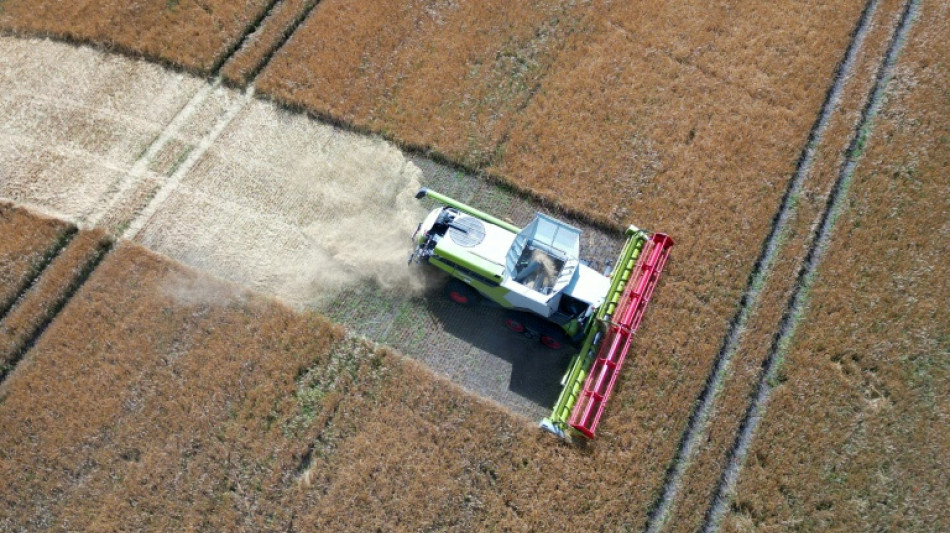
German farmers warn of drought toll on grain harvest / Photo: RALF HIRSCHBERGER - AFP/File

 Hong Kong court set to sentence activist Joshua Wong in security case
 Australia raises benchmark rate to highest level in 18 years

 'The Remarried Empress' Cast Discusses Bringing Fantasy Royal Drama to Life
 Asian stocks retreat as AI worries outweigh steep oil-price drop

 Hamad International Airport stages emergency drills during WATAN 2026

 Global failure to punish attacks leaves journalists at continuing risk

 Researchers Warn 'Bookkeeping Trick' Masks Beef Industry's Methane Emissions

 Climate Change Intensified Atlantic Hurricanes, Study Finds

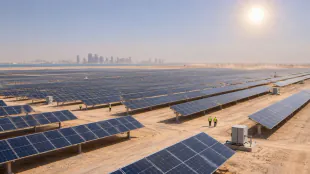 Qatar solar expansion opens scope for technical performance gains

 IXOPAY Announces IXO One, a Modular Payments Platform Built for an Era of Fluid Commerce
Germany's grain harvest is expected to fall by seven percent this year after months of severe drought and heatwaves, the German Farmers' Association (DBV) said Tuesday.
"An overly dry spring and a heatwave in the second half of June were defining factors" leading to what the group described as a "below-average grain harvest" forecast at 41.9 million tonnes.
That is also 1.5 percent lower that thaverage grain harvest of 42.5 million tonnes over the past five years, according to Joachim Rukwied, the DBV president.
Germany, along with much of Europe, has seen record-breaking temperatures this summer along with limited rainfall, sending river levels down and withering swathes of countryside.
Rukwied described "enormous regional differences" in the harvest, with farmers in southern and western Germany in particular suffering from a lack of rain amid the heat and reporting "low yields, or even total crop failure in some cases".
He said it was now too late in the growing season in areas "where drought damage is severe" to expect any help from a change in the weather.
Compounding problems for German farmers, according to the DBV, are notably higher input costs due to the global shortages of oil and other raw materials from the closure of the Strait of Hormuz during the Middle East war.
The resulting scarcity has pushed up prices of diesel fuel, fertilisers and pesticides.
"Overall, the poor harvest comes at a time of economic precariousness," the group said Tuesday.
"Significantly lower yields -- combined with low producer prices on the one hand and high costs for inputs such as diesel, crop protection products, and fertilisers on the other -- are placing an enormous strain on the liquidity of many farms."
- Apples as well -
Rukwied asked the German government to launch an emergency aid programme for farmers including early payouts of farm subsidies, more state aid for fertiliser purchases and cuts to diesel fuel taxes.
The winter rapeseed crop was "hit hardest, with a 20 percent drop in yield", Rukwied noted, adding that pests took a toll in addition to the drought and heat.
Winter barley fared better, with yields down by only four percent, which the DBV attributed to a larger planted area this year and the fact that the crop had "largely reached maturity before the heatwave and could be harvested earlier".
The apple harvest in Germany is also expected to take a hit from the parched weather, Germany's Federal Statistical Office said in a report also released Tuesday.
The total apple haul is forecast to drop 17.9 percent from last year's exceptionally large crop, and be down 5.4 percent compared to the average harvest over the past decade.
Apples are by far the most widely harvested tree fruit in Germany, and the agency said the decline was due to "recurring heatwaves and persistent dry weather during the spring and summer of 2026".
"As a result, many apples are dropping from the trees prematurely, remaining very small, or suffering from sunburn damage," the agency said.
M.Carneiro--PC