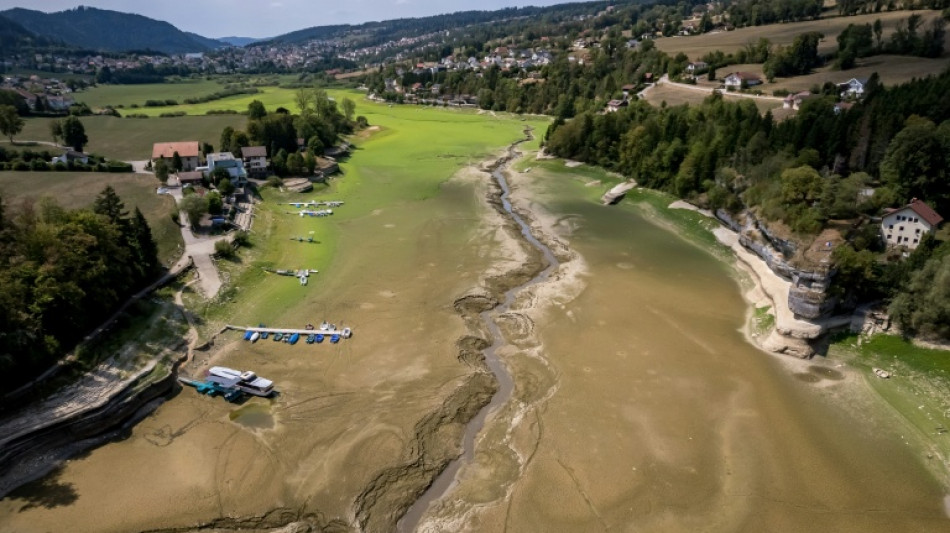
Europe heatwaves scorch 80 million with 40 C heat: AFP analysis / Photo: Fabrice COFFRINI - AFP

 Hong Kong court set to sentence activist Joshua Wong in security case

 Australia raises benchmark rate to highest level in 18 years

 'The Remarried Empress' Cast Discusses Bringing Fantasy Royal Drama to Life

 Asian stocks retreat as AI worries outweigh steep oil-price drop

 Hamad International Airport stages emergency drills during WATAN 2026

 Global failure to punish attacks leaves journalists at continuing risk

 Researchers Warn 'Bookkeeping Trick' Masks Beef Industry's Methane Emissions

 Climate Change Intensified Atlantic Hurricanes, Study Finds

 Qatar solar expansion opens scope for technical performance gains

 IXOPAY Announces IXO One, a Modular Payments Platform Built for an Era of Fluid Commerce
Europe's deadly record-breaking summer heatwaves sent temperatures above 40C in areas inhabited by 80 million people from mid-June to mid-August, according to official data analysed by AFP, with many of those areas not used to such hot weather.
Multiple waves of intense heat, fuelled by climate change, have sparked devastating droughts and wildfires in several European countries this year, cut crop yields and contributed to more than 25,000 excess deaths.
Western Europe experienced its hottest start to summer ever recorded in 2026, with the June–July period reaching record levels, according to the EU's Copernicus Climate Change Service.
Since mid-June, 30 million people in France, 23 million people in Spain, and eight million in both Germany and Italy have faced temperatures above 40C at least once.
Such high temperatures are extremely unusual in many of the areas affected, with many buildings -- even hospitals, schools and care homes -- unequipped with cooling measures such as air-conditioning.
AFP based its calculations on daily maximum temperatures from the European Drought Observatory and population data from the EU's Joint Research Centre.
More broadly, the thermometer climbed above 35 C in regions covering 80 percent of Europe’s residents, some 490 million people.
As well as being intense, the heat was long-lasting. In France more than 20 million people faced temperatures over 35C for at least 21 days -- five times more than in the summer of 2022.
Temperatures over 35C also hit countries normally spared extreme heat, such as the UK, Belgium, the Netherlands and Poland.
While mountainous areas have been spared the worst of the heat, the exceptional temperatures have seen a record number of rockfalls in the Alps, according to a French scientist.
Ludovic Ravanel of France's national scientific research centre CNRS, said high temperatures were melting "invisible" ice in cracks, which had held rocks together, leading to them falling.
Official German data released on Thursday showed a record 14,000 heat-related deaths this summer, adding to 4,500 in Spain, and 7,300 in France. The totals are not definitive and could yet rise.
P.Queiroz--PC