Memory of macabre cult massacre buried in Guyana jungle / Photo: Patrick FORT - AFP

 Ahead of Paris mass, pope urges life together in 'dignity and peace'

 Austria 'ghetto' language classes leave children to repeat school
 S.African women runners arm themselves after string of killings
 'I felt embarrassed': Japan eSports whizz-kid, 11, wins Games gold
 Indonesia fires threatens critically-endangered orangutan: IUCN

 Bangkok declares flood disaster across city

 'World records not enough': North Korea weightlifters target Olympic gold rush

 Iran proposes Hormuz plan, Trump reportedly refuses
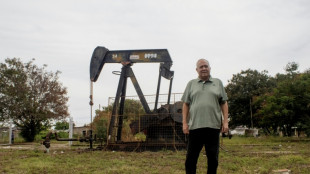
 El Nino rewrites the menu in the world's top restaurants
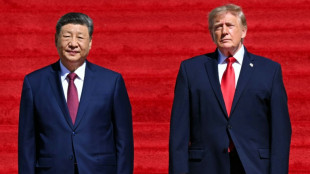
 Pope to hold giant mass on Champs-Elysees

 TikTok to pay Alabama $100 mn under pre-trial settlement

 Internationals take 7-3 Presidents Cup lead after foursomes sweep
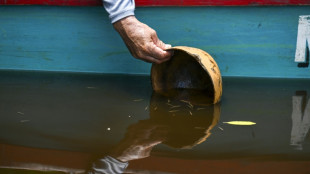
 Brazil team returns to Colombian site of doomed jet crash

 Mbappe injured as Zidane wins on France debut, Italy lose on Mancini return

 Senegal draw in Vieira debut, Nigeria survive scare as Cape Verde crash
 U2 performs surprise 50th anniversary gigs in Dublin

 Pope calls worshippers 'saints of France' after AI warning

 US court sides with Pentagon in Anthropic AI ban

 Wall Street stocks rise, greeting optimism over possible US-Iran deal

 NFL players chief raises concerns over pitch for Maracana game

 Daytime Russian attacks kill seven in Kyiv
 Spotting AI writing: how reliable are the detectors?

 French youth await pope after AI 'paradise of machines' warning
 Man City found guilty of Premier League charges, set to appeal: reports
 Embolo follows Xhaka out of Swiss squad over fake Covid documents
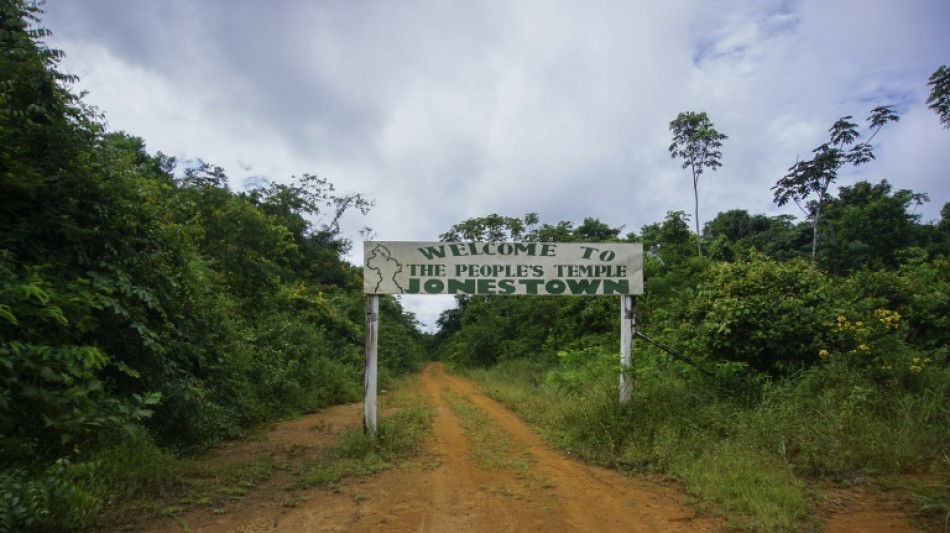
Deep in the Guyanese jungle, only a signpost and a nondescript plaque serve as reminders of a cult settlement where one of the most spine-chilling mass murder-suicides in modern history took place almost five decades ago.
"Welcome to the People's Temple," reads the green lettering on a sign above a red dirt road announcing the entrance to what was once Jonestown, a jungle utopia-turned-nightmare, where 914 adults and children died on November 18, 1978.
They were the followers of the US reverend-guru Jim Jones, who coerced them into committing suicide, urging parents to give their children poison, while others were shot trying to flee or forced to drink the deadly liquid.
The carnage highlighted the manipulative power cult leaders wield over their followers, and those who live nearby are torn between wanting to move on and wishing the site could serve as a lesson as to what went wrong.
"There is really nothing to see, unless the place is cleared up, and you will see what remains on the ground in terms of old vehicles, tractors and other things," said Fitz Duke, who lives in the remote nearby village of Port Kaituma.
He was 31 when the massacre occurred, and he recalls the presence of Jones and his following of poor African Americans, who worked hard to clear the jungle as they built what was meant to be a socialist, self-sufficient settlement on about 1,500 hectares in the middle of nowhere.
"They had a very good agricultural system," Duke said, adding that local villagers would often work for the community.
"They had a lot of livestock. They were almost self-sufficient in terms of food for themselves. We used to visit often. They had a very good band, a lot of instruments," he added.
However, while the community was billed as a non-racist, non-sexist, paradise on earth, it was run with an iron fist by Jones and his aides.
Ex-cult members made claims of drugs use, hunger and sexual enslavement, saying Jones forced his followers to work from dawn to dusk, six days a week.
"You couldn't just come and go as you like," said Duke.
"They had a huge tower to see directly on the main road. And they always had men up there to watch with their binoculars."
He said Jonestown guards with "bigger guns than the police" used to search the cars, and once stopped a police car, telling them "it wasn't Guyana, it was Jonestown."
- Hundreds 'brainwashed' -
After complaints in the United States about the living conditions in the community, Congressman Leo Ryan visited Jonestown on November 17, 1978, to investigate.
A day later, as he prepared to board a plane home, Ryan was shot dead on the tarmac by Jones's men, who also killed three journalists and a cult member who wanted to leave.
For Jones -- who had long warned his followers of a looming assault by the US government and carried out sessions in which they and their children drank fake poison -- there was no turning back.
He told his followers that Ryan was a CIA agent and that US Marines were preparing to attack the community.
A 45-minute recording found near his body would later reveal how he incited his followers to commit suicide in what he said was a "revolutionary act."
"It's still a wonder why and how one man could have so many hundreds of people brainwashed like that," said Duke.
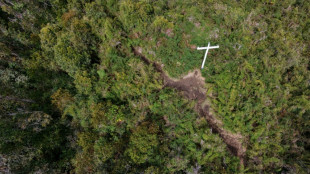
Forty-four years later, only a white slab in the overgrowth bearing the words "in memory of the victims of the Jonestown massacre" bears testament to what happened at the site.
The signpost at the entrance to the community was put up to replace the old version sometime after the events.
- 'A bad memory' -
Duke is among those who would prefer the massacre be forgotten.
"I feel that it has done our country real, real bad. It put Guyana on the map for bad reasons. They should do away with it. They should give the land to farmers for them to cultivate it," he said.
Local authorities did not wish to speak on the massacre.
However, opposition official in Port Kaituma, Tiffnie Daniels, 31, said she would like to see the site become a place where visitors could "understand what happened."
"There is just a monument and the jungle. But, if children want to study that, or people want to visit as a tourist site, there is nothing," she added.
"Yes, it's a bad memory, but it's also history."
P.Cavaco--PC