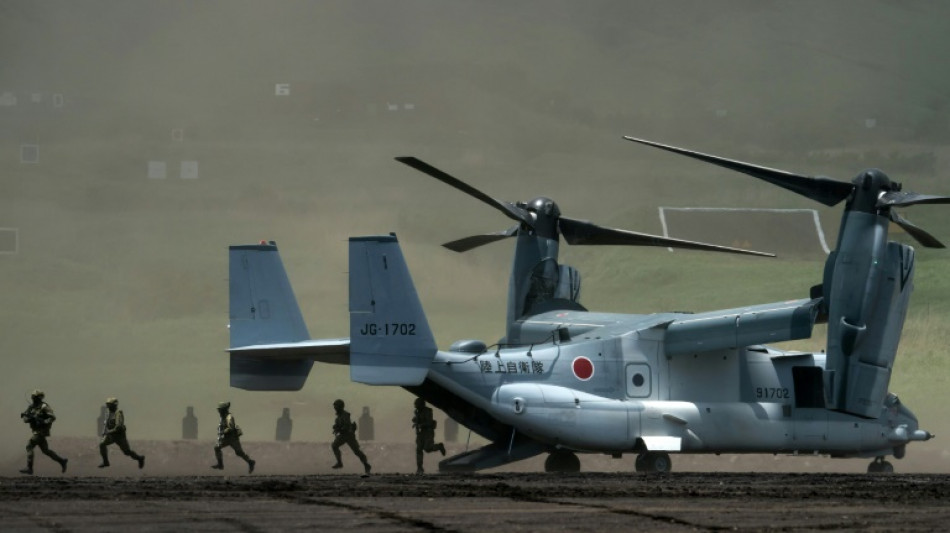
Japan to radically overhaul defence policy on China threats / Photo: Tomohiro Ohsumi - POOL/AFP

 Fernandez fights back to reach Singapore Open final

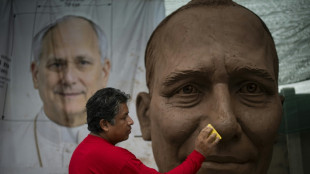 Giant statue of Pope Leo XIV takes shape in Peru workshop

 Ukraine crush holders Italy to reach first BJK Cup final

 Pope celebrates giant Paris mass in landmark visit

 Germany selects Munich for Olympics host bid

 Sagnol sacked as Georgia boss after Nations League upset
 Man City could face 'drastic' sanctions after reported guilty verdict: ex-chairman

 Furious Fury says row between rival promoters could scupper Joshua bout

 'Invincible' 223cm teen basketball player stars as China win bronze

 Tenth woman found dead in South Africa's string of killings
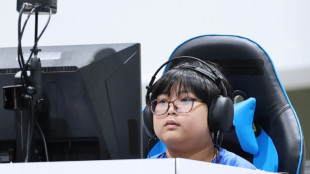 Japan schoolboy, 11, wins gold while empty seats blight Asian Games

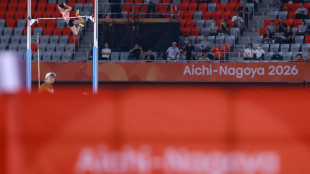 Japan organisers 'not satisfied' as empty seats blight Asian Games

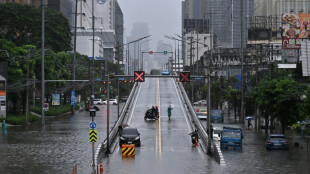 Canals full, roads submerged as Bangkok declares flood disaster

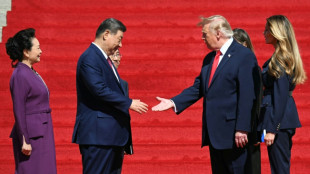 China, US to open AI 'communication channel' after summit
 Nepal tunnel survivor wants to help post-flood rebuild

 New China sprint star, 17, vows 'no limits' after Asian Games gold
 Japanese 11-year-old wins Asian Games eSports gold
 TikTok agrees to teen limits in US settlement following Meta
 Venezuela's oil cradle pins hopes on US energy deals

 US, China buy time with trade truce as pressure builds

 'Leo, Leo': Young Catholics give pope rockstar welcome in France

 Lula bans sports betting days ahead of Brazil's election

 Guatemala ensures survival of vulnerable 'fossil' fish

 Mancini finds positives in Italy loss, accepts fans' jeers

 Alcaraz helps Europe into Laver Cup lead
Japan is expected to announce its biggest defence overhaul in decades this week, hiking spending, reshaping its military command and acquiring new missiles to tackle the threat from China.
The policies, to be outlined in three defence and security documents as soon as Friday, will reshape the defence landscape in a country whose post-war constitution does not even officially recognise the military.
"Fundamentally strengthening our defence capabilities is the most urgent challenge in this severe security environment," Prime Minister Fumio Kishida said at the weekend.
"We will urgently ramp up our defence capabilities over the next five years."
The shift is the result of Tokyo's fears about China's growing military strength and regional posturing, as well as threats ranging from North Korean missile launches to Russia's invasion of Ukraine.
Key among the new policies is a pledge to boost spending to two percent of GDP by 2027 to bring Japan in line with NATO members.
That marks a significant increase from historic spending of around one percent, and has sparked criticism over how it will be financed.
The money will fund projects including the acquisition of what Japan calls "counterstrike capacity" -- the ability to hit launch sites that threaten the country, even preemptively.
Japan has previously shied away from acquiring that ability over disputes on whether it could violate the constitution's limit on self-defence.
In a nod to the controversy, the policy documents will reportedly insist that Japan remains committed to a "self-defence-oriented security policy" and will "not become a military power".
Part of that capacity will come from up to 500 US-made Tomahawk cruise missiles Japan is reportedly considering purchasing as a backstop while it develops longer-range missiles domestically.
- 'Greatest strategic challenge' -
Japan has also announced plans to develop a next-generation fighter jet with Italy and Britain, and is reportedly planning to build new ammunition depots and launch satellites to help guide potential counterstrikes.
The changes will also affect military organisation, with the Nikkei newspaper reporting that all three branches of the Self-Defense Forces will be brought under a single command within five years.
The SDF presence on Japan's southernmost islands will be increased -- including a tripling of units with ballistic missile interception capacity, according to local media.
The documents, including the key National Security Strategy, are expected to point to China for the shift in policy.
Japan's ruling party reportedly wanted to term Beijing a "threat", but under pressure from its coalition partner will settle for dubbing China a "serious concern" and Japan's "greatest strategic challenge".
That still represents a sea change from 2013, the document's first iteration and the last time it was updated, when Japan said it sought a "mutually beneficial strategic partnership", a phrase expected to disappear now.
Worries about China have deepened since major military drills carried out by Beijing around Taiwan in August, during which missiles fell in Japanese economic waters.
Japan is also expected to call Russia a challenge, compared to a 2013 pledge to seek cooperation and "enhance" ties.
Japan has joined Western allies in imposing sanctions on Moscow over Ukraine, sending already frosty relations into deep freeze.
The radical defence overhaul is likely to anger Beijing, which has regularly referenced Japan's wartime belligerence in criticising Tokyo.
It may also cause waves domestically, though surveys show growing support for a stronger defence strategy.
"For Japan's defence policymakers, these developments represent not a militarist resurgence but the latest step in a slow, gradual normalisation of defence and national security posture," said James Brady, vice president of Teneo consultancy.
X.Matos--PC