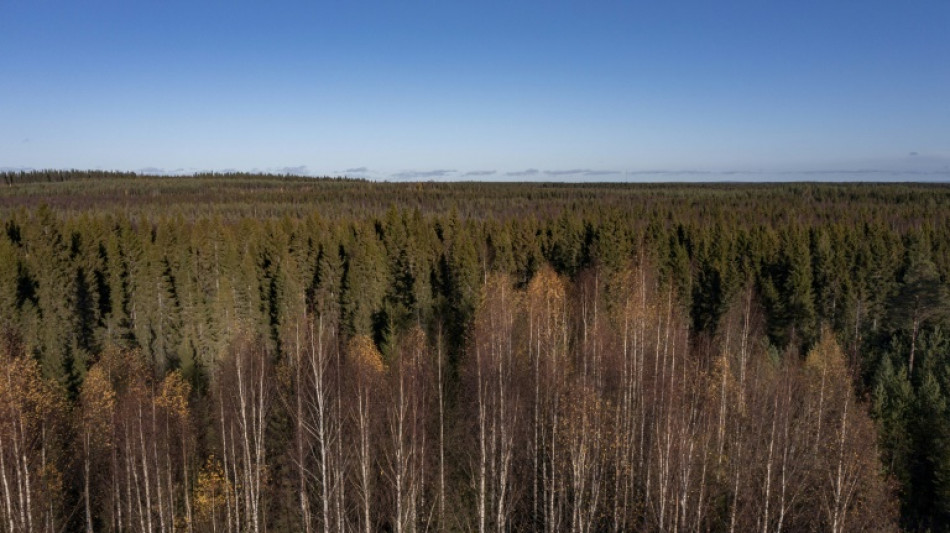
COP15's key aim: protect 30% of the planet / Photo: Olivier MORIN - AFP/File

 Man City chairman defiant over reported Premier League charges
 Germany ready to 'walk through fire' for Klopp, says Tah

 At least 16 killed in Russian and Ukrainian strikes

 Powerful storm pummels US Northeast
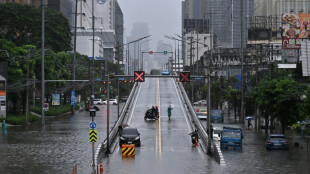
 Bangkok declares disaster after homes flooded, roads submerged by heavy rain
 Norris calls for errant Colapinto to be banned for causing Baku crash

 Russell finds himself again and prepares to heap pressure on Antonelli
 South Korea hold nerve to win Asian Games basketball gold

 Russell holds off Verstappen to claim imperious victory in Baku
 Russell holds off Verstappen to win Azerbaijan Grand Prix
 India's Kohli says 2027 ODI World Cup will be his last
 Huge crowds cheer Pope Leo along Champs-Elysees ahead of Paris mass
 Putellas wants to bring 'winning culture and mentality' to London City

 Rare Italian opera returns to Moscow after nearly 120-year hiatus

 Pope to celebrate giant Paris mass after 'peace' appeal
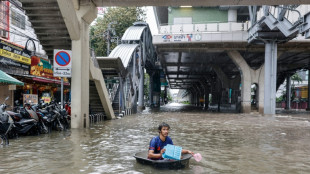 Homes flooded, roads submerged: Bangkok declares disaster over heavy rains

 Ahead of Paris mass, pope urges life together in 'dignity and peace'
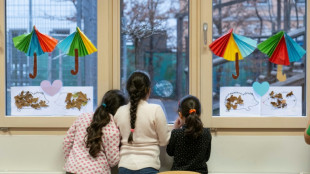 Austria 'ghetto' language classes leave children to repeat school
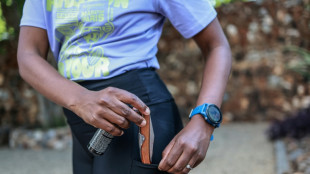 S.African women runners arm themselves after string of killings
 'I felt embarrassed': Japan eSports whizz-kid, 11, wins Games gold
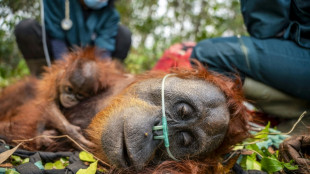 Indonesia fires threatens critically-endangered orangutan: IUCN

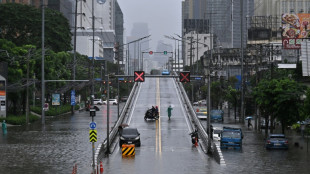 Bangkok declares flood disaster across city

 'World records not enough': North Korea weightlifters target Olympic gold rush

 Iran proposes Hormuz plan, Trump reportedly refuses
 El Nino rewrites the menu in the world's top restaurants
Headlining the COP15 biodiversity talks is a drive to secure 30 percent of Earth's land and oceans as protected zones by 2030 -- the most disputed item on the agenda.
Some campaigners say the so-called "30x30" target is nature's equivalent of the landmark 1.5C global warming target set at climate talks under the Paris Agreement.
But delegates negotiating a broad accord for protecting nature are divided over how to pay for "30x30" and how the measure would be applied.
Here are some facts about the initiative, one of numerous targets under discussion at the talks taking place in Montreal until December 19.
- Too much? -
Fearful that COP15 will end with a less ambitious agreement, scientists and environmentalists insist 30 percent must be a minimum target for protecting nature, not a ceiling.
Currently, 17 percent of land and eight percent of the seas have protected status.
South Africa, Russia, and Saudi Arabia have argued for a target of 20 percent. Other countries, such as China, Japan and South Korea support 30 percent for land but want a less arduous target of 20 percent for the seas.
The target would be applied worldwide, so countries with big populations or small shorelines would not be obliged to contribute a disproportionate share.
Some countries would shoulder higher percentages, particularly ones that are home to areas of rich biodiversity, or places of strategic importance for arresting climate change -- such as the Amazon and the Congo Basin.
- Not enough? -
Some say the 30 percent target is not ambitious enough.
"Thirty percent would be a laudatory goal if the year were 1952. But it's 2022 and we don't have the luxury of waiting," said Eric Dinerstein, a biologist who authored "Global Safety Net," a study on areas in need of protection.
"The simplest way to say it, as we biologists would like to put it, is that 50 percent is our 1.5 degrees."
Oscar Soria of the civil campaign group Avaaz called too for a 50-percent target, in line with other NGOs such as Wild Foundation and One Earth.
He argued that if governments recognized indigenous peoples' and other communities' rights over their territory, the 30 percent protection target would have already been achieved.
Accounting for six percent of the world's population and occupying 25 percent of its land, indigenous people are key players in the Montreal talks.
"We are here to send the message that we cannot achieve ambitious conservation aims unless our rights are fully taken into account," said Jennifer Corpuz, a lawyer and member of the International Indigenous Forum on Biodiversity.
- Subject to conditions -
Many NGOs say they will accept a 30 percent target if certain criteria are met, such as only including ecologically significant land in the protected areas and ensuring effective protection measures.
Some are demanding that a fixed percentage of the land be classed as strongly or totally protected -- with barely any human activity.
Most of these elements have yet to be approved in the draft agreements under discussion.
Campaigners are therefore pressing for action from one of the negotiating blocs at COP15: the High Ambition Coalition for Nature and People. The bloc is jointly led by Costa Rica, France and Britain and backed by 130 countries that support the 30 percent target.
Some are limiting the scope of these demands, however.
"If the criteria are too restrictive, countries will go and protect areas that are not of great interest for biodiversity," said one Western negotiator who asked not to be named.
"But the richest areas are also the ones with the best resources: they have to be managed sustainably but not prohibited," the negotiator added.
"There is a lot of talk about 30 percent, but what is key is also what is done to nature in the remaining 70 percent."
Other key aims at stake in the talks are defending biodiversity in land management, reducing the use of pesticides, and restoring damaged land.
J.Oliveira--PC